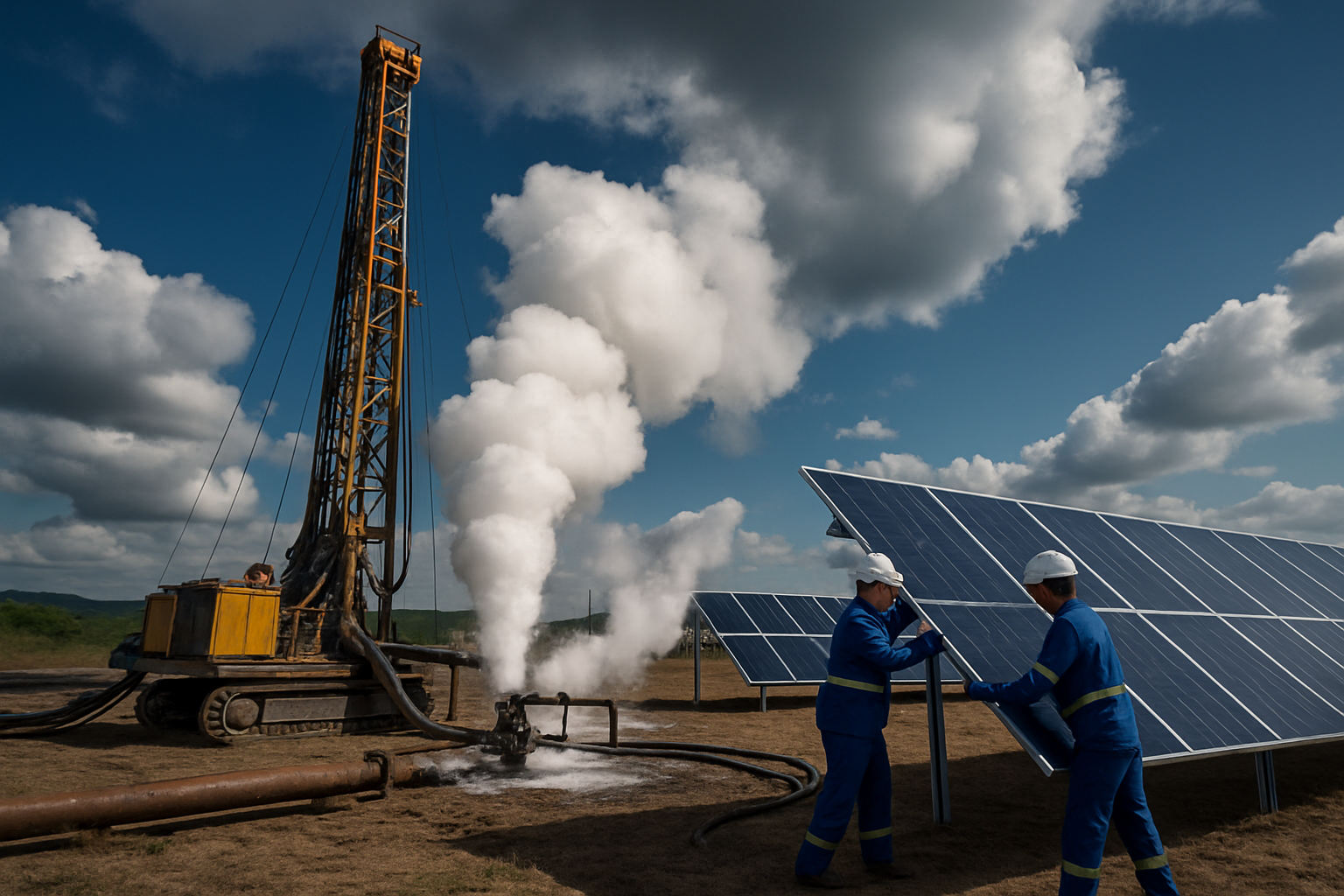
Croatia has achieved a remarkable 100% success rate in geothermal exploratory drilling projects, while China expands its solar energy partnerships to Cuba, signaling a major acceleration in global renewable energy development during a critical period for climate action.
The convergence of these developments represents a watershed moment in the global clean energy transition, occurring as the world faces unprecedented climate challenges with January 2026 marking the 18th consecutive month of temperatures exceeding 1.5°C above pre-industrial levels.
Croatia's Geothermal Milestone
Croatia's geothermal breakthrough near Zagreb in the Zapresic region has revealed underground thermal reserves reaching 120°C at depths of 2,500 meters, with potential to generate 150MW capacity serving 200,000 households. Energy Minister Davor Filipović described this as a "paradigm shift for energy independence strategy," leveraging Croatia's exceptional 99.25% EU funding absorption rate—the highest among member states.
The success builds on Croatia's position within the European renewable energy framework, where the country has demonstrated exceptional capability in implementing EU-funded green infrastructure projects. This geothermal development represents a €500 million investment opportunity that could create thousands of specialized jobs while contributing significantly to regional energy security.
"This represents a fundamental transformation of our energy landscape, positioning Croatia as a leader in geothermal technology within the European Union."
— Davor Filipović, Croatian Energy Minister
China's Strategic Solar Expansion
Simultaneously, China is extending its renewable energy influence through a major solar energy partnership with Cuba, demonstrating Beijing's commitment to expanding its clean energy footprint in Latin America. Chinese ambassador to Cuba, Hua Xin, outlined comprehensive joint energy projects designed to address Cuba's "complex power situation" amid the US oil embargo.
This initiative showcases China's dual strategy of strengthening diplomatic ties while advancing renewable energy technology globally. The partnership addresses Cuba's critical energy needs while positioning China as a reliable alternative energy supplier in a region traditionally dependent on fossil fuel imports.
The China-Cuba solar collaboration represents part of Beijing's broader renewable energy diplomacy, which has seen similar partnerships across Central Asia, Africa, and Latin America. These projects demonstrate China's technological capabilities while creating new markets for Chinese solar technology and expertise.
Global Supply Chain Challenges
These renewable energy advances occur against the backdrop of significant supply chain vulnerabilities that threaten global clean energy deployment. China currently controls 60% of critical mineral production and 90% of refining capacity for lithium, cobalt, and rare earth elements essential for renewable energy infrastructure.
Memory chip shortages have caused sixfold price increases, affecting renewable control systems until 2027 when new fabrication facilities come online. The US-EU-Japan Critical Minerals Partnership, involving 55 countries and seven African suppliers, represents a coordinated effort to diversify supply chains and reduce dependency on single-source suppliers.
Estonia continues to demonstrate European renewable leadership with 88% renewable electricity generation and Europe's largest battery storage facility serving 90,000 households. These achievements provide templates for other nations pursuing rapid renewable energy transitions.
Strategic Implications
The renewable energy developments in Croatia and Cuba highlight the increasingly diverse pathways nations are pursuing toward energy independence. Croatia's geothermal success demonstrates how European nations can leverage natural geological advantages and EU funding mechanisms to achieve clean energy breakthroughs.
China's solar partnerships reveal how renewable energy has become a cornerstone of international diplomacy, offering developing nations alternatives to traditional fossil fuel dependencies while advancing global climate goals.
Economic and Environmental Impact
Croatia's geothermal development could attract significant international investment while establishing the country as a regional hub for geothermal expertise. The technology incorporates advanced digital monitoring, automated systems, and smart grid integration for continuous baseload power regardless of weather conditions.
The China-Cuba solar initiative addresses immediate energy security needs while contributing to long-term climate commitments. Both projects demonstrate how renewable energy functions as an economic development engine rather than merely an environmental obligation.
Future Outlook
These developments occur during a critical window for climate action, with environmental scientists warning that the current pace of renewable deployment must accelerate significantly to meet global climate targets. The diversity of approaches—from European geothermal innovation to Chinese solar diplomacy—provides multiple pathways for achieving the massive scale of clean energy transformation required.
Success in both Croatia and Cuba could catalyze additional renewable energy projects throughout their respective regions, demonstrating that clean energy transitions are achievable across different economic and political contexts. The integration of cutting-edge technology with practical energy solutions offers hope for meeting the urgent demands of climate action while supporting economic development and energy security.
As the world faces the reality of sustained warming beyond natural variability, these renewable energy breakthroughs represent essential steps toward building a sustainable energy infrastructure capable of supporting global prosperity while protecting planetary systems for future generations.