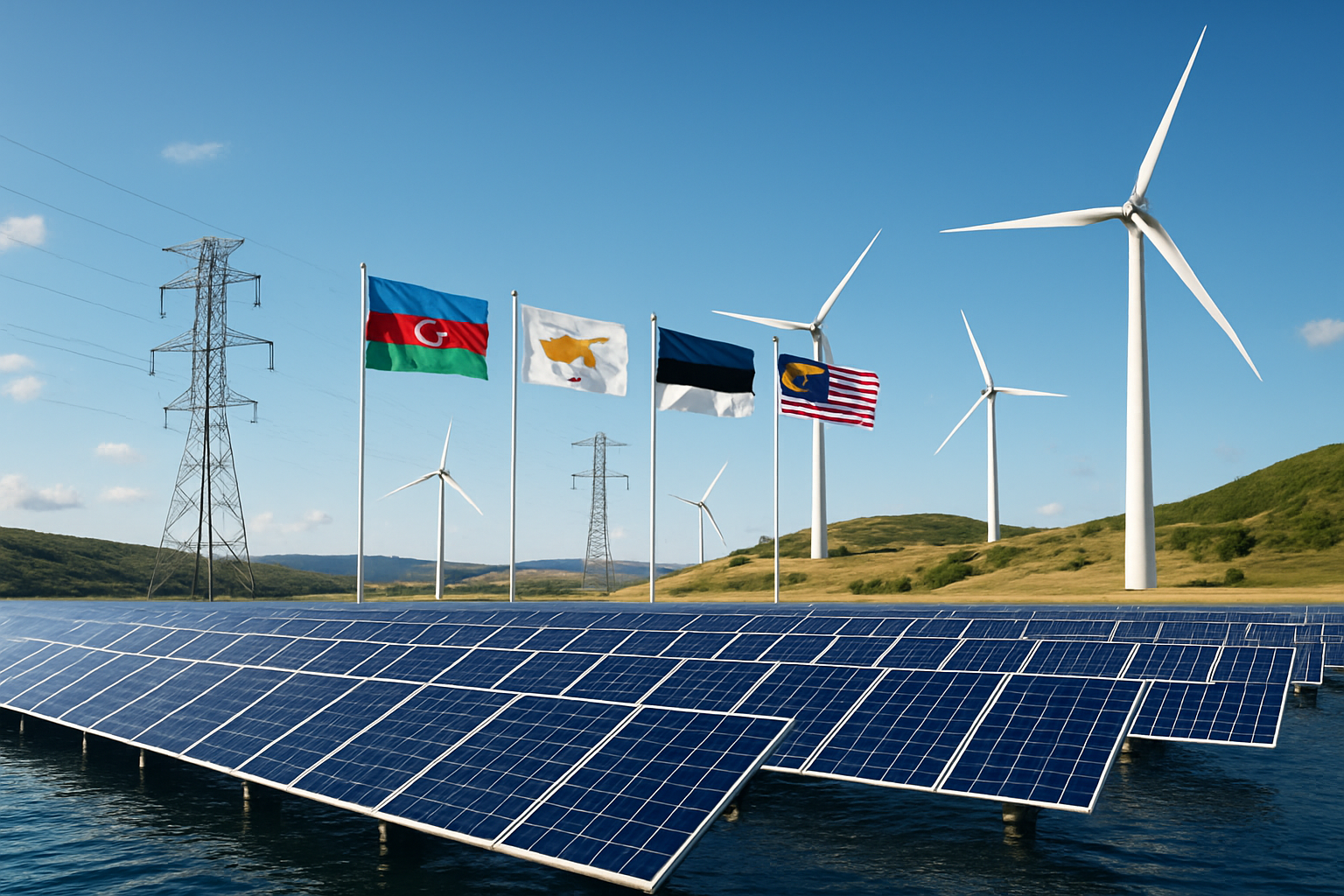
A coordinated surge in renewable energy projects across Azerbaijan, Cyprus, Estonia, and Malaysia is reshaping the global clean energy landscape, even as environmental concerns and critical materials shortages pose unprecedented challenges to the worldwide transition away from fossil fuels.
From floating solar installations on Malaysian water reservoirs to wind farm developments in Eastern Europe, February 2026 has witnessed significant momentum in renewable energy deployment across multiple continents. However, these advances are occurring against a backdrop of mounting environmental protests, supply chain vulnerabilities, and regulatory delays that threaten to slow the pace of global decarbonization.
Malaysia Leads Innovation with Floating Solar Technology
Malaysia has achieved a breakthrough in renewable energy innovation with the launch of two major solar projects totaling 28.21 megawatts in Sabah state. The most significant development is a 13.21MW floating solar facility at Babagon Dam, marking Malaysia's first floating solar installation on potable water—a technological milestone that could serve as a model for other water-scarce regions globally.
The Babagon Dam project, combined with a 15MW solar photovoltaic plant in Batu Sapi, Sandakan, represents a combined investment of RM63 million ($14.8 million). The floating solar installation is particularly notable for its innovative approach to land conservation, utilizing water surfaces rather than competing with agricultural or forest land for space.
"This represents a new era of sustainable energy development where we can harness solar power without compromising our land resources," stated a Sabah state energy official during the project launch.
— Sabah State Energy Department
The floating solar technology deployed at Babagon Dam offers several advantages over traditional ground-mounted installations, including reduced water evaporation, improved panel efficiency due to natural cooling effects, and minimal environmental disruption to existing ecosystems.
Azerbaijan Advances Regional Energy Cooperation
In the South Caucasus region, Azerbaijan has made significant progress in renewable energy partnerships with the announcement that bp has sold a 10% stake in the Shafag Jabrayil Solar Limited project to Hungary's state-owned MVM Energetika Zrt. This transaction reflects growing international cooperation in renewable energy development and demonstrates Azerbaijan's emergence as a regional clean energy hub.
The Shafag solar project represents part of Azerbaijan's broader strategy to diversify its energy portfolio beyond traditional oil and gas exports. The involvement of Hungarian state energy companies underscores the growing trend of European nations securing renewable energy partnerships with resource-rich countries in the Caucasus region.
This development aligns with previous analysis showing Azerbaijan positioned as a key regional energy coordinator, with the U.S. Chamber of Commerce identifying the South Caucasus as a strategic East-West energy hub. Current U.S.-Azerbaijan trade totals $74.9 million annually, with massive expansion potential as the country develops its renewable energy capabilities alongside its traditional energy exports.
Environmental Opposition Emerges in Cyprus
While renewable energy development accelerates globally, Cyprus faces significant environmental opposition to solar farm expansion. The Environmental Movement of Cyprus has called for urgent measures to halt what it describes as the "uncontrolled placement" of solar photovoltaic parks on agricultural and forest land, arguing that such installations damage the island's natural environment.
The organization has accused the government of allowing conflicts of interest and corruption to become "institutionalized to a large degree" in Cyprus, raising questions about the oversight and approval processes for renewable energy projects. The movement specifically criticized the destruction of forests, use of fertile agricultural land, and allocation of state-owned property for commercial renewable energy developments.
"The destruction of forests, the use of fertile or high-productivity agricultural land, and the allocation of state-owned land for commercial renewable energy projects are unacceptable practices, particularly when suitable alternatives exist on barren land or existing buildings."
— Environmental Movement of Cyprus
This opposition highlights a growing tension within the renewable energy sector between the urgent need for clean energy infrastructure and environmental protection concerns. The Cyprus case demonstrates that even climate-friendly technologies can face resistance when their implementation threatens local ecosystems or raises governance concerns.
Estonia Faces Wind Energy Development Delays
Estonia's renewable energy ambitions have encountered significant setbacks, with reports indicating that no wind farms will be completed in the country during 2026 or even the following year. This delay comes despite a 2023 auction process that required developments to be completed by this timeframe, highlighting the complex challenges facing renewable energy project implementation.
The delays in Estonia are particularly significant given the country's leadership in energy storage technology. Estonia recently opened continental Europe's largest battery storage facility with capacity to serve 90,000 households, positioning the nation as a pioneer in grid stability solutions for renewable energy integration.
Estonia achieved 88% renewable electricity production in 2024, primarily from hydroelectric power, demonstrating that delays in wind farm development do not necessarily undermine overall renewable energy progress. However, the wind farm delays underscore the regulatory, technical, and logistical challenges that can impede even well-planned renewable energy projects.
Global Context and Supply Chain Challenges
These regional developments occur within a broader context of accelerating global renewable energy deployment amid mounting supply chain pressures. European Union auditors have warned that climate goals are threatened by critical materials shortages, with China controlling 60% of global production and 90% of refining capacity for lithium, cobalt, and rare earth elements essential for renewable energy infrastructure.
The supply chain vulnerabilities have prompted coordinated international responses, including the U.S.-EU-Japan Critical Minerals Partnership involving 55 countries. This alliance aims to diversify supply chains away from Chinese dominance through alternative partnerships with African suppliers and enhanced recycling programs.
Memory price increases of sixfold are affecting renewable energy control systems, while natural gas prices have surged 24% in Europe and 78% in the United States, creating economic pressure that both supports renewable energy development and complicates project financing.
Climate Urgency Drives Continued Investment
The renewable energy developments across Azerbaijan, Cyprus, Estonia, and Malaysia occur during what climate scientists have identified as an unprecedented period of global warming. January 2026 marked the 18th consecutive month of the past 19 exceeding 1.5°C above pre-industrial levels, demonstrating sustained warming trends that override natural climate variability.
This climate urgency provides political and economic pressure for continued renewable energy deployment despite supply chain challenges and environmental opposition. The International Energy Agency estimates that achieving global climate targets requires tripling renewable energy capacity by 2030, making projects like Malaysia's floating solar installations and Azerbaijan's international partnerships essential components of the global clean energy transition.
Technology Integration and Innovation
The renewable energy projects across these four countries demonstrate sophisticated technology integration approaches combining traditional renewable energy with advanced digital monitoring, grid management systems, and innovative installation techniques. Malaysia's floating solar technology represents a significant innovation in space-efficient renewable energy deployment.
Estonia's battery storage leadership provides grid stability solutions essential for renewable energy integration, while Azerbaijan's international partnerships demonstrate how traditional energy-exporting countries can diversify into renewable energy exports. These developments suggest that renewable energy is evolving beyond simple generation to encompass comprehensive energy system management.
Economic and Strategic Implications
The economic implications of these renewable energy developments extend beyond immediate job creation and investment flows. Malaysia's floating solar technology could position the country as an exporter of innovative renewable energy solutions to other tropical and water-rich regions. Azerbaijan's partnerships strengthen its position as a regional energy hub connecting European and Asian markets.
Estonia's battery storage capabilities complement its high renewable electricity percentage, potentially making the country a net energy exporter during peak renewable generation periods. Even Cyprus, despite environmental opposition, continues renewable energy development that could enhance the island's energy independence and reduce import dependencies.
The strategic significance of these developments lies in their contribution to energy security diversification. As geopolitical tensions affect traditional energy supply chains, renewable energy provides domestic alternatives that reduce vulnerability to international disruptions while contributing to climate goals.
Future Outlook and Challenges
Looking ahead, the renewable energy developments in these countries face both opportunities and challenges. Supply chain diversification efforts through the U.S.-EU-Japan alliance may reduce dependence on Chinese materials, but alternative suppliers require years to develop adequate capacity and processing capabilities.
Environmental opposition, as demonstrated in Cyprus, requires careful balance between renewable energy deployment and ecosystem protection. Future projects will need enhanced community engagement, environmental impact assessment, and governance frameworks to maintain public support for clean energy transition.
Technical challenges include grid integration for intermittent renewable sources, energy storage scaling, and maintenance of aging renewable energy infrastructure. However, innovations like Malaysia's floating solar and Estonia's battery storage demonstrate that technological solutions continue to emerge for renewable energy challenges.
The renewable energy surge across Azerbaijan, Cyprus, Estonia, and Malaysia reflects broader global momentum toward clean energy transition amid unprecedented climate urgency. While supply chain challenges and environmental concerns pose significant obstacles, continued innovation and international cooperation provide pathways for overcoming these barriers. Success in scaling renewable energy deployment in these diverse geographical and economic contexts will serve as crucial test cases for global climate targets achievement in the remainder of this decade.