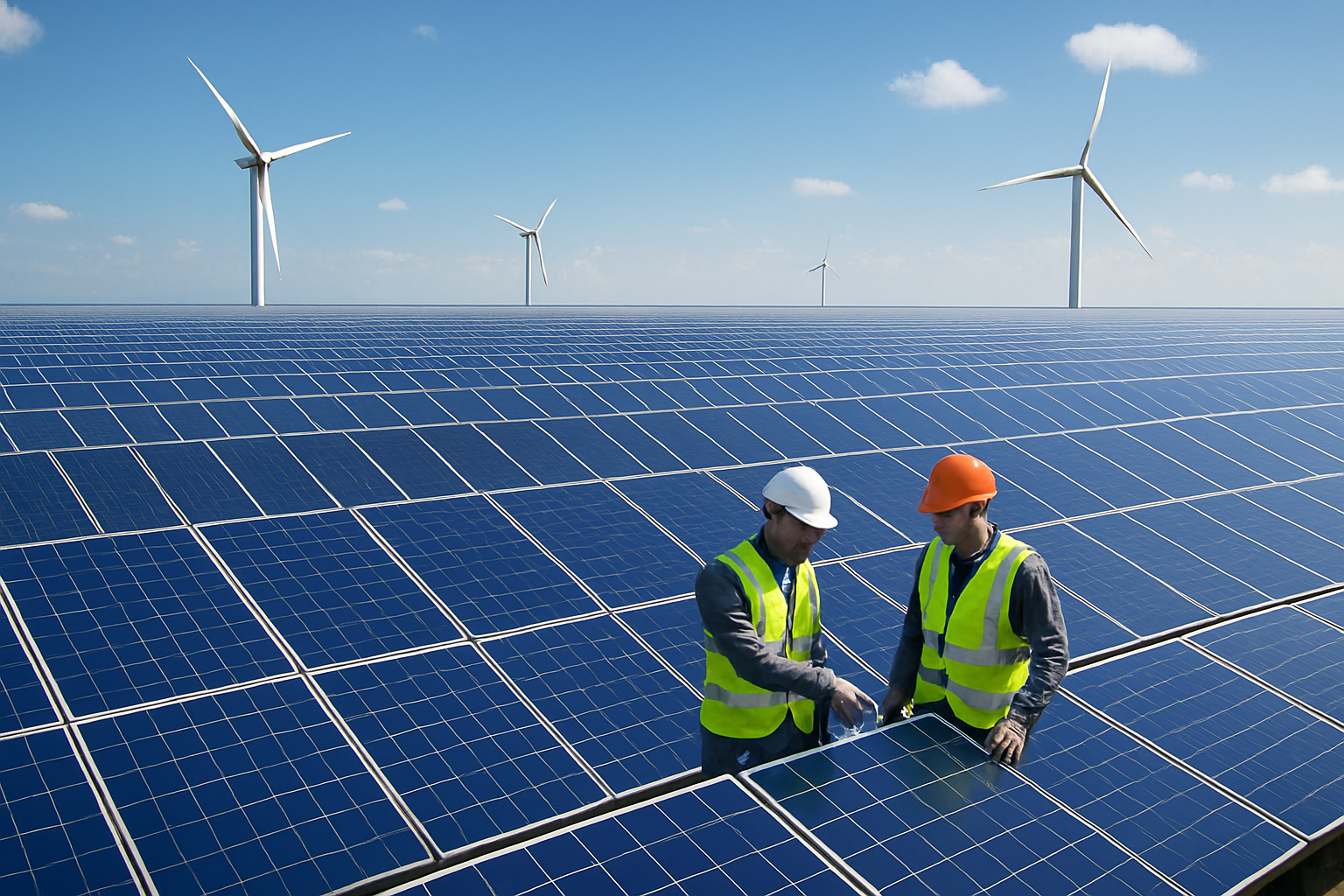
A coordinated global surge in renewable energy projects is reshaping the energy landscape as nations from Algeria to Kazakhstan accelerate clean energy initiatives amid mounting climate pressures and supply chain challenges.
The latest developments span four continents, with major announcements from Algeria, China, Guyana, and Jordan demonstrating unprecedented international momentum toward renewable energy independence during what experts describe as a critical period for climate action.
Kazakhstan's Gigawatt Wind Milestone
Kazakhstan achieved a historic breakthrough with the groundbreaking of its first gigawatt-scale wind power project, marking a significant milestone for Central Asian renewable energy development. The 1-gigawatt Mirny wind power project, featuring Shanghai Electric Group as lead contractor, represents one of the largest renewable energy investments in the region.
The ambitious project is expected to generate approximately 4 billion kilowatt-hours of electricity annually while reducing carbon dioxide emissions by more than 3.2 million tonnes each year. Construction is scheduled for 31 months with commissioning planned for the fourth quarter of 2028.
"This project demonstrates Kazakhstan's commitment to diversifying our energy portfolio while positioning the country as a regional leader in clean energy development,"
— Industry Analysis, Central Asian Energy Markets
The collaboration involves Chinese, Kazakh, and French companies, highlighting the international cooperation driving large-scale renewable projects. Shanghai Electric Group's involvement provides core equipment and integrated solutions, demonstrating the global supply chain supporting renewable energy expansion.
Guyana's Solar Revolution
Guyana is targeting 5,000 households in the first phase of its ambitious grid-connected solar programme as part of the country's comprehensive low-carbon energy transition strategy. Dr. Mahender Sharma, CEO of the Guyana Energy Agency (GEA), outlined the initiative's scope during recent policy discussions.
The programme represents a fundamental shift in Guyana's energy strategy, leveraging the country's abundant solar resources while building domestic capacity for renewable energy installation and maintenance. The initiative includes technical training programmes and community engagement efforts to ensure sustainable implementation.
Guyana's approach emphasizes grid integration rather than standalone systems, allowing households to contribute excess solar generation to the national electricity network while maintaining reliable power supply. This strategy positions the country as a regional model for Caribbean renewable energy development.
Algeria's Infrastructure Modernization
Algeria's state electricity company Sonelgaz announced comprehensive plans to enhance production capacity ahead of the summer peak demand period, including significant investments in renewable energy infrastructure. The initiative was confirmed during a national meeting of energy sector managers in Algiers.
The comprehensive plan focuses on anticipating electricity demand while implementing investment programmes to ensure service continuity and quality improvements across the national territory. Algeria's approach integrates traditional grid management with renewable energy sources to meet growing electricity consumption.
The programme represents Algeria's strategic positioning as a North African energy hub, combining domestic energy security with potential export capabilities to European markets through existing and planned interconnections.
Jordan's Solar-Powered Innovation
Jordan launched an innovative solar-powered lighting project for the Amman Development Corridor, demonstrating creative applications of renewable energy in urban infrastructure. The project covers 42 kilometers with high-efficiency LED lighting units powered entirely by solar energy.
The 1.4 million dinar investment prioritizes critical intersections, entrances, and high-traffic areas to ensure road safety while showcasing solar technology's practical applications. The initiative represents Jordan's commitment to integrating renewable energy into essential public infrastructure.
Jordan's Ministry of Public Works and Housing emphasized the project's role in reducing operational costs while providing reliable lighting for one of the country's most important transportation corridors.
Global Supply Chain Challenges
Despite accelerating deployment, renewable energy expansion faces significant supply chain vulnerabilities. China currently controls approximately 60% of global production and 90% of refining capacity for critical materials including lithium, cobalt, and rare earth elements essential for solar panels, wind turbines, and battery systems.
The US-EU-Japan Critical Minerals Partnership, involving 55 countries and seven African alternative suppliers, represents a coordinated response to address strategic dependencies. However, developing alternative supply chains requires substantial infrastructure investment and years of development time.
Technology Integration Advances
Modern renewable energy projects increasingly incorporate sophisticated digital monitoring, automated control systems, and artificial intelligence-powered optimization. These technological advances enable real-time performance monitoring, predictive maintenance, and grid integration capabilities that maximize renewable energy efficiency.
Smart grid management systems allow utilities to balance variable renewable generation with electricity demand, while battery storage systems provide grid stability during peak demand periods. The integration of these technologies has become essential for large-scale renewable deployment.
Climate Urgency Drives Acceleration
The renewable energy surge occurs during a period of unprecedented climate urgency, with January 2026 marking the 18th consecutive month of global temperatures exceeding 1.5°C above pre-industrial levels. This sustained warming demonstrates that human-induced climate change is overriding natural variability, creating additional pressure for rapid decarbonization.
The International Energy Agency emphasizes that meeting climate targets requires tripling renewable energy capacity by 2030, making current deployment rates insufficient despite recent acceleration. Countries are increasingly viewing renewable energy as essential infrastructure rather than optional environmental policy.
Economic Multiplier Effects
Renewable energy investments create substantial economic multiplier effects, with digital infrastructure generating $3-4 in economic returns per dollar invested over a decade. The sector creates employment across construction, manufacturing, and operational phases while reducing long-term energy costs and enhancing energy independence.
Countries implementing comprehensive renewable strategies demonstrate greater economic resilience and attract sustainable investment across multiple sectors, including green technology manufacturing, eco-tourism, and environmental services.
International Cooperation Models
Successful renewable energy deployment increasingly relies on sophisticated international cooperation frameworks combining technology transfer, financing mechanisms, and knowledge sharing. The diversity of approaches—from China's Belt and Road Initiative to multilateral development bank financing—provides multiple pathways for countries to access renewable technology and investment.
South-South cooperation is expanding, with developing nations emerging as renewable energy solution providers rather than aid recipients, leveraging local renewable resources and innovative governance approaches.
Future Trajectory
The coordinated renewable energy expansion across Algeria, China, Guyana, and Jordan provides templates for scaling clean energy globally. Success depends on maintaining political commitment across electoral cycles, securing adequate financing, managing supply chain vulnerabilities, and fostering international cooperation.
As the environmental action window narrows and ecological systems approach critical thresholds, the tools, knowledge, and cooperation frameworks demonstrated by these initiatives offer essential momentum for the comprehensive energy transformation required during this decisive climate action decade.