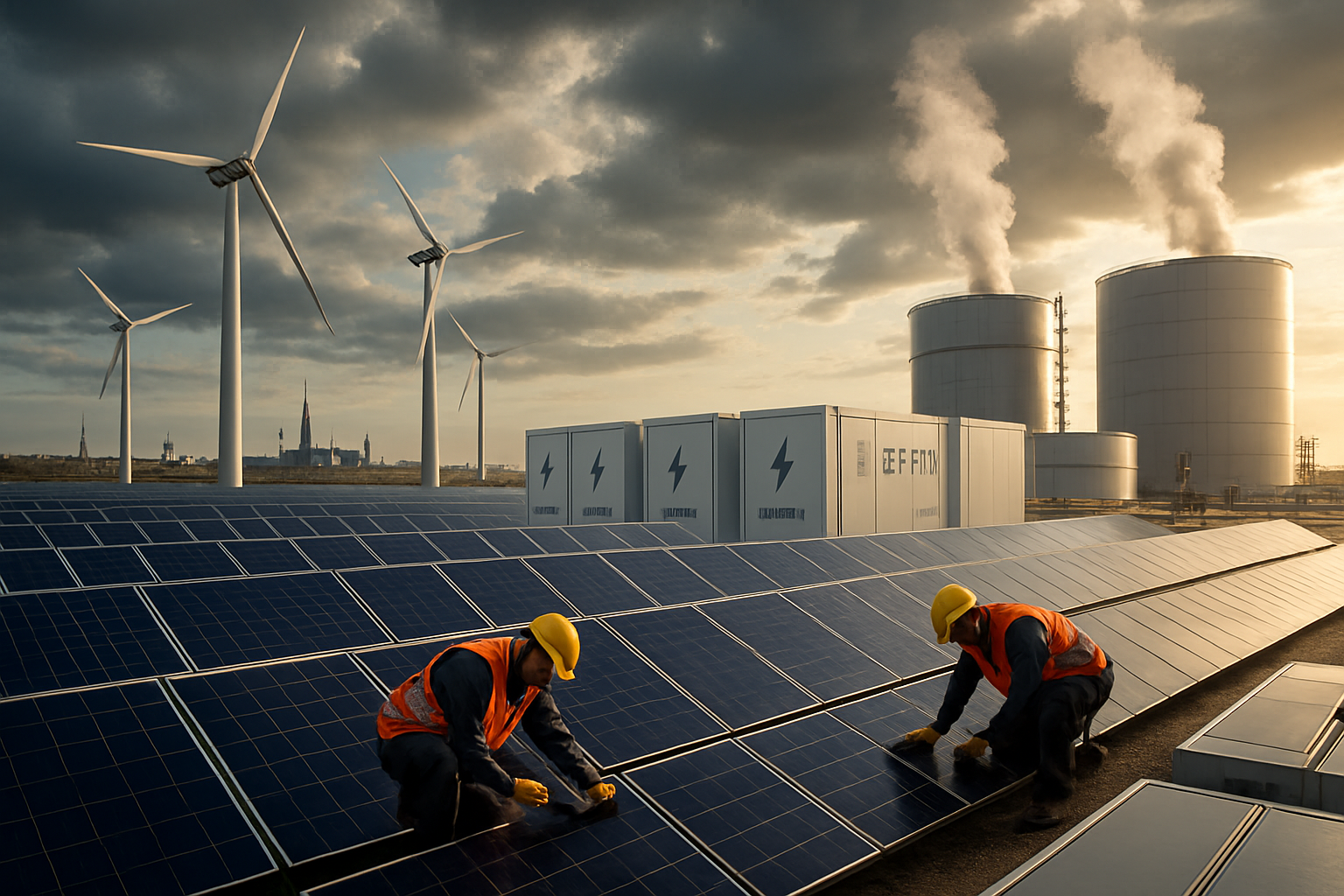
A wave of renewable energy infrastructure projects spanning three continents demonstrates the accelerating global transition to clean energy, as countries from Central America to Southeast Asia implement major solar, electric vehicle charging, and energy policy initiatives despite ongoing supply chain challenges and material shortages.
The simultaneous launch of these projects across Guatemala, Indonesia, and the Bahamas reflects a coordinated international effort to build resilient clean energy systems, occurring amid unprecedented global demand for renewable infrastructure and critical materials needed for the green transition.
Guatemala's Solar Revolution Takes Shape
Guatemala marked a significant milestone in its energy transition with the inauguration of the Planta Solar Fénix 2, a strategic collaboration between IELOU Energy and Shift Energy, part of CMI's energy division and Castillo Hermanos' energy subsidiary. The $3 million project represents a breakthrough in distributed generation and strengthens the country's national electrical grid resilience.
The facility was developed through a private tender process that consolidated a modern collaboration model focused on sustainable energy infrastructure for Guatemala. This approach demonstrates how public-private partnerships can effectively mobilize capital for renewable energy development in developing economies.
"This alliance combines technological innovation, environmental sustainability, and local development,"
— Project stakeholders, emphasizing the comprehensive approach to Guatemala's energy transition
The Planta Solar Fénix 2 project strengthens Guatemala's position in Central America's growing renewable energy sector, providing a model for distributed solar generation that other regional nations are closely monitoring. The investment comes as Latin American countries accelerate renewable energy deployment to meet growing electricity demands while reducing carbon emissions.
Indonesia's Electric Vehicle Infrastructure Expansion
Indonesia's state electricity company PT PLN (Persero) reaffirmed its commitment to strengthening the national electric vehicle ecosystem through active participation in the Indonesia International Motor Show (IIMS) 2026. The initiative aligns with the country's rapid electric vehicle adoption growth and represents a critical infrastructure investment for Southeast Asia's largest economy.
PLN's strategy focuses on building a comprehensive charging network with 5,000 electric vehicle charging stations (SPKLU) distributed nationally. This massive infrastructure deployment addresses one of the primary barriers to electric vehicle adoption: range anxiety and charging accessibility in Indonesia's vast archipelago geography.
The timing coincides with Indonesia's broader transportation electrification goals and its position as a major nickel producer, providing critical materials for electric vehicle batteries. The country's dual role as both a raw material supplier and infrastructure developer positions it strategically in the global electric vehicle supply chain.
Bahamas Unveils Comprehensive Energy Policy Framework
The Bahamas Energy Minister tabled new comprehensive energy policy legislation, marking a significant policy milestone for the Caribbean nation's energy independence goals. The initiative represents years of planning and consultation to modernize the country's energy sector and reduce dependence on imported fossil fuels.
The policy framework addresses multiple dimensions of energy security, including renewable energy integration, grid modernization, and regulatory updates to accommodate new technologies. For small island developing states like the Bahamas, energy security directly impacts economic resilience and climate vulnerability.
The Caribbean region faces unique energy challenges, including high electricity costs, vulnerability to fuel supply disruptions, and increasing climate change impacts. The Bahamas' comprehensive policy approach provides a potential model for other island nations pursuing energy independence.
Global Context and Supply Chain Challenges
These renewable energy developments occur against a backdrop of significant global supply chain challenges. European Union auditors have warned that climate goals are at serious risk due to critical raw materials shortages, with China controlling 60% of global production and 90% of refining capacity for lithium, cobalt, and rare earth elements essential for renewable energy infrastructure.
The materials crisis has prompted coordinated international responses, including the recent US-EU-Japan Critical Minerals Strategic Partnership announced in Washington D.C., involving 55 countries aimed at diversifying supply chains and reducing Chinese dependency. Japan's breakthrough in deep-sea rare earth mining at Minamitorishima, with concentrations 20 times higher than terrestrial mines, offers potential solutions to supply constraints.
Despite these challenges, countries continue accelerating renewable energy deployment. Recent achievements include Estonia opening continental Europe's largest battery storage facility serving 90,000 households, Austria achieving 88% renewable electricity production in 2024, and Romania's Greenvolt Group securing €58.5 million for wind farm development.
Regional Integration and Technology Transfer
The projects demonstrate increasing South-South cooperation and technology transfer in renewable energy development. Guatemala's distributed generation model, Indonesia's comprehensive charging network strategy, and the Bahamas' integrated policy approach reflect sophisticated understanding of local energy challenges and solutions.
These developments align with broader trends in renewable energy financing and deployment. Jordan recently unveiled a $650 million hydroelectric storage project, while India announced $6 billion in energy infrastructure investment including solar with battery storage systems. The Maldives targets 220 MW renewable energy capacity for complete energy independence.
Energy sector analysts note that developing countries are increasingly becoming innovation leaders in renewable energy deployment, often leapfrogging traditional energy infrastructure to implement cutting-edge clean energy systems directly.
Economic and Environmental Implications
The economic implications of these infrastructure investments extend beyond immediate job creation and energy cost reductions. Guatemala's solar project creates a model for distributed generation that can be replicated across Central America. Indonesia's charging network supports the country's automotive industry development and positions it as a regional electric vehicle hub.
Environmental benefits include reduced carbon emissions, improved air quality in urban areas, and decreased reliance on imported fossil fuels. For island nations like the Bahamas, renewable energy development also enhances climate resilience by reducing vulnerability to fuel supply disruptions during extreme weather events.
The projects occur as global energy markets face significant volatility, with natural gas prices surging 24% in Europe and 78% in the United States recently. Oil prices have reached $69.33 per barrel for Brent crude, highlighting the economic incentives for renewable energy transition.
Future Outlook and Scaling Challenges
The success of these diverse renewable energy initiatives will depend on sustained political commitment, continued technological innovation, and coordinated international support for supply chain diversification. Each project addresses specific local energy challenges while contributing to global climate goals.
Implementation challenges include maintaining skilled technical workforces, ensuring adequate financing for scaling, and managing integration with existing electricity grids. The projects also highlight the importance of regulatory frameworks that can adapt to rapidly evolving clean energy technologies.
As countries worldwide accelerate renewable energy deployment to meet 2030 climate targets, the experiences from Guatemala, Indonesia, and the Bahamas provide valuable lessons for sustainable energy transition in diverse economic and geographic contexts. Their success could trigger additional international investment, creating positive development cycles for clean energy infrastructure globally.