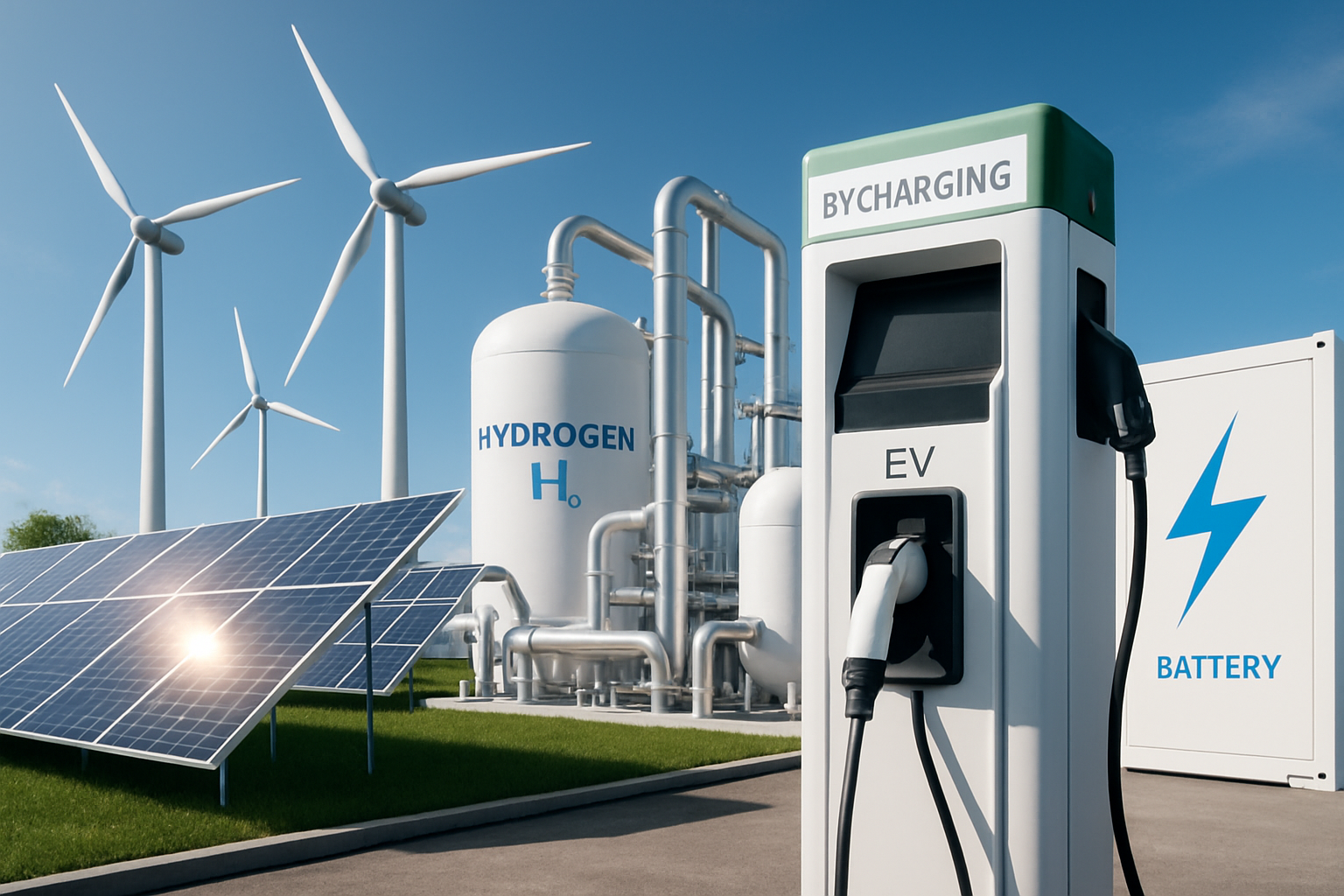
Major renewable energy initiatives launched simultaneously across multiple continents this week signal an unprecedented global acceleration in clean energy deployment, driven by climate urgency and strategic concerns over critical materials supply chains dominated by China.
The Lagos State Government in Nigeria announced ambitious plans to deploy scalable clean energy solutions designed to boost economic growth, support small and medium enterprises, and enhance climate resilience across Africa's most populous city. The initiative represents a significant shift toward sustainable energy infrastructure in West Africa's economic powerhouse.
Simultaneously, Romania witnessed major progress in energy infrastructure as Mass Global Energy Rom, a subsidiary of Iraq's Mass Group Holding, confirmed that electricity production at the Mintia natural gas power plant will begin in September 2026. The facility boasts a capacity of 1.7 gigawatts and forms part of a broader energy transformation strategy.
Romania's Billion-Dollar Energy Storage Revolution
Romanian Energy Minister representatives announced plans for a groundbreaking Battery Energy Storage System (BESS) project worth approximately €1 billion. The massive undertaking will provide a total capacity of 2,500 megawatts distributed across four to five strategic locations, including the Mintia facility.
"This project aims to balance the energy system and provide energy during peak demand periods," Mass Global Energy Rom representatives explained during a meeting with Prime Minister Ilie Bolojan on February 5.
The development comes as European Union auditors warn that climate goals face serious threats due to critical raw materials shortages. China currently controls 60% of global production and 90% of global refining capacity for lithium, cobalt, and rare earth elements essential for renewable energy infrastructure.
Global Context of Energy Transformation
These developments unfold against the backdrop of January 2026 being recorded as the hottest month in global history, with 18 of the past 19 months exceeding 1.5°C above pre-industrial levels. The unprecedented warming continues despite La Niña conditions that should provide natural cooling, demonstrating that human-caused warming now overrides natural climate variability.
Historical context from recent months reveals a coordinated international response to energy security challenges. The Turkey-Saudi Arabia renewable energy agreement signed in February established a $2 billion framework for 5,000 megawatts of solar power capacity across central Turkey. Meanwhile, Austria achieved remarkable success with 88% renewable electricity production in 2024, while Estonia opened continental Europe's largest battery storage facility capable of serving 90,000 households.
"The convergence of climate urgency and supply chain vulnerabilities is driving nations to accelerate renewable energy deployment at unprecedented speed," noted energy analysts tracking global developments.
— International Energy Analysis, February 2026
Strategic Response to Chinese Dominance
The renewable energy surge occurs amid growing international concern over China's control of critical materials supply chains. Recent memory of global energy initiatives shows a pattern of Western nations seeking strategic autonomy through diversified partnerships and domestic production capabilities.
The US-EU-Japan Critical Minerals Strategic Partnership, announced at a Washington D.C. summit with 55 countries participating, represents a fundamental shift from market-driven to security-based supply chain coordination. The alliance aims to challenge China's monopolistic position through minimum pricing mechanisms, alternative supply chains, and strategic stockpiling coordination.
Japan's breakthrough in deep-sea rare earth mining at Minamitorishima, achieving concentrations 20 times higher than terrestrial mines at 6,000-meter depths, strengthens alliance technical capabilities. This technological advancement could provide alternatives to Chinese-controlled materials essential for renewable energy infrastructure.
African Energy Leadership Emerges
Nigeria's Lagos clean energy initiative represents broader African leadership in renewable energy development. The continent has witnessed massive investment surges, including Ivory Coast's 732.7 billion CFA francs ($1.2 billion) in gold mining projects that will support renewable energy infrastructure, and South Africa's R325 million commitment to the Zandkopsdrift rare earth elements project.
The February 4-5 Critical Minerals Ministerial in Washington featured seven African countries—Angola, Democratic Republic of Congo, Guinea, Kenya, Morocco, Sierra Leone, and Zambia—as key partners in developing alternative supply chains. These nations possess significant untapped reserves of lithium, cobalt, and rare earth elements essential for global renewable energy deployment.
Climate Adaptation and Energy Resilience
The energy transformation addresses both climate change and extreme weather vulnerabilities. Recent Arctic weather systems caused Estonia to set electricity consumption records at 1,723 megawatts amid the coldest winter in 25 years, while Cuba suffered massive blackouts affecting 3.4 million people when oil reserves dwindled to 15-20 days supply.
Romania's battery storage systems and Nigeria's distributed clean energy networks represent resilience-building approaches that can withstand extreme weather events and supply disruptions. These projects integrate technological innovation with climate adaptation strategies, ensuring energy security during increasingly volatile weather patterns.
Economic and Environmental Integration
The renewable energy surge demonstrates sophisticated integration of economic development with environmental protection. Lagos State's initiative specifically targets small and medium enterprises, recognizing that clean energy deployment must support economic growth to achieve sustainable adoption.
Romania's approach combines traditional natural gas infrastructure with cutting-edge battery storage technology, providing a transition pathway that maintains energy security while building renewable capacity. This balanced strategy addresses immediate energy needs while establishing long-term sustainability frameworks.
Technology and Innovation Drivers
Advanced technologies enable the renewable energy acceleration. Romania's BESS project incorporates sophisticated grid balancing capabilities that manage intermittent renewable sources. Smart management systems, advanced treatment technologies, and efficiency optimization respond to changing availability patterns caused by climate change.
The integration of energy storage with renewable generation addresses the fundamental challenge of intermittency that has historically limited clean energy deployment. Battery systems provide grid stability solutions essential for large-scale renewable integration.
Future Implications and Challenges
The global renewable energy surge faces implementation challenges requiring sustained political commitment, massive investment, and years of development for new infrastructure. Environmental regulations create cost disadvantages compared to existing systems, while competition with established fossil fuel infrastructure demands comprehensive policy support.
Success depends on enhanced international cooperation, accelerated technology transfer, and innovative financing mechanisms that recognize ecosystem service value. The action window for limiting global warming continues to narrow, requiring rapid scaling of renewable energy initiatives across diverse economic and geographic contexts.
Water infrastructure increasingly recognized as both crisis and investment opportunity, with global investors viewing utilities as defensive assets amid population growth, urbanization, and climate pressures. Technology integration includes smart management systems and efficiency optimization responding to changing environmental conditions.
Strategic Significance for Global Energy Security
The February 2026 renewable energy developments represent a fundamental shift in global energy geopolitics. Nations are moving from reactive crisis management to proactive ecosystem service management that emphasizes community participation, technological integration, and economic viability.
Marine conservation gains momentum with international cooperation examples, while environmental protection evolves toward holistic approaches addressing climate change and economic development simultaneously. The coordination between Nigerian urban energy solutions and Romanian grid-scale storage demonstrates diverse pathways toward energy independence.
As extreme weather events increase frequency and intensity, renewable energy infrastructure provides adaptive capacity essential for maintaining economic stability and social resilience. The integration of energy security with climate adaptation creates comprehensive frameworks for sustainable development in an era of accelerating environmental change.
The renewable energy surge of February 2026 establishes momentum for continued international cooperation in addressing the twin challenges of climate change and supply chain vulnerabilities, offering hope for sustainable energy futures amid mounting global environmental pressures.