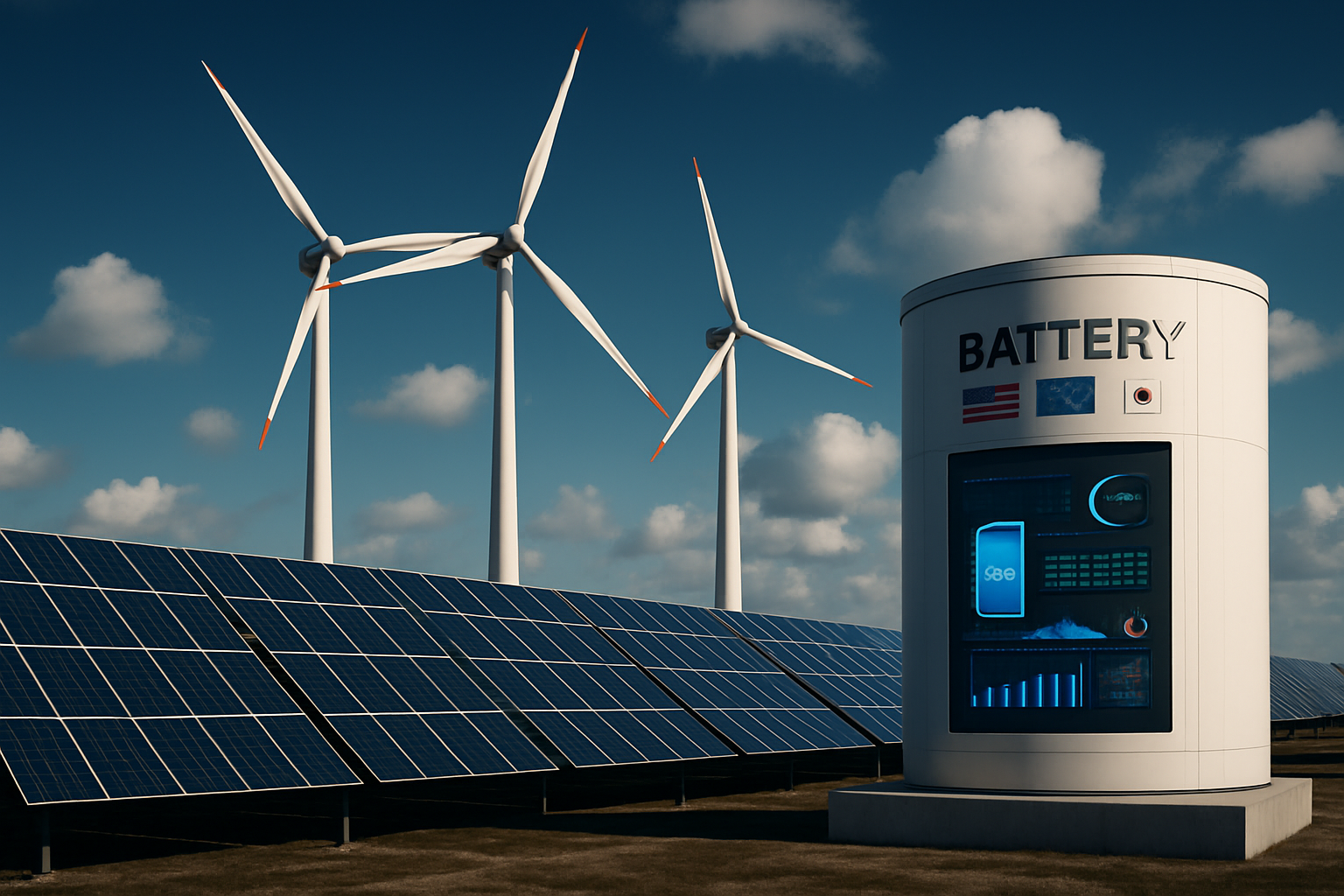
A coordinated surge in renewable energy projects and sustainability initiatives across four nations demonstrates unprecedented global momentum in clean energy deployment, as Austria advances AI-powered energy optimization, Iceland announces massive renewable investments, Singapore commits $630 million to emissions reduction, and Zimbabwe plans a major solar installation.
The developments, emerging simultaneously across different continents, signal a decisive shift in global energy policy as nations accelerate their transition away from fossil fuels amid mounting climate pressures and supply chain vulnerabilities.
Austria Pioneers AI-Driven Energy Efficiency
Austrian technology company AT&S has positioned itself at the forefront of the International Energy Saving Day initiative, showcasing how artificial intelligence can revolutionize production processes for enhanced sustainability. The high-tech company demonstrates innovative approaches in research and development that make manufacturing processes more efficient and sustainable through AI integration.
The initiative represents a broader Austrian commitment to combining cutting-edge technology with environmental stewardship, building on the country's position as one of eleven climate pioneer cities implementing locally-adapted solutions that exceed EU requirements.
Iceland Unveils Massive Renewable Investment Program
Landsvirkjun, Iceland's national power company, announced an unprecedented ISK 190 billion ($1.4 billion) investment program spanning five years, marking the largest renewable energy commitment in the nation's history. The ambitious plan was unveiled during the company's annual meeting in Harpa, where Chairman Brynja Baldursdóttir outlined comprehensive expansion across multiple renewable technologies.
"We are going to build Hvammsvirkjunar power plant, which is a hydropower station, we are going to expand Sigalda [power plant], we are going to build Vaðalda which is the first wind power plant in Iceland and the first wind turbines will be commissioned this autumn, and then we are expanding [geothermal facility] Þeistareykir."
— Brynja Baldursdóttir, Chairman of Landsvirkjun
The investment program demonstrates Iceland's strategy of leveraging its unique geological advantages to become a renewable energy superpower. Despite the massive infrastructure investments, the company maintains its commitment to shareholder returns, planning dividends of ISK 15-20 billion annually.
Singapore's Carbon Reduction Commitment
Singapore has pledged SG$800 million (US$630 million) over the next five years to support comprehensive carbon dioxide emissions reduction efforts, reinforcing the city-state's long-term climate ambitions. The substantial financial commitment positions Singapore as a regional leader in climate action within Southeast Asia.
The investment plan comes at a critical time as the region faces mounting pressure to accelerate decarbonization efforts. Singapore's approach emphasizes technological solutions and international cooperation, building on its strategic position as a financial and technological hub for sustainable development in Asia.
Zimbabwe Advances Solar Energy Development
Zimbabwe's renewable energy sector received a significant boost as Mosi-Oa-Tunya Energy Centre (Private) Limited applied for licensing to construct and operate a 25-megawatt solar plant. The project represents another milestone in Zimbabwe's ongoing renewable energy drive, demonstrating the country's commitment to diversifying its energy portfolio.
The solar installation aligns with Zimbabwe's broader strategy of leveraging abundant solar resources to address energy security challenges while contributing to global climate goals. The project reflects growing private sector confidence in Zimbabwe's renewable energy market and regulatory framework.
Global Context and Supply Chain Considerations
These developments occur against a backdrop of unprecedented global climate urgency, with January 2026 marking the 19th consecutive month of temperatures exceeding 1.5°C above pre-industrial levels. The sustained warming demonstrates that human-induced climate change is now overriding natural climate variability, including La Niña cooling effects.
However, the renewable energy expansion faces significant supply chain challenges. China's dominance in critical materials—controlling 60% of production and 90% of refining capacity for lithium, cobalt, and rare earth elements—poses strategic vulnerabilities for global clean energy deployment. This has prompted the US-EU-Japan Critical Minerals Partnership, involving 55 countries and seven African alternative suppliers, to diversify supply chains.
Technology Integration and Innovation
The projects demonstrate sophisticated integration of cutting-edge technology with traditional energy systems. Austria's AI-powered optimization represents the next generation of smart energy management, while Iceland's diversified renewable portfolio showcases how nations can leverage natural advantages through advanced engineering.
Digital monitoring, automated control systems, and predictive maintenance are becoming standard features across these initiatives, enabling real-time optimization and improved reliability. This technological sophistication is crucial for managing the intermittency challenges associated with renewable energy sources.
Economic Development and Job Creation
The renewable energy surge is generating significant economic multiplier effects. Iceland's massive investment program will create thousands of specialized jobs across construction, maintenance, and manufacturing sectors. Austria's AI-driven approach positions the country as a technology leader in energy efficiency solutions with substantial export potential.
Singapore's commitment demonstrates how environmental protection can function as an economic development engine rather than a regulatory burden, attracting sustainable investment and positioning the nation as a clean technology hub. Zimbabwe's private sector engagement shows growing confidence in renewable energy markets across emerging economies.
International Cooperation and Knowledge Sharing
The simultaneous advancement of these projects reflects increasing international cooperation in clean energy deployment. South-South cooperation is expanding, with developing nations emerging as environmental solution providers rather than aid recipients.
Technology transfer and financing mechanisms are evolving to support rapid scaling of renewable energy infrastructure. The diversity of approaches—from Austria's AI integration to Zimbabwe's solar development—provides resilience against single-solution dependencies while offering multiple pathways for climate adaptation.
Strategic Implications and Future Outlook
The March 2026 renewable energy developments represent a critical juncture in global climate action. The window for effective environmental intervention is narrowing as ecological systems approach critical thresholds that could trigger irreversible changes.
Success in these initiatives depends on sustained international cooperation, enhanced coordination across sectors and scales, and continued financial commitments recognizing environmental protection as essential infrastructure for human prosperity and planetary sustainability.
The tools and knowledge exist for comprehensive environmental protection, but implementation requires unprecedented speed and coordination during this critical climate action decade. These four nations' simultaneous advancement of renewable energy projects provides a template for the kind of coordinated global response necessary to address the climate emergency while building sustainable economic prosperity.