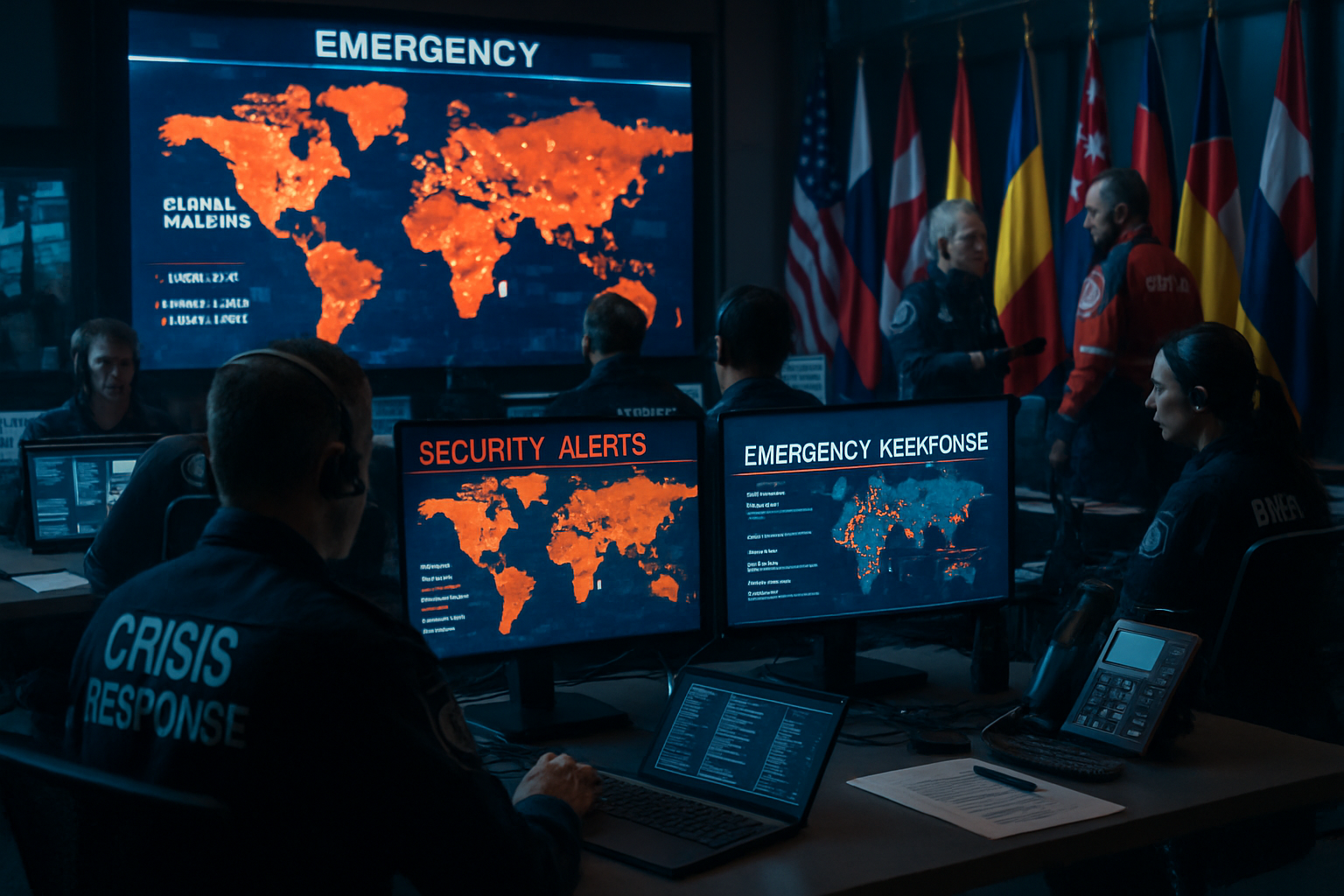
A convergence of security incidents and emergency response challenges across multiple continents has exposed critical vulnerabilities in global safety systems, with Afghanistan experiencing deadly explosions while Swedish authorities manage simultaneous chemical alerts and school threats.
The latest incidents, spanning from the streets of Mazar-i-Sharif to the cities of northern Sweden, demonstrate how quickly security situations can escalate beyond traditional response capabilities, challenging emergency systems designed for isolated rather than coordinated threats.
Afghanistan Security Deterioration
A blast rocked Mazar-i-Sharif's eastern district Tuesday evening, with local sources reporting a loud explosion in the "Masood Road" area near the Rawza-e-Mubarak shrine. The incident, occurring amid rising regional security tensions, represents the latest in a series of security challenges facing the war-torn nation.
While details on casualties and damage remain unconfirmed, the explosion's proximity to a significant religious site underscores the continuing threat to civilian infrastructure and public safety in Afghanistan's northern regions. The incident adds to mounting concerns about deteriorating security conditions affecting millions of Afghan civilians.
Swedish Emergency Response Crisis
Sweden faced multiple simultaneous emergencies that tested the country's crisis management capabilities. In Luleå, port authorities shut down operations after an uncalibrated gas detector triggered alarms for hydrogen cyanide, though subsequent testing with calibrated equipment found no contamination.
"We take the safe approach rather than risk anything," said Stina Sundén Jansson, communications chief at Luleå port, as authorities maintained closure until noon the following day despite finding no actual threat.
— Luleå Port Authority
Simultaneously, authorities in Borlänge made the unprecedented decision to close 16 schools and preschools following what officials described as a "potential threat of violence" received overnight. The threat prompted the municipality's crisis management team to convene emergency sessions.
Municipal Director Jörgen Olsson explained the proactive approach: "We have assessed the information and decided to act preventively as a precautionary measure." The closures affected thousands of students and highlighted the delicate balance between maintaining normal operations and ensuring public safety.
Systemic Emergency Response Challenges
These incidents illustrate broader challenges facing emergency response systems worldwide. The Swedish cases demonstrate how false alarms and unverified threats can trigger major operational disruptions, while the Afghanistan explosion shows the ongoing reality of actual security threats in conflict zones.
Memory of past security crises informs current responses. Earlier this year, Cyprus implemented comprehensive emergency preparedness measures including SMS alert systems and civil defense assessments following regional tensions. Similarly, multiple countries have experienced educational safety challenges, from school threats to infrastructure vulnerabilities.
International Coordination Gaps
The pattern of simultaneous emergencies across different nations reveals critical gaps in international coordination mechanisms. While individual countries maintain sophisticated emergency response capabilities, the global nature of modern security challenges requires enhanced cooperation frameworks.
Recent aviation safety crises, transportation emergencies, and security incidents have demonstrated that traditional mutual aid assumptions—where some regions assist others during emergencies—may be inadequate when multiple regions face simultaneous threats.
Technology and Human Factors
The Swedish chemical alert highlighted both the benefits and limitations of modern safety technology. While advanced detection systems provide early warning capabilities, they also require proper calibration and human interpretation to avoid unnecessary panic and operational disruption.
Emergency management experts emphasize that effective crisis response requires sophisticated integration of technological capabilities with human expertise and community engagement. Success depends on systems that can rapidly distinguish between genuine threats and false alarms while maintaining public confidence.
Prevention-First Approaches
Security analysts note that countries implementing comprehensive prevention-focused strategies consistently report superior outcomes compared to purely reactive approaches. These strategies integrate early warning systems, community engagement, and international cooperation to address threats before they escalate into crises.
The Swedish response to school threats exemplified this approach, with authorities choosing to close facilities based on assessment rather than waiting for incidents to occur. While disruptive, such measures demonstrate institutional commitment to civilian protection over operational convenience.
Future Implications
Current security challenges occur within a broader context of global transformation, including climate-related emergencies, technological disruption, and evolving threat landscapes. The convergence of traditional security concerns with modern vulnerabilities requires fundamental adaptation of emergency response systems.
Emergency management professionals emphasize that building resilient security infrastructure requires sustained political commitment, adequate resources, and international cooperation frameworks designed for contemporary rather than historical threat patterns.
Path Forward
The incidents in Afghanistan and Sweden, while geographically distant and contextually different, share common elements that inform broader security policy. Both demonstrate the critical importance of rapid assessment capabilities, clear communication protocols, and flexible response mechanisms.
Success in managing contemporary security challenges requires balancing proactive prevention with effective response, technological sophistication with human judgment, and national capabilities with international cooperation. The coming period will test whether democratic institutions can adapt quickly enough to meet evolving threats while preserving the values and freedoms they seek to protect.
As global security environments become increasingly complex and interconnected, the effectiveness of emergency response systems in protecting civilian populations will depend on their ability to learn from each incident and continuously improve their capabilities for rapid, coordinated, and effective action.