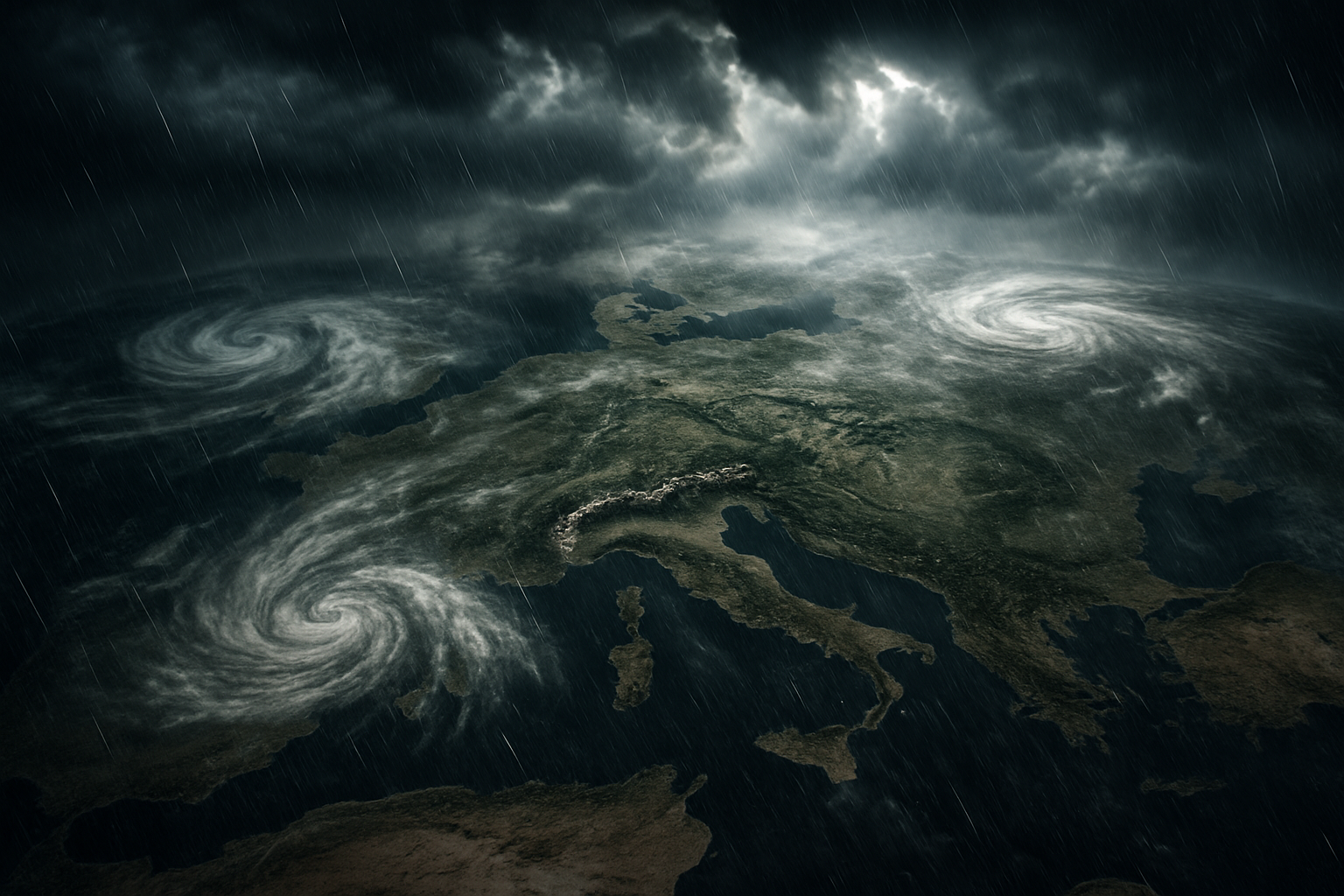
Multiple countries across Europe, Asia, and Africa are battling severe weather conditions simultaneously, with meteorological services issuing unprecedented warnings for storms, floods, and extreme weather events during what marks the 23rd consecutive month of global temperatures exceeding 1.5°C above pre-industrial levels.
Mediterranean Weather Anomalies
Cyprus faces an extreme dust episode with particle concentrations exceeding 200 μg/m³, described by Meteorological Director Philippos Tymvios as "considered extreme" with once-per-decade strength. The dust cloud has blanketed areas including Kaimakli in Nicosia, creating apocalyptic orange skies and forcing Larnaca Municipality to suspend outdoor work activities due to health hazards.
The dust storm has significantly reduced visibility across the island, while authorities have issued health warnings for residents with respiratory conditions. The phenomenon represents part of a broader pattern of atmospheric instability affecting the eastern Mediterranean region.
European Storm Systems Wreak Havoc
Storm Dave, the fourth named storm of 2026, continues its destructive path across Northern Europe, unleashing hurricane-force winds up to 90 mph across Scotland, Northern Ireland, Wales, and northern England. The storm has caused widespread disruption during the Easter weekend, with Ireland's Met Éireann issuing yellow wind warnings for all counties.
Norwegian meteorological services report 8,000 households without power in southern regions, while authorities warn residents to avoid parks and wooded areas due to falling trees. Sweden's SMHI has issued warnings for heavy snowfall in Värmland, with meteorologist Hilda Westberg noting "low-pressure systems lining up," forcing traditional Easter egg hunts indoors due to rain, cold, and snow.
"The current conditions are just an introduction - the real storm is yet to come."
— Ibrahim Smajlović, Bosnia Herzegovina Federal Hydrometeorological Institute
North African Weather Emergencies
Algeria faces a dangerous triple threat with heavy rainfall exceeding 50mm in northern regions, winds surpassing 100 km/h, and dense snowfall above 1,100 meters in western and central mountains. The weather system is accompanied by dust storms creating respiratory hazards across multiple provinces including Blida, Boumerdès, Tizi Ouzou, and Béjaïa.
Civil protection teams have been conducting rescue operations to assist families trapped by the severe conditions, demonstrating the intensity of this weather system affecting North Africa's Mediterranean coast.
Nordic Countries Under Pressure
Sweden has experienced its warmest March on record, with the Swedish Meteorological and Hydrological Institute (SMHI) confirming unprecedented conditions. The unusual weather patterns have disrupted traditional seasonal activities and forced adaptation of Easter celebrations across Scandinavia.
Denmark faces unusual spring fire risks due to changing seasonal patterns, while authorities issue warnings about unexpected weather developments. The Nordic region's experience highlights how climate change manifests differently across small geographic areas, creating new challenges for emergency planning.
Infrastructure Under Strain
Emergency services across multiple continents are operating at or beyond capacity limits, with traditional mutual aid mechanisms proving inadequate for simultaneous multi-continental disasters. Transportation networks, power grids, and communication systems designed for historical climate patterns are repeatedly failing as extreme weather exceeds operational parameters.
The European Union's Civil Protection Mechanism has been repeatedly activated, with Sweden and Denmark receiving €246 million in assistance representing the largest coordinated European weather response on record. However, experts note this response is insufficient for the scale and simultaneity of current challenges.
Climate Science Context
The current weather crisis occurs during the 23rd consecutive month of global temperatures exceeding 1.5°C above pre-industrial levels, marking the longest sustained extreme warming period in recorded human history. January 2026 remains the hottest month ever recorded, with human-induced climate change completely overriding natural cooling mechanisms including La Niña effects.
The World Meteorological Organization indicates a 50-60% probability of El Niño development during July-September 2026, potentially driving unprecedented temperatures through a combination of baseline warming and natural cycle amplification. This "climate volatility paradox" enables sustained global warming while creating devastating regional extremes through disrupted atmospheric circulation and polar vortex patterns.
Economic and Social Impact
Agricultural sectors across affected regions face mounting losses as extreme weather destroys crops and disrupts supply chains during critical growing seasons. Tourism industries are experiencing extended cancellations and infrastructure damage during peak preparation periods, while transportation disruptions create cascading effects throughout global commerce.
Mental health services report increased demand for climate anxiety support and repeated trauma counseling, as families face the possibility of losing generational properties multiple times within a single decade. Recovery timelines have fundamentally shifted from weeks to months or years, representing a fundamental change in disaster response approaches.
Adaptation Imperative
Climate adaptation experts describe April 2026 as a watershed moment requiring a choice between reactive crisis management and transformative infrastructure adaptation. The concept of "building back better" has evolved from an optional enhancement to an essential survival strategy for communities facing permanent climate volatility.
Traditional seasonal patterns that have guided infrastructure design, agricultural planning, and emergency preparedness for centuries are no longer reliable frameworks. Current conditions provide a preview of routine circumstances expected in the 2030s without comprehensive climate adaptation investment.
International Cooperation Challenges
Environmental challenges transcend political boundaries as atmospheric systems and ocean currents transport climate effects globally, making unilateral adaptation insufficient. The simultaneity of disasters is testing cooperation mechanisms designed for stable regions assisting isolated emergencies, requiring unprecedented coordination and enhanced frameworks.
Traditional assumptions that some regions remain stable and available to assist others during emergencies are breaking down as multiple continents face simultaneous disasters. Success requires unprecedented international cooperation, enhanced multi-sector coordination, and financial commitments recognizing environmental protection as essential infrastructure.
Looking Forward
Additional weather systems are developing in the Atlantic and Pacific regions, with authorities maintaining high alert status globally. The persistence of current crisis conditions may establish a "new normal" of extreme weather frequency and intensity that permanently challenges traditional emergency response frameworks.
The climate action window continues to narrow as ecological systems approach critical thresholds that could trigger irreversible changes to global food security, climate stability, and human settlements. Tools, knowledge, and cooperation frameworks exist for comprehensive environmental protection, but success depends on unprecedented speed, coordination, and sustained international cooperation with political commitment to environmental protection as essential infrastructure for planetary sustainability.
The question facing humanity is whether we can organize and implement solutions rapidly enough to maintain planetary habitability during Earth's most environmentally challenging period in recorded history. The choices made in the coming months will be decisive for climate resilience strategies affecting generations, requiring a fundamental societal response to the permanent climate volatility era during this decisive climate action decade.