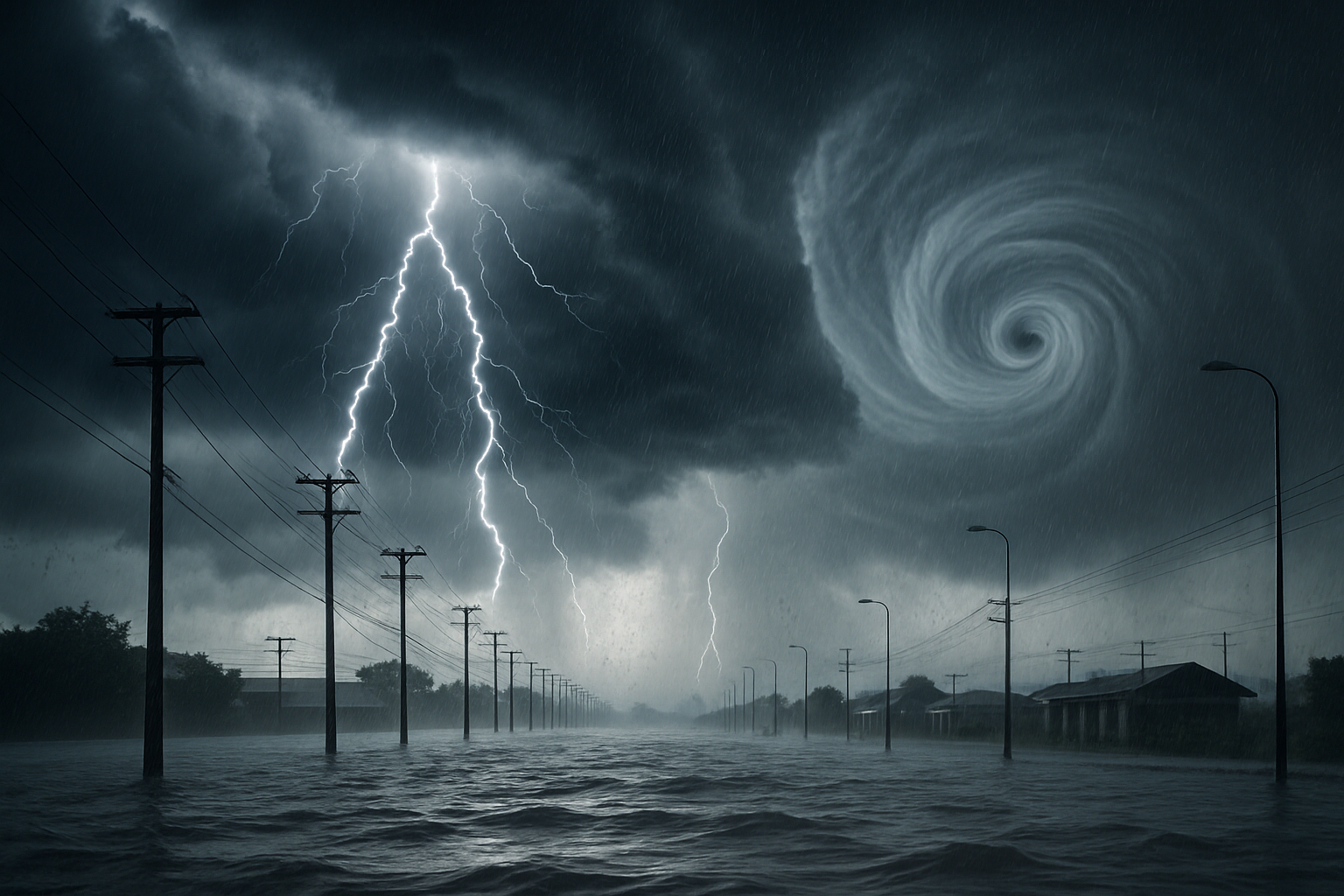
A devastating global weather crisis is unfolding across multiple continents as severe flooding, deadly tornadoes, and extreme temperature fluctuations simultaneously overwhelm emergency services in at least seven countries, marking the 20th consecutive month of record-breaking global temperatures.
From the deadly tornadoes sweeping across the central United States to catastrophic flooding in Kenya's capital, and from unprecedented Mediterranean snowfall in Cyprus to rising water levels in Latvia, the convergence of extreme weather events represents an alarming escalation in the global climate emergency that has been building since early 2026.
United States Tornado Devastation
The central United States has been battered by a series of deadly tornadoes that have claimed at least eight lives across Oklahoma and Michigan, according to reports from Al Jazeera. Authorities warn that more extreme weather lies ahead, with emergency services struggling to respond to the widespread destruction left in the wake of these powerful storm systems.
The tornado outbreak represents part of a broader pattern of severe weather that has characterized the early months of 2026, with traditional seasonal patterns becoming increasingly unpredictable and extreme events occurring with greater frequency and intensity.
Kenya Flooding Crisis Overwhelms Nairobi
In Kenya, the capital city of Nairobi has been brought to a standstill by severe flooding following heavy overnight rains. Motorists were stranded for hours as roads became impassable, highlighting the vulnerability of urban infrastructure to increasingly intense precipitation events.
The flooding in Nairobi demonstrates how rapidly extreme weather can transform from a meteorological event into a humanitarian crisis, particularly in densely populated urban areas where drainage systems struggle to cope with the volume and intensity of modern rainfall patterns.
Mediterranean Weather Anomalies
Cyprus has experienced unusual Mediterranean weather conditions, with snow forecasted for the Troodos mountains - a rare occurrence that reflects the broader disruption of traditional regional climate patterns. These anomalous conditions in the Mediterranean basin represent part of the global climate volatility that has characterized 2026.
Similarly, Algeria is bracing for significant weather challenges with predictions of substantial snowfall in mountainous regions above 1,500 meters in the western and central highlands. The country is also preparing for heavy rainfall warnings affecting 14 provinces, including areas around the capital region.
European Flooding and Temperature Extremes
Latvia's State Fire and Rescue Service has been forced to evacuate residents from flooded households in Ropaži municipality's Garkalne parish due to rapid snow melt. The flooding has been compounded by temperature fluctuations that have created dangerous conditions as winter ice gives way to spring warmth.
"Water levels in several Latvian rivers have risen by one to 2.6 meters since the start of the thaw period,"
— Latvian Environment, Geology and Meteorology Centre
The situation in Latvia reflects broader patterns across Northern Europe, where the interaction between accumulated winter precipitation and rapidly changing temperatures has created complex flooding scenarios that challenge traditional emergency response protocols.
Historical Climate Context
These simultaneous weather emergencies occur during what scientists now confirm as the 20th consecutive month of global temperatures exceeding 1.5°C above pre-industrial levels - the longest sustained extreme warming period in recorded human history. January 2026 was confirmed as the hottest month ever recorded, extending an unprecedented warming streak that has fundamentally altered global atmospheric patterns.
This sustained warming has created what climate scientists term a "climate volatility paradox" - where rising global temperatures enable both heat records and devastating regional extreme weather events through the disruption of traditional atmospheric circulation patterns, including polar vortex instability and altered ocean current systems.
Emergency Response Infrastructure Under Strain
The simultaneous nature of these global weather emergencies has exposed critical weaknesses in international disaster response systems. Traditional mutual aid mechanisms, designed to help regions recover from isolated extreme weather events, are being overwhelmed as multiple countries face disasters concurrently.
Emergency services across affected regions report operating at or beyond capacity limits, with infrastructure systems designed for historical climate patterns now functioning well beyond their intended parameters. Transportation networks, power grids, and communication systems are experiencing cascading failures as they struggle to cope with the intensity and frequency of current weather conditions.
Economic and Social Impact
The economic toll of these concurrent weather disasters is mounting rapidly, with agricultural sectors facing billions in losses from damaged crops and disrupted supply chains. Tourism industries are grappling with extended cancellations and infrastructure damage during what should be peak seasons for many regions.
Beyond the immediate economic impacts, communities are reporting profound social disruption, with families losing generational homes, small businesses facing extinction, and vulnerable populations requiring extended emergency support. Mental health services are experiencing increased demand as communities struggle to cope with the psychological trauma of repeated extreme weather events.
Scientific Warnings and Future Projections
Climate scientists emphasize that current conditions provide a preview of what may become routine circumstances in the 2030s without significant climate adaptation investments. The choice between reactive crisis management and transformative infrastructure adaptation is becoming increasingly urgent as extreme weather events test the limits of current response capabilities.
The World Meteorological Organization has indicated that La Niña cooling patterns are approaching their end, with a probable El Niño return in autumn 2026 that could drive global temperatures to unprecedented levels by combining baseline warming with natural climate amplification effects.
International Cooperation Under Pressure
The global nature of the current weather crisis is testing international cooperation frameworks that were designed for sequential rather than simultaneous disasters. The European Union's Civil Protection Mechanism has been repeatedly activated throughout 2026, with Sweden and Denmark providing €246 million in assistance - representing the largest coordinated European weather response on record.
However, traditional bilateral assistance mechanisms are proving inadequate when multiple continents face disasters simultaneously, highlighting the need for enhanced international cooperation frameworks specifically designed for the era of permanent climate volatility.
Adaptation Imperatives
The March 2026 weather crisis represents what many experts describe as a watershed moment for global climate preparedness. The choice between reactive crisis management and proactive ecosystem service management is becoming critical as the window for effective climate action continues to narrow.
Infrastructure systems require fundamental reassessment for what climate scientists are calling the "new normal" of extreme weather volatility, where traditional seasonal patterns no longer provide reliable foundations for planning. The concept of "building back better" with climate-resilient infrastructure is transitioning from an optional improvement strategy to an essential survival requirement for communities worldwide.
Technology and Traditional Knowledge Integration
Successful responses to current extreme weather conditions are increasingly requiring sophisticated integration of cutting-edge technology with traditional ecological knowledge and community-based management systems. Advanced meteorological monitoring, satellite imagery, and AI-enhanced forecasting are being combined with indigenous weather knowledge and local community preparedness strategies.
This technology-tradition synthesis represents a maturation in environmental protection strategies, recognizing that neither purely technological nor traditional approaches alone are sufficient for addressing the complexity and scale of current climate challenges.
Looking Forward: Critical Action Window
As additional weather systems continue to develop across the Atlantic and Pacific, authorities maintain high alert levels globally. The persistence of crisis conditions over weeks rather than days is establishing extreme weather frequency as a characteristic feature of the current climate system rather than an exceptional occurrence.
The tools, knowledge, and cooperation frameworks exist for comprehensive climate protection, but success depends on unprecedented speed and coordination through sustained international cooperation, enhanced political commitment, and recognition of environmental protection as essential infrastructure for human prosperity and planetary sustainability.
The global weather crisis of March 2026 may well prove decisive in determining whether human societies can develop the adaptive capacity necessary to protect essential environmental systems during this period of unprecedented planetary change. The choices made in response to current challenges will influence environmental protection approaches and global climate resilience for decades to come.