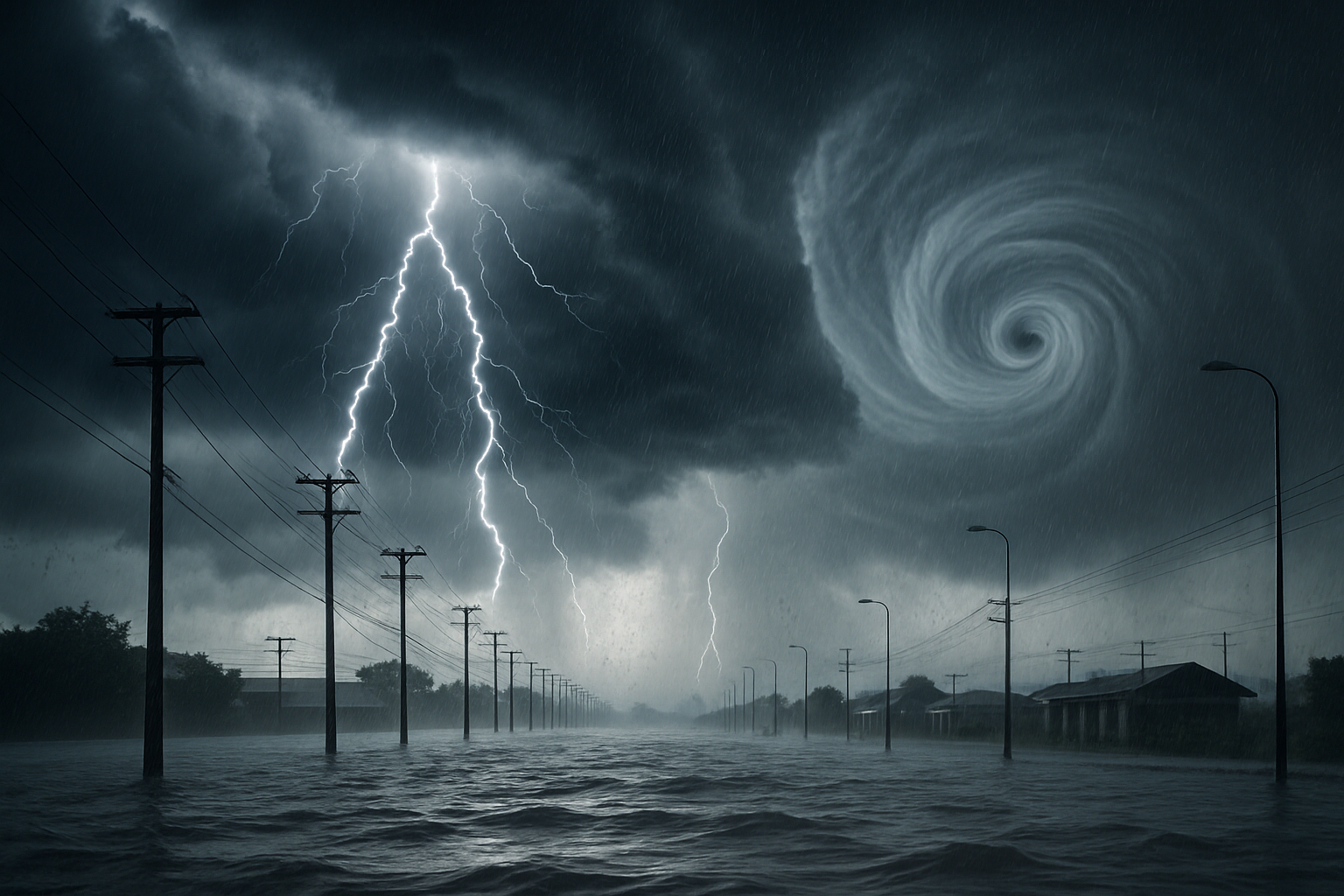
Seven countries across four continents face simultaneous extreme weather emergencies as Cyclone Narelle intensifies to Category 4 status approaching Western Australia, while deadly floods devastate Afghanistan and unusual spring weather patterns disrupt traditional seasonal cycles globally.
The convergence of severe weather events spans from the devastating floods in Kandahar, Afghanistan, that have claimed two lives including a five-year-old child, to the powerful tropical cyclone threatening 800 kilometers of Australia's coastline. This unprecedented simultaneity of extreme weather occurs during what climate scientists are calling a critical period of global atmospheric instability.
Afghanistan Flood Tragedy Unfolds
In Afghanistan's Kandahar province, heavy rainfall and subsequent flooding have caused significant destruction, leaving dozens of families affected according to the province's Department for Disaster Response and Preparedness. Officials report that approximately 85 homes in Kandahar city were either completely or partially destroyed, while around 90 families living in temporary shelters were also impacted by the severe floods.
The human cost has been devastating, with authorities confirming that two people, including a five-year-old child, lost their lives in Daman district as floodwaters swept through the region. Joint response teams have been dispatched to assess damage and provide urgent humanitarian assistance to displaced families, highlighting the immediate need for coordinated relief efforts.
Cyclone Narelle Threatens Australian Coast
Severe Tropical Cyclone Narelle has intensified to Category 4 status as it barrels toward Western Australia's coastline, threatening an 800-kilometer stretch with destructive winds and dangerous storm surge. The historic weather system has already impacted Queensland and is now tracking southward in what meteorologists describe as an unusual pattern.
Exmouth stands in the firing line as the eye of the storm approaches, prompting emergency authorities to issue alerts for residents to shelter indoors. The cyclone's intensity and southward trajectory represent a concerning development for Australia's emergency services, which are coordinating responses across multiple states simultaneously.
Mediterranean Weather Anomalies
The Middle East and North Africa region faces its own set of weather challenges, with Algeria's meteorological services issuing urgent warnings for thunderstorms accompanied by hail. The system threatens northern regions with heavy rainfall exceeding 60 millimeters and dangerous dust storms that pose particular risks to individuals with respiratory conditions.
Jordan has experienced flooding that forced authorities to temporarily close the Shamiya bridge in Ma'an due to rising water levels from the low-pressure system affecting the region. The closure, implemented by Ma'an Greater Municipality's emergency room, includes safety barriers to prevent vehicle and pedestrian crossing.
Kuwait's meteorological department forecasts continued atmospheric instability with scattered thunderstorms and dust-raising winds, though conditions are expected to stabilize by Friday morning with potential fog formation over the weekend.
Southern Hemisphere Weather Warnings
New Zealand's MetService has issued warnings for severe weather conditions as systems develop that could place several regions in the "flood firing line." The meteorological service warns of potential upgrades to red heavy rain warnings as storm systems sweep across the country, testing emergency response capabilities on both ends of the nation.
"The convergence of these weather systems creates hazardous conditions that challenge our emergency response frameworks across multiple fronts."
— MetService Forecasters
Climate Context and Historical Perspective
These simultaneous extreme weather events occur within a broader pattern of unprecedented global climate volatility. Historical memory from recent severe weather crises shows that the frequency and intensity of such events have been escalating significantly, with emergency services worldwide reporting strain on traditional response mechanisms designed for sequential rather than concurrent disasters.
The current crisis builds upon months of extreme weather patterns that have overwhelmed emergency services globally. Previous incidents across multiple continents have demonstrated the inadequacy of traditional mutual aid systems when multiple regions face disasters simultaneously, requiring fundamental restructuring of international cooperation frameworks.
Emergency Response and Infrastructure Challenges
Emergency services across affected regions are operating at or beyond capacity limits, with traditional mutual aid mechanisms proving inadequate for simultaneous multi-continental disasters. Transportation networks, power grids, and communication systems designed for historical climate patterns are repeatedly failing as extreme weather exceeds operational parameters.
The infrastructure vulnerabilities exposed by these concurrent emergencies highlight the critical need for enhanced emergency protocols, including warming centers, power outage preparations, and communication systems for isolated areas. Recovery timelines are extending from traditional weeks to months or years, emphasizing the importance of climate-resilient infrastructure.
Agricultural and Economic Impacts
The simultaneous weather emergencies threaten agricultural sectors across multiple regions during critical growing seasons. Unseasonable flooding, extreme temperatures, and severe storms are causing mounting losses in crop production and disrupting supply chains essential for global food security.
Tourism industries face significant disruptions as dangerous weather conditions force cancellations and infrastructure damage affects peak revenue periods. The economic cascade effects extend beyond immediate weather impacts, affecting global commerce through transportation disruptions and supply chain complications.
Looking Ahead: Adaptation Imperatives
The current pattern of simultaneous extreme weather events represents what scientists describe as a critical test of global climate preparedness. The choice between reactive crisis management and transformative infrastructure adaptation becomes increasingly urgent as the frequency and intensity of such events continue to escalate.
Enhanced international cooperation frameworks are essential, as environmental challenges transcend political boundaries through atmospheric systems and ocean currents that transport climate effects globally. The adequacy of current disaster response systems faces unprecedented testing as the window for effective climate action continues to narrow.
Climate adaptation experts emphasize that these conditions may represent a preview of routine circumstances expected in the 2030s without significant climate adaptation investment. The need for comprehensive strategies that integrate immediate emergency response with long-term resilience building has never been more apparent as the world grapples with the reality of permanent climate volatility.