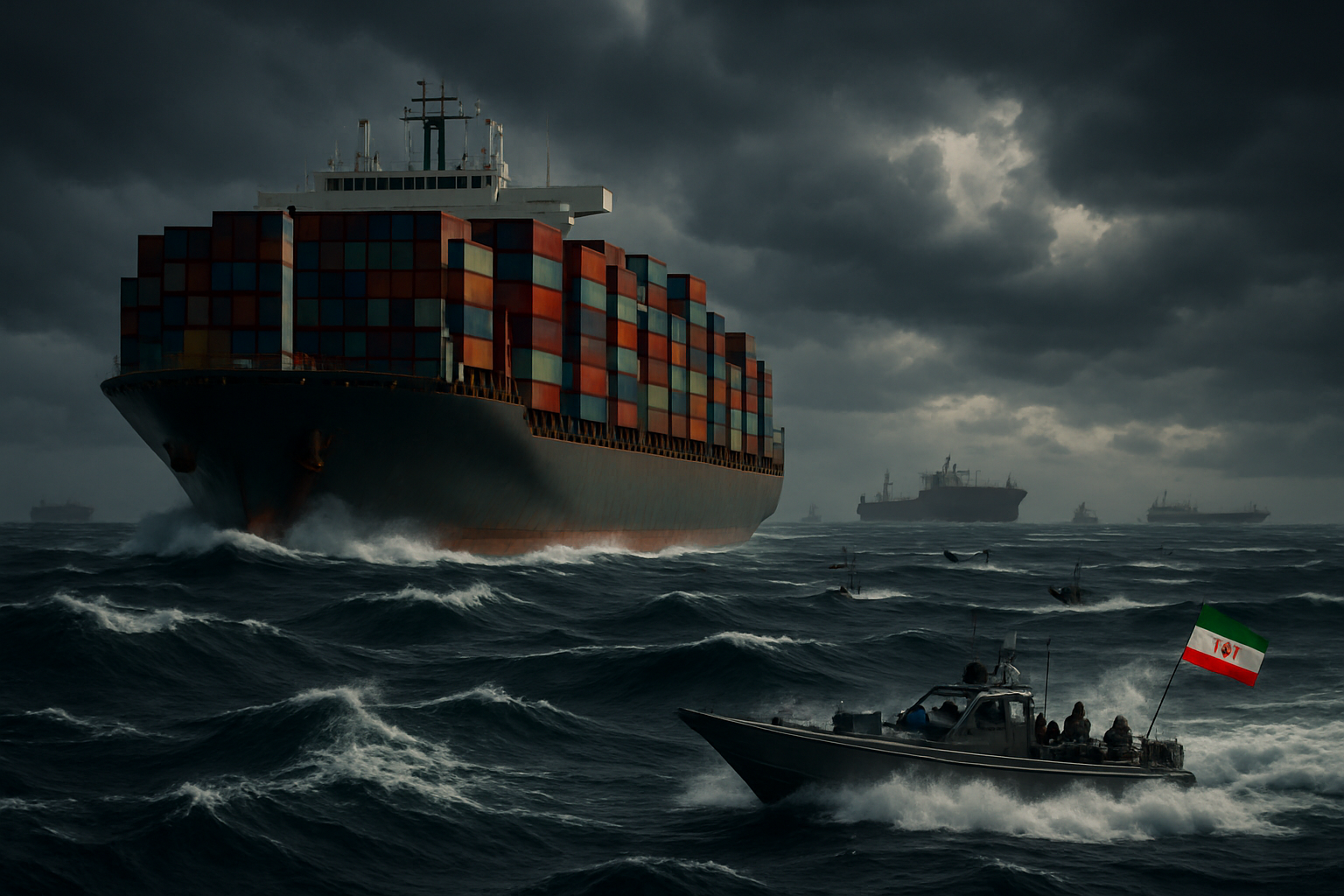
The global maritime and shipping industry is navigating one of its most challenging periods in decades, as ongoing tensions involving Iran continue to disrupt critical shipping routes while Asian nations rapidly expand their transportation infrastructure to capture a greater share of global trade.
Iran Crisis Continues to Disrupt Global Shipping
Greek shipping company Technomar Shipping confirmed that one of its vessels, the Epaminondas, was boarded by Iranian forces in recent operations, adding to mounting concerns about maritime security in the region. The incident highlights the continued vulnerability of commercial shipping in waters where Iran maintains significant influence.
The shipping crisis stems from broader geopolitical tensions that have periodically affected the Strait of Hormuz, a critical chokepoint handling approximately 40% of global seaborne oil transit. When disruptions occur, the 21-mile waterway becomes a bottleneck that can send shockwaves through global energy markets and supply chains.
"The maritime industry has learned to adapt to geopolitical uncertainties, but the scale of potential disruptions in key shipping lanes requires unprecedented coordination between international partners."
— Maritime Industry Analyst
According to historical data, when tensions escalate in the region, oil prices can surge dramatically, with Brent crude previously reaching peaks of over $119 per barrel during severe disruptions. The International Energy Agency has had to coordinate massive strategic petroleum reserve releases exceeding 400 million barrels to stabilize global markets during crisis periods.
Asian Infrastructure Boom Reshapes Global Trade
While maritime security concerns dominate headlines, Asian nations are quietly revolutionizing global trade infrastructure through massive investment programs. Hong Kong's MTR Corporation recently unveiled a groundbreaking HK$300 million (US$38.3 million) Integrated Wheelset Maintenance Centre, demonstrating the region's commitment to transportation efficiency.
The new facility, located at Ho Man Tin siding, will dramatically reduce maintenance time from over three days to just 10 hours through advanced automation. With capacity to process 1,500 wheelsets annually, the centre represents the type of technological advancement that positions Asian hubs as increasingly competitive alternatives to traditional Western logistics centers.
Malaysia's Strategic Port Expansion
Malaysia's infrastructure development exemplifies the broader Asian strategy to capture global shipping traffic. The Kuching Port Authority announced major expansion projects for 2026-2028, including a 220-metre wharf extension with advanced mooring capabilities designed to accommodate larger vessels.
This expansion aligns with Southeast Asia's broader strategy to establish alternative shipping routes and reduce dependence on traditional chokepoints. When primary shipping lanes face disruption, these enhanced facilities provide crucial backup options for global commerce.
Industry Adapts to New Security Realities
The convergence of geopolitical tensions and infrastructure development is reshaping how shipping companies approach route planning and risk management. Major carriers like Maersk and MSC have had to develop sophisticated contingency plans that can rapidly redirect cargo flows when disruptions occur.
Enhanced satellite tracking, AI-powered monitoring systems, and real-time analytics have become standard tools for managing maritime operations in an increasingly complex global environment. These technologies enable shipping companies to respond quickly to changing conditions and maintain supply chain continuity.
The Dry Bulk Market Response
The dry bulk shipping sector, particularly capesize bulkers, has been at the center of discussions about market adaptation strategies. Industry panels at major maritime conferences have focused extensively on how shipping companies can maintain profitability while navigating increased security costs and route uncertainty.
Greek shipping companies, with their extensive experience in challenging operational environments, have demonstrated remarkable resilience. Many firms have achieved zero detention records over extended periods, showcasing operational excellence even during volatile market conditions.
Financial and Environmental Pressures
The shipping industry faces a complex web of challenges beyond geopolitical risks. Environmental regulations are driving demand for cleaner vessels, making older ship designs less attractive for long-term investment. This regulatory pressure coincides with the need for enhanced security measures and alternative routing capabilities.
Insurance costs have surged dramatically when regional tensions escalate, with maritime insurance premiums increasing substantially for vessels operating in higher-risk areas. These additional costs ultimately flow through to global supply chains and consumer prices.
Technology as a Solution
Port automation and predictive maintenance technologies are becoming essential investments rather than optional upgrades. Smart port technologies, including automated cranes and digital monitoring systems, enable facilities to maximize efficiency while maintaining security protocols.
The integration of blockchain technology for cargo tracking and autonomous vessels for certain routes represents the industry's long-term vision for reducing both security risks and operational costs.
Looking Ahead: Resilience Through Diversification
The maritime industry's future depends increasingly on geographic diversification and enhanced cooperation between international partners. The development of alternative shipping routes through Asian ports provides crucial backup capacity when primary routes face disruption.
Companies that have invested in operational excellence, strategic flexibility, and advanced technology are proving most capable of navigating current challenges. This includes developing relationships with multiple port authorities and maintaining contingency plans for various disruption scenarios.
"The shipping industry is fundamentally about connecting global markets, and that mission requires constant adaptation to changing political and economic realities."
— Port Authority Executive
Environmental sustainability remains a key concern, with the industry working to balance immediate operational needs with longer-term climate commitments. The International Maritime Organization continues to develop frameworks that align emissions reduction with maintaining global trade connectivity.
Global Economic Implications
The maritime shipping industry serves as the backbone of global commerce, carrying approximately 90% of international trade. Disruptions to major shipping routes can have cascading effects on manufacturing, energy markets, and consumer goods availability worldwide.
Recent infrastructure investments in Asia, combined with technological advances in port operations, are creating more resilient global supply chains. However, the industry's ability to maintain this resilience depends on continued international cooperation and strategic planning.
As the industry moves forward, success will likely depend on companies' ability to balance immediate security concerns with long-term infrastructure development, while maintaining the operational flexibility needed to adapt to an increasingly complex global environment.