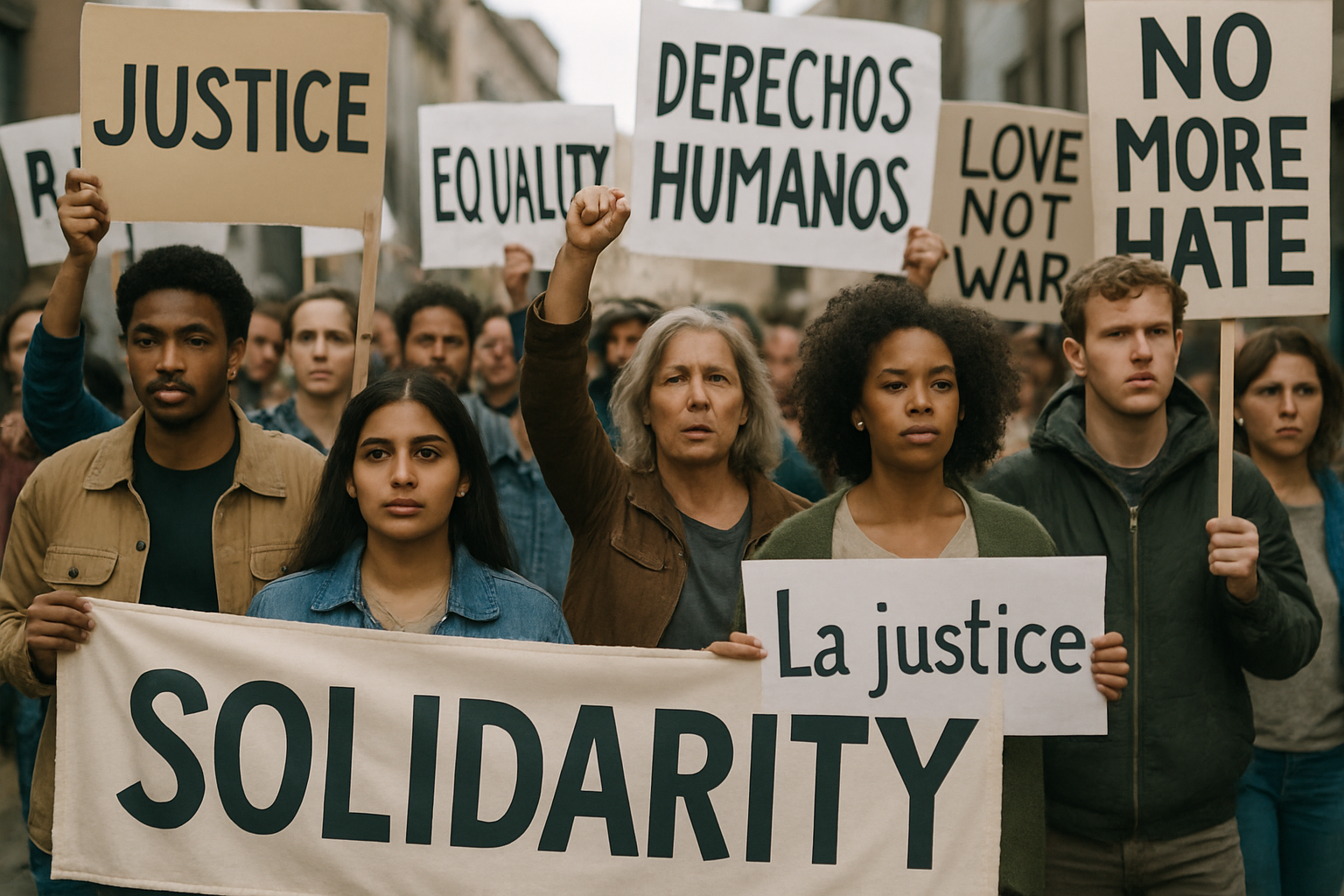
A pattern of religious intolerance, political violence, and systematic targeting of social activists has emerged across four nations this week, marking a dangerous escalation in global tensions as democratic institutions face unprecedented pressure from extremist movements.
From Brisbane synagogue attacks to far-right terror plots in Ireland, the evidence reveals a coordinated assault on civil liberties and religious freedom that experts warn could signal a broader breakdown of democratic norms worldwide.
Australia: Synagogue Attack Highlights Security Crisis
Australia's Jewish communities remain on high alert following a targeted ramming attack on the Margaret Street synagogue in Brisbane, where a 32-year-old Sunnybank man deliberately crashed his Toyota Hilux into the building's gates. Queensland Police have confirmed this as a "targeted attack" involving hate crime charges, though officials stopped short of classifying it as terrorism, citing "other factors" behind the incident.
The attack represents the latest in a disturbing pattern of antisemitic violence plaguing Australian Jewish communities since the devastating December 14, 2025 Bondi Beach Hanukkah festival attack that claimed 15 lives. The Brisbane incident occurred against the backdrop of violent protests during Israeli President Herzog's February 2026 visit, which resulted in 27 arrests in Sydney alone.
"This attack demonstrates the vulnerability of religious institutions to vehicle ramming incidents despite enhanced security measures."
— Queensland Police spokesperson
Community leaders have expressed serious concerns about the escalating nature of these incidents, which follow an established pattern of targeting Jewish institutions during periods of heightened Middle East tensions. The attack has prompted discussions about enhanced protective measures for religious facilities across Australia.
Ireland: Far-Right Terror Plot Targeting Muslim Communities
In Galway, Irish authorities have arrested four men allegedly involved in plotting to destroy a local mosque as part of what prosecutors describe as an "eye for an eye" campaign targeting Muslim communities and immigration workers. The suspects, who appeared in court this week, represent what security experts characterize as a new level of organized far-right extremism in Ireland.
The plot specifically targeted Muslims and workers at International Protection Accommodation Services (IPAS), highlighting the intersection between anti-immigrant sentiment and religious hatred. The case has raised alarm bells about the sophistication of far-right networks operating across Europe, with coordination capabilities that extend beyond simple hate crimes to organized terror planning.
Irish security services have noted an increase in far-right activity coinciding with broader European trends, where extremist movements exploit social media platforms to coordinate activities across national borders.
UK: Political Leaders Fuel Religious Tensions
The United Kingdom has witnessed a political firestorm over public prayer rights for Muslims, with Reform Party leader Nigel Farage facing widespread condemnation for calling to ban Muslim prayer in public spaces. The controversy erupted following a prayer event held in London's Trafalgar Square, which Farage characterized as inappropriate for British cultural norms.
Muslim community leaders have condemned Farage's statements as "bigoted" and warned of a "growing tide of hate" affecting religious minorities across the UK. The situation escalated when Conservative leader Kemi Badenoch questioned whether such events fit "within the norms of British culture," prompting calls for her to discipline party colleagues who described public prayers as "acts of domination."
The political rhetoric has created what religious freedom advocates describe as a dangerous normalization of anti-Muslim sentiment within mainstream political discourse, potentially encouraging grassroots harassment and discrimination.
Australia: Political Leaders Under Attack
In Sydney, Australian Prime Minister Anthony Albanese and Home Affairs Minister Tony Burke were jostled and jeered by crowds at Lakemba Mosque, reflecting growing tensions within Australia's diverse religious communities. The hostile reception indicates deepening polarization over government policies regarding Middle East conflicts and domestic religious affairs.
The incident at one of Australia's most prominent mosques suggests that political leaders are facing unprecedented challenges in managing community relations during periods of international tension.
Indonesia: Human Rights Activist Chemical Attack
The global pattern of targeting activists extended to Indonesia, where authorities arrested six people, including four from military intelligence units, in connection with a chemical attack on a prominent human rights activist in Jakarta. The incident has sent shockwaves through Indonesia's civil society, with activists warning of a systematic campaign to silence dissent.
The involvement of military intelligence personnel in the attack has raised serious questions about state-sponsored intimidation tactics against human rights advocates, representing a concerning escalation in authoritarian responses to peaceful activism.
Bosnia: Healthcare Access Crisis
In Bosnia and Herzegovina, social activists have launched urgent appeals for public and institutional support as a young woman named Amila faces a complete breakdown in medical treatment after two months without therapy. Her deteriorating condition has become a symbol of systemic healthcare failures affecting vulnerable populations across the region.
"Without access to therapy, the disease is getting worse. Attacks accompanied by severe pain are becoming more frequent and severe."
— Healthcare advocacy statement
The case highlights how social justice issues often intersect with basic human rights, as activists struggle to secure fundamental healthcare access for marginalized communities.
Historical Context: Pattern of Democratic Regression
These incidents occur within a broader context of what human rights observers have identified as a coordinated assault on democratic institutions worldwide. Recent months have seen systematic harassment targeting women politicians across Latin America, the establishment of what UN experts call a "machinery of repression" in Venezuela, and judicial censorship of lawyers in Armenia.
The sophistication of these attacks suggests what experts term "authoritarian innovation" – the evolution of repressive techniques that operate through seemingly legitimate institutional channels while exploiting technological platforms for cross-border coordination.
International Women's Day 2026 saw unprecedented governmental recognition of women's rights across dozens of countries, yet this progress has been paralleled by increasingly sophisticated backlash efforts targeting activists and minority communities.
Technology and Transnational Coordination
Security experts have noted the borderless nature of modern extremist movements, which use social media platforms and encrypted communications to coordinate harassment campaigns and share tactical knowledge across jurisdictions. The Australian synagogue attack, Irish terror plot, and UK political rhetoric all demonstrate hallmarks of movements that learn from and adapt tactics developed by similar groups internationally.
This technological amplification has made traditional law enforcement approaches insufficient, as investigators struggle to track networks that operate across multiple legal systems and exploit jurisdictional gaps in international law enforcement cooperation.
International Response and Cooperation Challenges
The international community faces unprecedented challenges in responding to this new form of sophisticated repression that transcends traditional diplomatic and law enforcement frameworks. Digital harassment campaigns against women politicians operate across jurisdictions using social media platforms, while legal system censorship creates "self-censorship" effects among activists who fear retaliation.
Traditional human rights advocacy approaches have proven insufficient for addressing these evolved forms of repression, highlighting the need for new international cooperation mechanisms that can address digital harassment while protecting legal professionals from institutional retaliation.
Economic and Social Implications
The erosion of civil liberties and legal system independence creates cascading effects beyond immediate victims. Foreign investment decreases in countries where legal systems lack independence, while the exclusion of women and minorities from political life reduces the talent pool necessary for effective governance.
Countries with stronger human rights protections consistently demonstrate more robust and sustainable economic growth, while civil society repression erodes the social capital necessary for economic innovation and development.
Looking Forward: Critical Choices Ahead
The coming months will prove critical in determining whether the international community can develop effective responses to this coordinated assault on human rights and democratic institutions. The sophistication and international scope of current repressive techniques threatens democratic governance foundations extending far beyond immediate victims.
Success requires recognition that these incidents represent interconnected patterns rather than isolated events, demanding equally comprehensive and sustained international responses. Coordination will be essential across digital rights protection, legal independence safeguarding, and women's political participation security.
The stakes include not only the immediate safety of targeted communities but the future of democratic governance and human rights protection in an increasingly connected yet politically fragmented world. As these cases demonstrate, the assault on human rights has become more sophisticated, international in scope, and systematic in approach – requiring responses of equal sophistication and determination from democratic institutions worldwide.