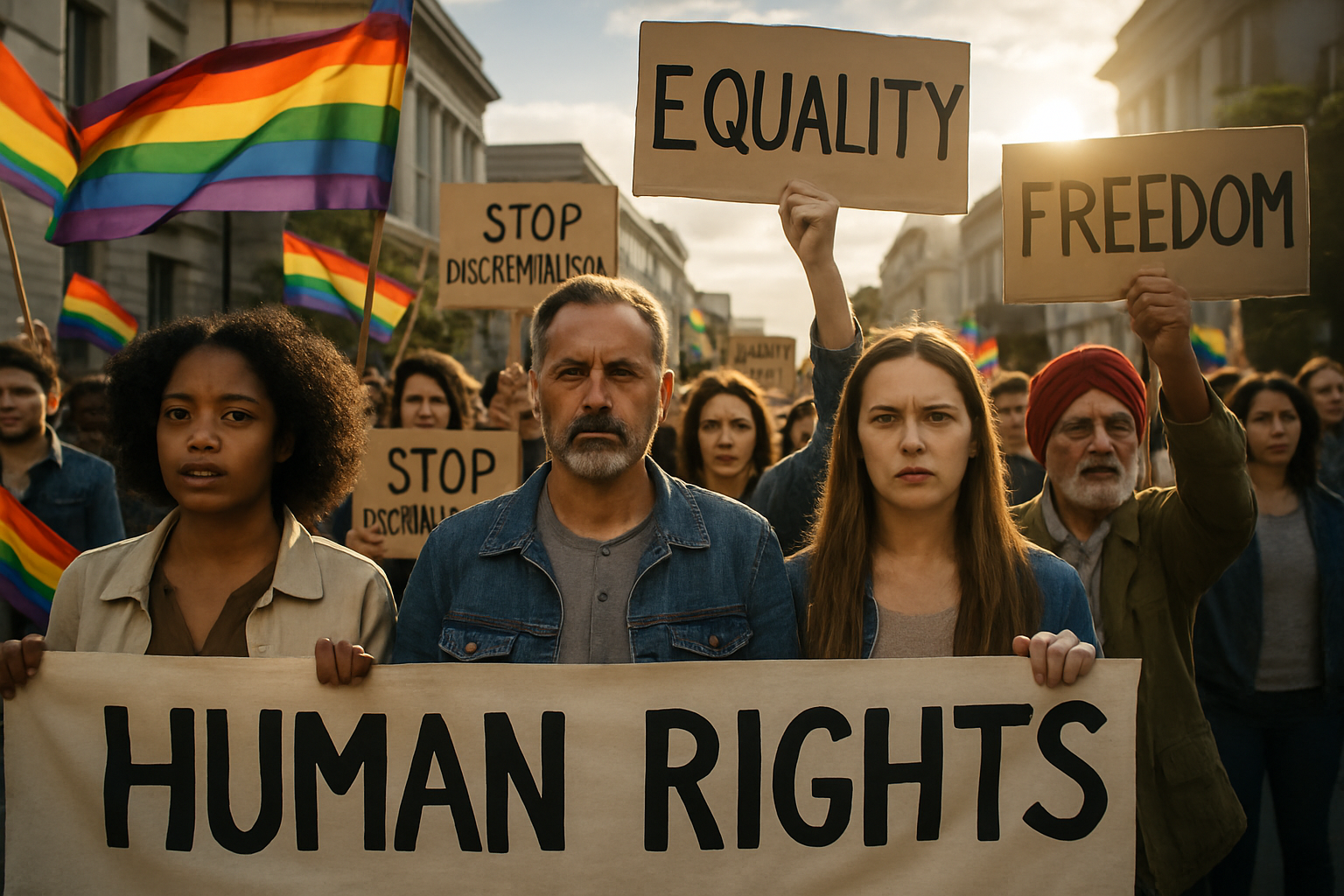
A coordinated assault on LGBTQ+ rights is unfolding across three continents, as documented in a Planet News investigation spanning Cuba, the United Kingdom, and Senegal, revealing systematic rollbacks of human rights protections that once seemed secure.
The investigation exposes how discriminatory policies are spreading beyond mere legislative restrictions to encompass institutional persecution, criminalization, and the targeting of organizations that have historically provided safe spaces for LGBTQ+ individuals.
Cuba: Global Offensive Against LGBTIQ+ Rights
According to a comprehensive analysis published by Havana Times, what were once considered "residual practices" of discrimination have evolved into sophisticated political tools designed to systematically roll back LGBTQ+ rights. The report emphasizes that these methods "persist and expand as a political tool to roll back rights, even where they once seemed consolidated."
The Cuban analysis reveals that discriminatory practices are no longer isolated incidents but part of a coordinated strategy to undermine legal protections and social acceptance that LGBTQ+ communities had previously achieved. This represents a dangerous evolution from passive discrimination to active persecution.
United Kingdom: Institutional Exclusion of Transgender Youth
In the United Kingdom, Girlguiding, one of the nation's largest youth organizations, announced that transgender girls and women currently participating in its programs must leave by September 6, 2026. The organization's decision, implemented following a Supreme Court ruling on gender recognition, affects vulnerable young people who had found community and support within Girlguiding groups.
The youth organization stated that while its "belief in dignity, respect and inclusion" remains unchanged, it "must operate lawfully" under the new legal framework. This institutional exclusion represents a significant blow to transgender youth who had previously found acceptance and belonging within the organization's programs.
"Youth organisation says its belief in 'dignity, respect and inclusion' is unchanged but it 'must operate lawfully'"
— Girlguiding Statement, The Guardian
The decision highlights how legal rulings can cascade through civil society organizations, forcing institutions that previously embraced inclusive policies to abandon vulnerable community members.
Senegal: Criminalization and Arrests
The situation in Senegal represents perhaps the most severe escalation, with law enforcement conducting active raids and arrests targeting suspected LGBTQ+ individuals. According to reports from Senenews, the Brigade de Recherches in Keur Massar has arrested four individuals on suspicion of homosexuality, continuing a pattern of criminalization that treats sexual orientation and gender identity as criminal offenses.
These arrests demonstrate how state power is being deployed to actively pursue and prosecute LGBTQ+ individuals, transforming what should be private personal matters into criminal investigations. The systematic nature of these operations suggests coordinated enforcement efforts designed to intimidate and suppress LGBTQ+ communities.
Historical Context and Global Patterns
Planet News memory archives reveal this current crisis represents a dramatic reversal from recent progress documented across multiple countries. As recently as February 2026, Chile's Supreme Court advanced lesbian couples' fertility rights, and the Philippines recognized same-sex property rights under the Family Code. These positive developments now appear increasingly isolated as global trends shift toward restriction and persecution.
The contrast is particularly stark when compared to Nepal's historic milestone in March 2026, when Bhumika Shrestha became the country's first transgender woman lawmaker, demonstrating that progress remains possible even as other nations retreat from human rights commitments.
International Women's Day Context
This systematic assault on LGBTQ+ rights occurs against the backdrop of International Women's Day 2026, which saw unprecedented government recognition of gender equality issues across dozens of countries. The juxtaposition highlights how progress in women's rights can coexist with regression in LGBTQ+ protections, suggesting that human rights advocacy requires multifaceted approaches addressing intersectional challenges.
Historical memory from our archives shows that March 2026 represented a "critical juncture" for human rights globally, with evidence-based prevention strategies and international cooperation converging to provide opportunities for comprehensive empowerment programs. However, the current LGBTQ+ crisis demonstrates how quickly these opportunities can be undermined by coordinated opposition.
Economic and Social Implications
The systematic exclusion of LGBTQ+ individuals from society carries profound economic consequences. Countries that embrace inclusive policies typically demonstrate stronger economic growth, increased innovation capacity, and more resilient communities. Conversely, discriminatory policies reduce workforce participation, limit creative potential, and create social tensions that undermine community cohesion.
Research consistently shows that societies investing in comprehensive human rights protections report substantial benefits through improved community resilience, enhanced workforce productivity, and strengthened international relationships. The current rollbacks threaten these economic advantages while imposing significant costs through enforcement operations and lost human potential.
Legal Framework Under Attack
International legal experts argue that the systematic targeting of LGBTQ+ individuals violates fundamental human rights principles potentially constituting persecution under international law. The coordinated nature of these restrictions across different legal systems suggests influences transcending national boundaries.
The European Union's March 2026 ruling that member states must provide mechanisms for updating gender identity documentation when it differs from birth assignment stands in stark contrast to the restrictive trends documented in our investigation. This divergence highlights growing global divisions on LGBTQ+ rights recognition.
Community Resilience and Response
Despite systematic persecution, LGBTQ+ communities demonstrate remarkable resilience through mutual support networks, international solidarity, and continued advocacy for basic human dignity. Organizations across the affected countries are adapting their strategies to provide safety and support under increasingly dangerous conditions.
Civil society organizations emphasize that sustained commitment rather than episodic support is essential for protecting vulnerable communities. As our archives from the global women's rights movement show, the "Women's Day Every Day" paradigm of sustained daily commitment proves more effective than annual symbolic recognition.
International Response Required
The coordination evident across Cuba, the UK, and Senegal requires equally coordinated international responses. Traditional human rights advocacy approaches prove insufficient for addressing new forms of sophisticated repression that operate through seemingly legitimate institutional channels.
Success requires sustained political commitment beyond electoral cycles, comprehensive professional training, robust community engagement, and continued international cooperation. The stakes extend far beyond immediate victims to include fundamental questions about whether democratic societies can maintain values while protecting against systematic discrimination.
Looking Forward
This investigation reveals that LGBTQ+ rights face their most serious global challenge in decades. The systematic nature of current restrictions, spanning different legal systems and cultural contexts, suggests coordinated opposition to human rights progress that requires immediate and sustained international attention.
The coming months will prove critical in determining whether the international community can effectively respond to this coordinated assault on LGBTQ+ rights or whether current trends continue, potentially reversing decades of hard-won progress toward equality and human dignity.
As our comprehensive analysis shows, the choice facing the global community is stark: organize around human flourishing and equal rights for all, or allow systematic discrimination to undermine the fundamental principles of human dignity that should unite democratic societies worldwide.