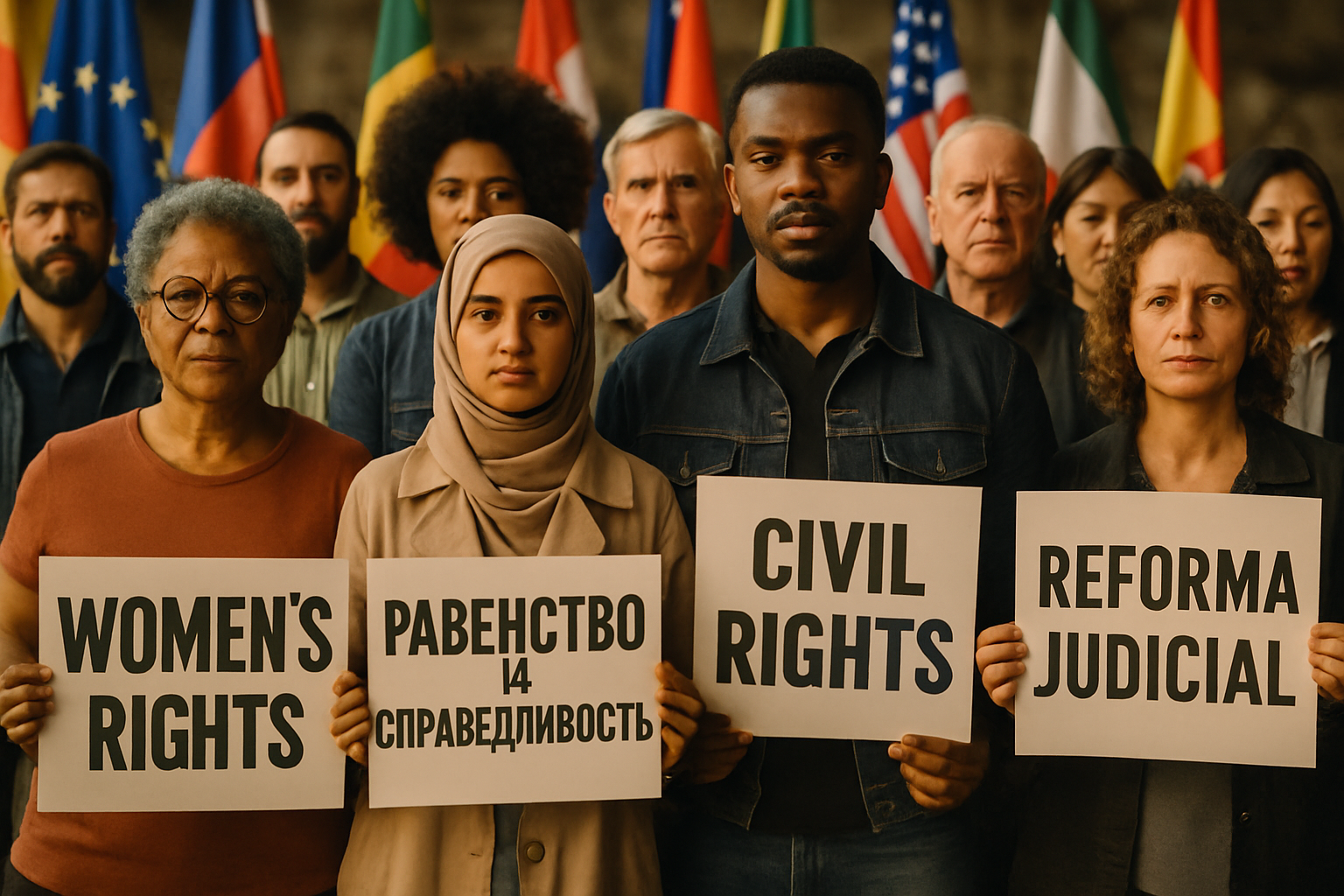
A disturbing pattern of human rights violations and judicial repression is emerging across multiple continents, as documented in recent reports from Armenia, Latin America, and the Middle East. From systematic attacks on legal professionals to digital violence targeting women politicians, these developments signal a coordinated assault on democratic institutions and civil liberties worldwide.
Armenia's Assault on Legal Independence
The Armenian Bar Association has raised serious concerns about what they describe as an unprecedented attack on the fundamental rights of lawyers in the country. The controversy centers on a public statement by Armenia's Supreme Judicial Council (SJC), a body dominated by appointments from the current ruling party, that broadly admonishes lawyers to cease any commentary deemed critical of judges.
According to the Armenian Weekly, this blanket censure directed at the legal profession "risks creating a chilling effect on lawful, good-faith professional expression and advocacy." The statement represents a significant escalation in tensions between the judiciary and the legal profession, with critics arguing that it undermines the constitutional guarantees that protect lawyers' independence.
"Lawyers are independent professionals whose constitutional and statutory guarantees — including Article 64 of the Armenian Constitution and the Law on Advocacy — protect their basic right to provide effective legal representation."
— Armenian Bar Association Statement
While the SJC's mandate includes safeguarding judicial independence, legal experts argue that the council's approach threatens to silence legitimate criticism and accountability mechanisms that are essential to a functioning democracy. The controversy highlights the delicate balance between protecting judicial integrity and preserving the independence of the legal profession.
Latin America's Digital Violence Against Women
Across Latin America, a new form of political suppression is emerging through digital violence targeting women in politics. Research documented by Havana Times reveals that such attacks "can discourage women from participating in politics and public life, deter qualified candidates, and reinforce inequalities."
This digital harassment represents a sophisticated evolution of traditional forms of political intimidation, leveraging social media platforms and online spaces to systematically target women who dare to participate in public life. The phenomenon is particularly concerning because it operates across borders, with coordinated campaigns often targeting female political figures, journalists, and activists simultaneously across multiple countries.
The impact extends far beyond individual victims, creating what experts describe as a "chilling effect" that deters other women from entering political life. This systematic exclusion threatens the democratic principle of equal representation and undermines decades of progress in women's political participation across the region.
Venezuela's Ongoing Human Rights Crisis
Perhaps nowhere is the crisis of human rights more acute than in Venezuela, where UN fact-finding missions continue to document systematic abuses. According to Al Jazeera's reporting on recent UN Human Rights Council findings, experts warn that the "machinery of repression" is continuing to evolve and adapt, creating new challenges for those seeking to protect fundamental rights.
The situation in Venezuela represents a case study in how authoritarian systems adapt their methods of control while maintaining a veneer of legitimacy. International observers note that the sophistication of repressive mechanisms has increased, making traditional forms of human rights monitoring and intervention more difficult.
The Broader Pattern of Democratic Regression
These three cases represent different manifestations of a broader global trend: the systematic weakening of institutions that protect human rights and democratic governance. From legal professionals in Armenia facing censorship to women politicians across Latin America experiencing digital harassment, to ongoing repression in Venezuela, the pattern reveals a coordinated assault on civil society.
What makes these developments particularly concerning is their sophistication. Unlike crude forms of authoritarianism that rely on obvious violence or censorship, these new approaches operate through seemingly legitimate institutional channels or exploit technological platforms in ways that make international intervention more complex.
International Response and Solidarity
The international community's response to these developments has been mixed, with some countries and organizations speaking out forcefully while others remain silent. Human rights organizations have documented how these various forms of repression often learn from and adapt to each other, creating a kind of "authoritarian innovation" that spreads across borders.
The memory of recent international initiatives, such as the comprehensive International Women's Day celebrations in March 2026, provides context for understanding both the progress achieved and the backlash it has generated. As documented in previous reports, that global celebration represented "unprecedented governmental recognition" and "sustained daily commitment to gender equality" across dozens of countries.
"Gender equality requires fundamental community infrastructure versus individual crisis management. The current backlash demonstrates that progress is neither linear nor guaranteed."
— International Women's Rights Assessment, March 2026
The Technology Factor
A particularly troubling aspect of these developments is how they exploit technological platforms to amplify their impact. Digital violence against women politicians, for example, leverages the borderless nature of social media to create harassment campaigns that can operate across multiple jurisdictions simultaneously.
Similarly, the censorship of legal professionals increasingly operates through sophisticated monitoring of digital communications and social media activity, creating what experts describe as "self-censorship" as lawyers modify their behavior to avoid potential retaliation.
Economic Dimensions of Repression
These human rights violations also carry significant economic costs. When legal systems lack independence, foreign investment decreases and economic development stagnates. When women are driven from political life through harassment, countries lose access to half their potential leadership talent. When civil society organizations are systematically repressed, the social capital necessary for economic innovation erodes.
Research from various international economic institutions has consistently shown that countries with stronger human rights protections and more inclusive political systems tend to have more robust and sustainable economic growth. The current wave of repression thus threatens not only individual rights but also long-term economic prosperity.
Looking Forward: The Need for Coordinated Response
The sophistication and interconnected nature of these challenges requires an equally sophisticated and coordinated international response. Traditional approaches to human rights advocacy, while still important, may be insufficient to address these new forms of repression.
International cooperation mechanisms need to evolve to address digital forms of harassment and intimidation. Legal frameworks must be developed to protect lawyers and other legal professionals from institutional retaliation. Women's political participation must be actively protected through both technological and legal means.
Most importantly, the international community must recognize that these various forms of repression are not isolated incidents but part of a broader pattern that threatens democratic governance worldwide. The response must be equally comprehensive and sustained.
The Stakes
What is at stake extends far beyond the immediate victims of these various forms of repression. The systematic weakening of legal independence, the exclusion of women from political life, and the broader suppression of civil society threaten the foundations of democratic governance itself.
As these cases demonstrate, the assault on human rights and social justice is becoming more sophisticated, more international in scope, and more systematic in its approach. The response from those committed to protecting human dignity and democratic values must be equally sophisticated, international, and systematic.
The coming months will be critical in determining whether the international community can mount an effective response to these challenges or whether the forces of repression will continue to gain ground. The stakes could not be higher: the future of democratic governance and human rights protection in an increasingly connected but politically fragmented world.