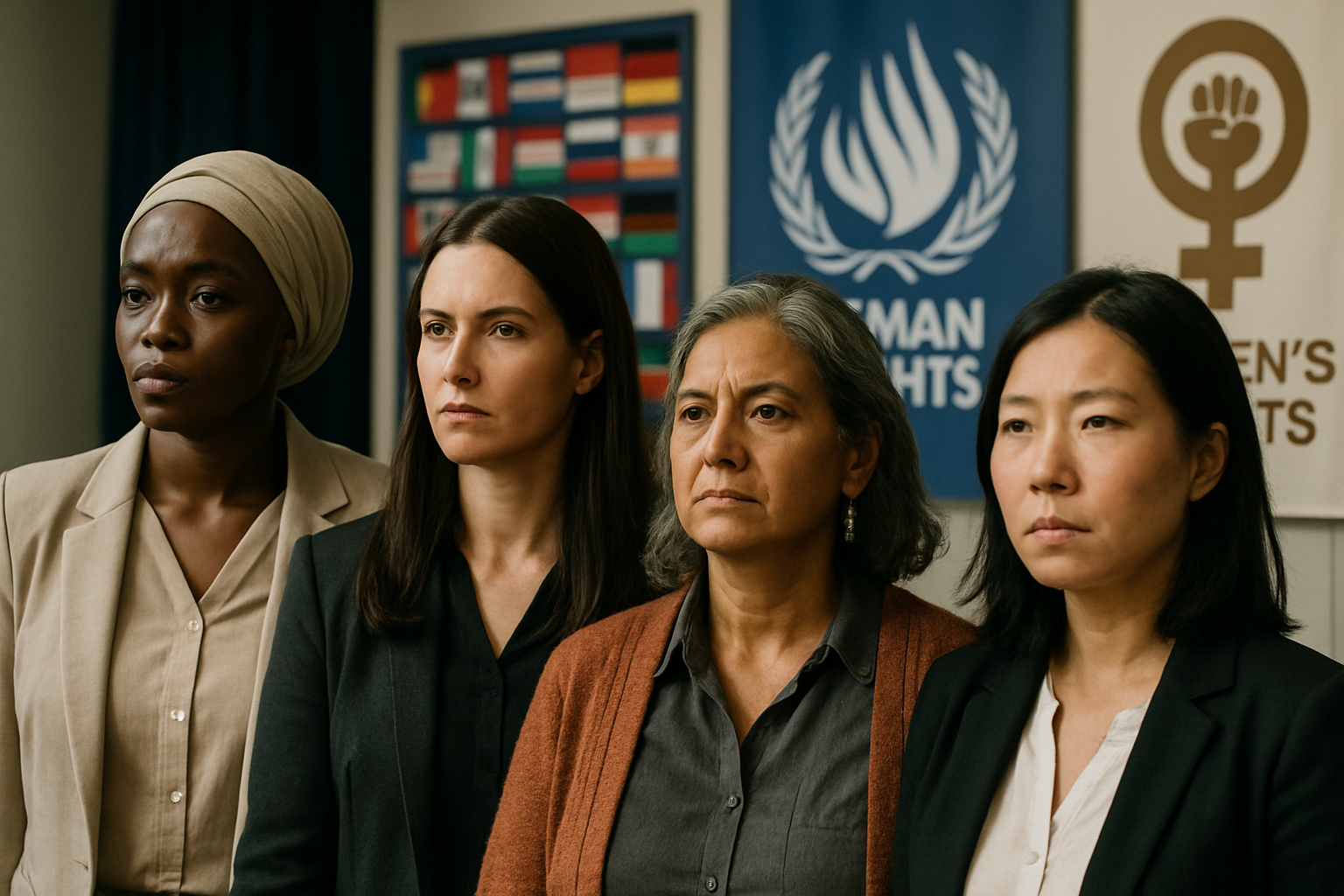
Human rights advocates across Central Africa and the Middle East are confronting unprecedented challenges as they fight for fundamental freedoms, women's rights, and social justice in an increasingly complex global landscape.
Recent developments from the Democratic Republic of Congo and Egypt highlight both the progress being made in human rights advocacy and the persistent barriers facing those who defend the most vulnerable members of society. These cases underscore a broader pattern of challenges confronting social justice movements worldwide in 2026.
Democratic Republic of Congo: Building Women's Rights Infrastructure
In Kinshasa, significant efforts are underway to strengthen women's rights and provide essential support for vulnerable populations. The United Nations Organization Stabilization Mission in the Democratic Republic of the Congo (MONUSCO), through its Corrections section, conducted a groundbreaking rights awareness session on March 28 for at least 45 female detainees at the Ndolo military prison.
This initiative represents a crucial intervention in the country's justice system, where women prisoners often face additional vulnerabilities. The program, organized as part of March's dedication to women's rights, provided participating women with certificates and merit awards, recognizing their engagement in educational programming within the correctional facility.
"Education and awareness of rights are fundamental tools for empowerment, especially for women in vulnerable situations," emphasized human rights advocates involved in the program.
— MONUSCO Corrections Division
Simultaneously, women leaders in business and administration have been advocating for systemic change. Female presidents of the boards of directors of state portfolio companies and public institutions gathered in Kinshasa on March 28 to call for the guarantee and effectiveness of women's rights as March drew to a close.
These female executives, representing significant economic and administrative influence, used their platform to push for concrete policy changes rather than symbolic gestures. Their advocacy demonstrates how women in positions of power are leveraging their influence to create systemic change for broader gender equality initiatives.
Legal Advocacy Takes Center Stage
The legal profession in the DRC has emerged as a critical front in the fight for women's rights. Female attorneys from Cabinet Nguangu organized a conference-debate on March 28 in Kinshasa, directly challenging the injustices that women face throughout the country.
These legal professionals expressed their determination to combat systematic discrimination through the judicial system, representing a sophisticated approach to social justice advocacy. By combining legal expertise with grassroots organizing, these attorneys are working to create lasting institutional changes that protect women's rights.
The legal advocacy represents part of a broader trend across the region where professional women are using their expertise to create systemic change. This approach goes beyond traditional activism to engage directly with the institutions and legal frameworks that shape women's daily experiences.
Egypt Confronts Child Marriage Crisis
In Egypt, government officials are grappling with the persistent challenge of child marriage, demonstrating the complex intersection of traditional practices and human rights advocacy. Amal Ammar, President of the National Council for Women, participated in a Human Rights Committee meeting at the House of Representatives to discuss the phenomenon of child marriage, alongside MP Tariq Radwan.
The discussion focused on identifying and closing loopholes that allow circumvention of child marriage laws, highlighting the sophisticated legal challenges that human rights advocates face when traditional practices conflict with modern legal frameworks.
"There is a necessity to close the gaps that enable circumvention of child marriage laws," stated officials familiar with the parliamentary discussions.
— Egyptian National Council for Women
This governmental attention to child marriage represents a significant step in addressing one of the most persistent human rights challenges in the region. The involvement of high-level officials demonstrates growing recognition that protecting children's rights requires sustained institutional commitment rather than periodic campaigns.
Global Context and Systematic Challenges
These developments in Central Africa and the Middle East occur within a broader global context where human rights advocates face increasingly sophisticated challenges. Based on extensive documentation of social justice movements worldwide, advocates are confronting coordinated opposition that operates through seemingly legitimate institutional channels.
The evolution of advocacy strategies reflects this reality. In the DRC, the combination of prison reform, business leadership advocacy, and legal profession mobilization demonstrates a multi-pronged approach to creating sustainable change. This coordinated strategy addresses both immediate needs and long-term institutional transformation.
Similarly, Egypt's parliamentary approach to child marriage shows how advocates are working within existing governmental frameworks to achieve policy changes. This institutional engagement represents a mature understanding of how lasting social change occurs through sustained policy implementation rather than dramatic symbolic gestures.
Prevention-First Approaches Show Promise
The programs documented in both countries reflect a growing international trend toward prevention-first approaches to human rights challenges. Rather than responding to violations after they occur, advocates are increasingly focusing on creating systems that prevent discrimination and abuse from developing.
The MONUSCO educational programs in DRC prisons exemplify this approach by providing rights education before women are released back into society. This proactive strategy aims to empower individuals with knowledge that can prevent future rights violations.
Similarly, Egypt's focus on closing legal loopholes represents a preventive approach to child marriage, addressing the structural issues that enable harmful practices rather than simply responding to individual cases.
International Cooperation and Knowledge Sharing
The success of these initiatives depends heavily on international cooperation and knowledge sharing among human rights advocates. The involvement of international organizations like MONUSCO demonstrates how global partnerships can provide resources and expertise for local advocacy efforts.
This international dimension is crucial because human rights challenges increasingly transcend national boundaries. Criminal networks, discriminatory practices, and systematic oppression operate across jurisdictions, requiring coordinated responses from advocates who can share strategies and resources.
The documentation from both countries shows how local advocates are adapting international human rights standards to address specific cultural and legal contexts. This localization is essential for creating sustainable change that respects cultural autonomy while advancing universal human rights principles.
Economic Dimensions of Rights Advocacy
The involvement of business leaders in DRC's women's rights advocacy highlights the growing recognition that human rights have significant economic implications. When women face systematic discrimination, entire economies suffer from reduced productivity, limited innovation, and decreased social stability.
Countries that invest in comprehensive human rights protections demonstrate stronger economic growth and more resilient communities. This economic argument provides additional leverage for advocates who can demonstrate that social justice initiatives generate measurable returns on investment.
The business community's engagement in rights advocacy also provides sustainable funding sources for ongoing programs, reducing dependence on external aid or government funding that may be subject to political changes.
Technology and Modern Advocacy
While not explicitly featured in the immediate cases, the broader context of 2026 human rights advocacy increasingly involves sophisticated technology integration. Digital platforms enable advocates to organize more effectively, document violations more comprehensively, and coordinate internationally with unprecedented efficiency.
However, this technological advancement also creates new vulnerabilities, as opponents of human rights can use the same tools for surveillance, harassment, and disinformation campaigns. Successful advocacy in 2026 requires understanding how to leverage technology benefits while protecting against digital threats.
The educational approaches used in both DRC and Egypt could be enhanced through digital tools that provide ongoing support and resources to participants beyond the initial program contact.
Looking Forward: Sustainable Change Strategies
The developments in Central Africa and the Middle East provide templates for sustainable human rights advocacy that could be adapted globally. The key elements include institutional engagement, professional expertise utilization, prevention-focused programming, and sustained political commitment.
Success in these contexts requires moving beyond annual symbolic recognition toward sustained daily commitment to human rights principles. This approach treats human rights as fundamental community infrastructure rather than crisis management, requiring consistent attention and resource allocation.
The combination of grassroots organizing, institutional engagement, and international cooperation demonstrated in these cases provides a model for addressing complex human rights challenges in diverse cultural and political contexts.
Critical Juncture for Global Human Rights
March 2026 represents a critical juncture for global human rights advocacy, where current choices influence the trajectory of social justice movements for decades ahead. The stakes extend beyond individual cases to fundamental questions about democratic governance, international cooperation, and the protection of vulnerable populations.
The success of initiatives in the DRC and Egypt depends on sustained commitment from advocates, adequate resources from supporting institutions, and continued international cooperation that respects cultural autonomy while advancing universal human rights principles.
As these cases demonstrate, effective human rights advocacy in 2026 requires sophisticated understanding of legal frameworks, cultural contexts, economic implications, and international cooperation mechanisms. The future of social justice depends on advocates' ability to coordinate these elements into comprehensive strategies that create lasting change.