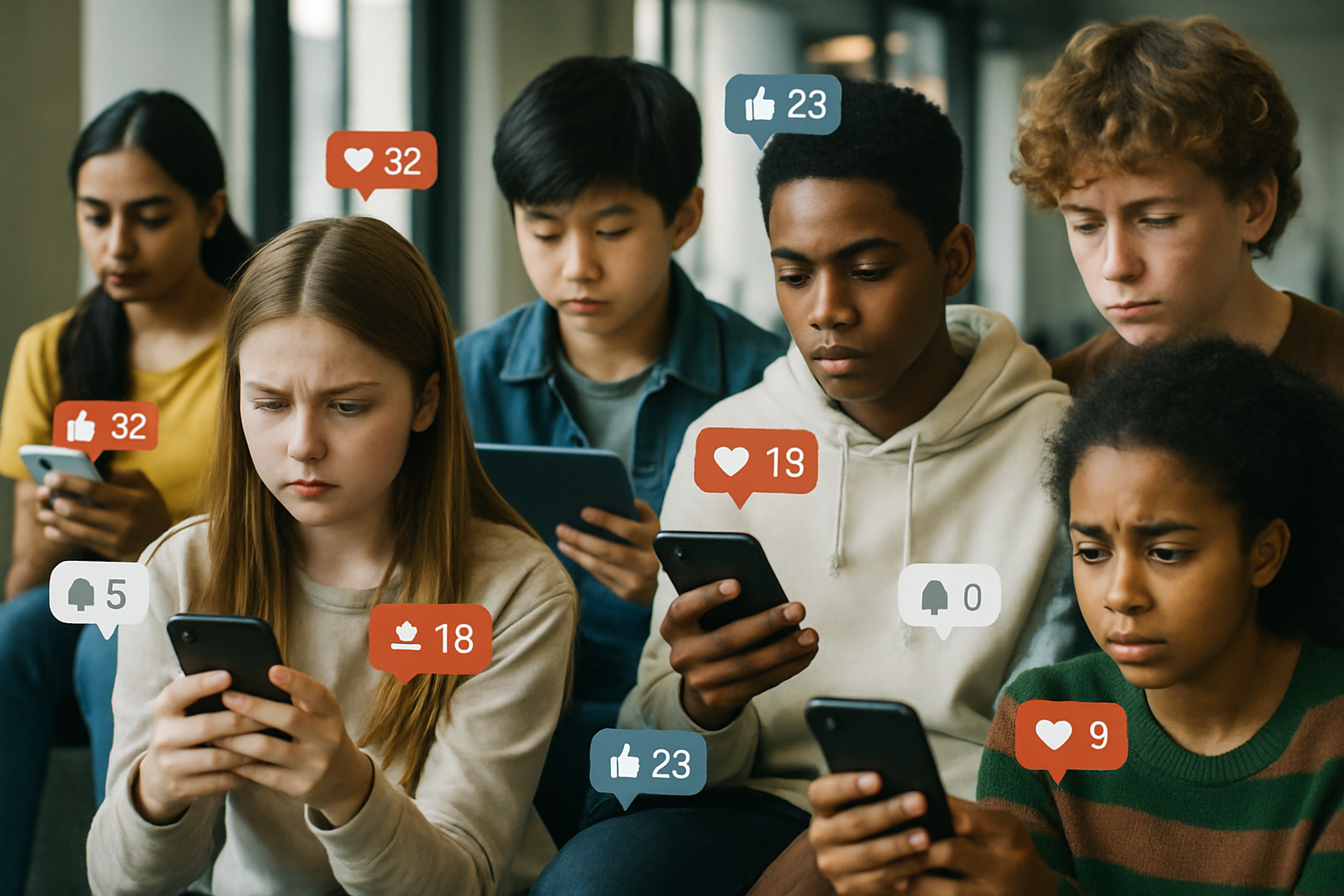
An unprecedented transformation is reshaping the global social media landscape as governments worldwide implement sweeping changes to protect children from digital harms, fundamentally altering how young people interact with online platforms.
Australia's groundbreaking social media ban for users under 16, which eliminated 4.7 million teen accounts since December 2025, has now entered a comprehensive monitoring phase. The country's eSafety watchdog will track children's medical records, sleep quality, Ritalin usage, and NAPLAN educational performance to evaluate the policy's effectiveness, marking the world's first systematic attempt to measure the real-world impact of social media restrictions on youth development.
European Nations Accelerate Age Restriction Measures
The regulatory momentum has rapidly spread across Europe, with Lithuania becoming the latest nation to consider comprehensive restrictions. Conservative politician Daiva Ulbinaitė has prepared legislative amendments proposing to ban social media use for children under 16, though Prime Minister Inga Ruginienė advocates for alternative approaches focused on increasing youth engagement in productive activities rather than imposing outright prohibitions.
Sweden has emerged as a key battleground in this digital policy revolution. Education Minister Simona Mohamsson is conducting high-level meetings with parliamentary representatives about screen time's negative effects on student concentration and academic performance. The discussions come as Finland's Institute for Health and Welfare updated national recommendations, advising against smartphones for children under 13 years old.
Swedish sixth-graders at the Finland-Sweden school in Stockholm demonstrate the generational divide on this issue. While some students acknowledge smartphones as "disturbances" in educational settings, others emphasize their importance for communication and emergency situations, reflecting the complex balance governments must strike between protection and practical necessity.
Scientific Evidence Drives Policy Changes
The global regulatory wave builds on substantial scientific research demonstrating the harmful effects of early digital exposure. Dr. Ran Barzilay's University of Pennsylvania studies show that smartphone exposure before age 5 causes persistent sleep disorders, cognitive decline, and weight problems that continue into adulthood. Current statistics reveal that 96% of children aged 10-15 use social media, with 70% experiencing harmful content exposure and over 50% encountering cyberbullying.
University of Macau research has provided particularly compelling evidence that short-form video consumption through smartphone "scrolling" negatively impacts cognitive development, causing social anxiety, academic disengagement, and reduced school engagement. The research demonstrates a direct correlation: the more students consume short-form videos, the less they engage with educational activities.
"Children spending four or more hours daily on screens face 61% increased depression risk through sleep disruption and decreased physical activity."
— Research findings from multiple international studies
Industry Resistance and Economic Implications
Technology companies have escalated their opposition to these regulatory measures. Elon Musk characterized European initiatives as "fascist totalitarian" overreach, while Telegram's Pavel Durov has warned users about "surveillance state" implications. Government officials are increasingly using this industry resistance as evidence supporting the necessity for stronger regulatory intervention.
The economic stakes are substantial. The so-called "SaaSpocalypse" of February 2026 eliminated hundreds of billions in technology stock market capitalization amid regulatory uncertainty. A global memory crisis, with semiconductor prices increasing sixfold, is constraining the technical infrastructure needed for age verification systems until 2027, when new fabrication facilities come online.
Alternative Approaches Emerge
Not all nations are pursuing restrictive regulatory models. Malaysia emphasizes parental responsibility through comprehensive digital safety campaigns, with Communications Minister Datuk Fahmi Fadzil stressing that parents must control device access rather than using digital devices as "babysitters."
Oman has implemented a "Smart tech, safe choices" educational initiative focusing on conscious digital awareness rather than blanket restrictions. This approach emphasizes teaching recognition of "digital ambushes" where attackers exploit security curiosity to install malicious content, representing a prevention-through-education philosophy.
Implementation Challenges and Privacy Concerns
The technical requirements for effective age verification present significant challenges. Real age verification systems require biometric authentication or identity document validation, raising serious privacy concerns about creating comprehensive government databases. The Netherlands' recent Odido data breach, affecting 6.2 million customers (nearly one-third of the population), demonstrates the vulnerability of such centralized data repositories.
Cross-border enforcement presents another complex challenge, requiring unprecedented international cooperation. The coordinated timing of European initiatives is specifically designed to prevent "jurisdictional shopping," where platforms might relocate operations to avoid regulatory oversight.
Global Precedent and Future Implications
The developments of February 2026 represent a critical inflection point in global technology governance. Spain leads the most aggressive approach with criminal executive liability frameworks creating personal imprisonment risks for technology executives—a world-first approach that could become a global standard if successful.
The European Commission has already found TikTok in violation of the Digital Services Act for "addictive design" features including unlimited scrolling, autoplay, and personalized recommendations designed to maximize user dependency over wellbeing. Potential penalties reach 6% of global revenue, representing billions of euros for platforms of TikTok's scale.
"This represents the most significant challenge to technology industry self-regulation in internet history."
— International Policy Analysts
The Path Forward
As parliamentary approval is sought across European nations throughout 2026 for coordinated year-end implementation, the stakes extend far beyond social media regulation. This represents a fundamental test of whether democratic institutions can effectively regulate multinational technology platforms while preserving the benefits of digital connectivity.
Success could trigger worldwide adoption of criminal liability frameworks and comprehensive age restrictions. Failure might strengthen anti-regulation arguments and leave vulnerable young populations without protection from demonstrable technological harms.
The resolution of these 2026 initiatives will establish precedents affecting millions of children globally, determining the framework for 21st-century technology governance in an increasingly connected world where digital and physical realities intersect in complex ways.
As governments worldwide grapple with balancing child protection, digital rights, and economic competitiveness, the coming months will prove decisive in shaping how democratic societies manage the relationship between technological innovation and human wellbeing in the digital age.