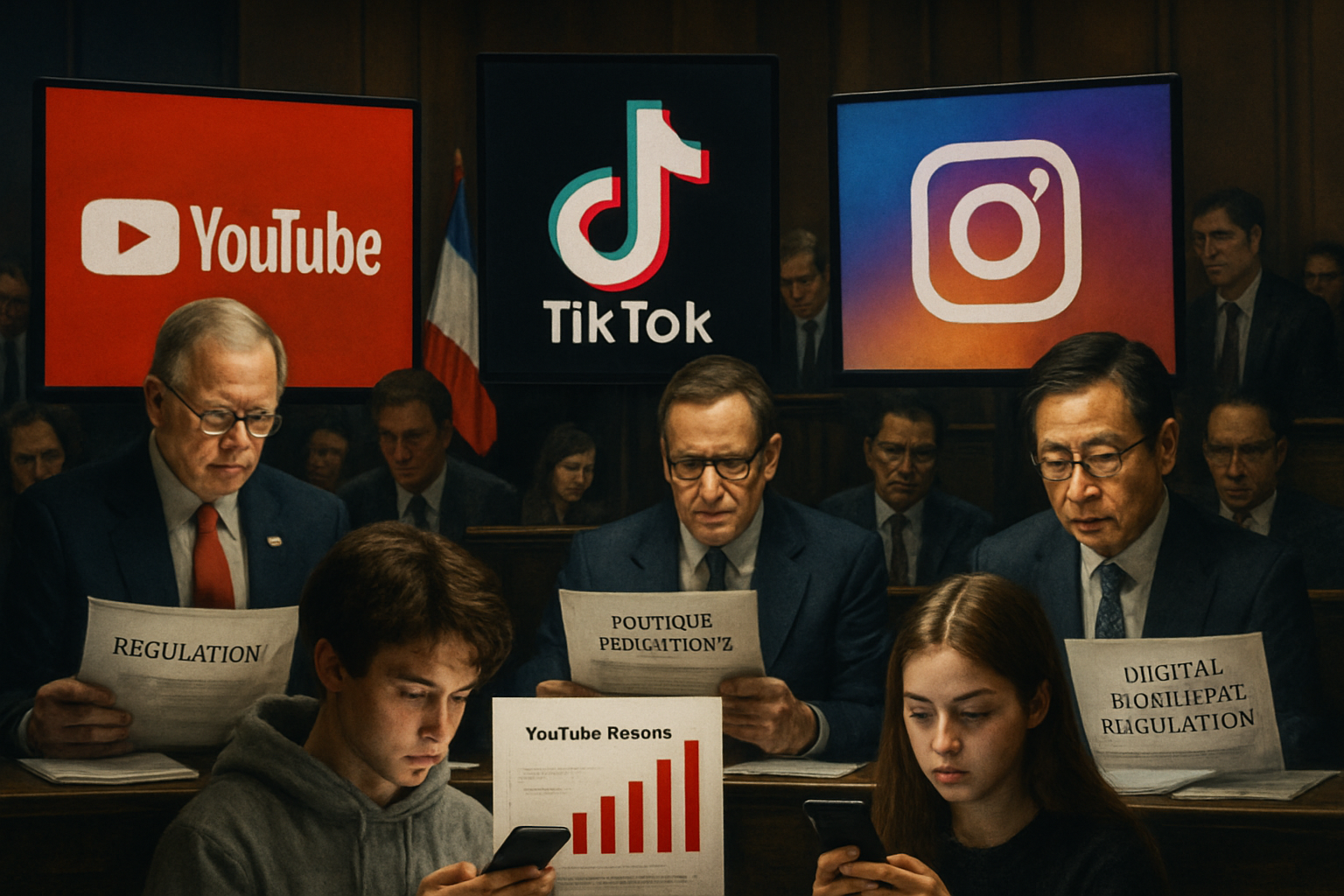
Google announced that YouTube generated over $60 billion in revenue during 2025, marking a historic milestone for the video platform as governments across three continents move to dramatically reshape how social media operates, particularly for younger users.
The revenue achievement, disclosed by Google parent company Alphabet, underscores YouTube's dominance in the digital advertising market just as regulatory authorities worldwide are implementing the most significant restrictions on social media platforms in their history. The timing highlights a fundamental tension between the massive commercial success of social media companies and growing governmental concerns about their societal impact.
YouTube's Financial Dominance Amid Regulatory Pressure
YouTube's $60 billion milestone represents the platform's continued growth despite increasing regulatory scrutiny globally. The Google subsidiary has consistently increased its revenue streams through advertising, premium subscriptions, and creator monetization programs, demonstrating the persistent commercial appeal of user-generated content platforms.
This financial success comes as European regulators have intensified their oversight of digital platforms. The European Commission recently concluded that TikTok violated EU Digital Services Act provisions through "addictive design" features, including unlimited scrolling, automatic video playback, and personalized recommendation systems designed to maximize user dependency rather than wellbeing.
The contrast between YouTube's revenue growth and the regulatory crackdown on social media platforms illustrates the complex challenge facing governments: how to address legitimate concerns about digital platform impacts while preserving the economic benefits and user engagement that make these services globally popular.
Political Influence Through Social Media: The Japan Case
Japan provides a compelling example of social media's evolving role in political discourse. Analysis shows that Sanae Takaichi, a prominent Liberal Democratic Party figure, made 65 posts during a recent reporting period, with each post averaging approximately 5,200 reposts. This engagement level demonstrates how political leaders are increasingly leveraging social media platforms to build influence and communicate directly with constituents.
Takaichi's social media success reflects broader trends in political communication, where traditional media gatekeepers have less control over political messaging. The ability to achieve viral reach through platforms like Twitter and Facebook has fundamentally altered political campaigning and governance communication strategies across democracies worldwide.
The Japanese political social media landscape operates within a relatively permissive regulatory framework compared to the restrictions being implemented elsewhere, creating an interesting contrast with the more interventionist approaches being adopted by European and other governments.
Australia's Groundbreaking Teen Social Media Ban
Australia has emerged as the global pioneer in age-based social media restrictions, becoming the first country to ban social media access for individuals 16 years old and under in December 2025. The policy was implemented after Australian government research found that 96% of children aged 10 to 15 used social media, with 70% experiencing exposure to harmful content and over half encountering cyberbullying.
The Australian ban eliminated over 4.7 million teen accounts since its implementation, according to government data. The policy requires robust age verification systems that go beyond simple checkbox confirmations, representing a significant technical and regulatory challenge for platforms operating in Australian jurisdiction.
The Association of Heads of Independent Schools in Australia supported the ban in parliamentary submissions, citing concerns about the "design features" of social media applications that create addictive user experiences, particularly among developing minds. The organization argued that these features serve platform commercial interests rather than user wellbeing.
Philippines Considers Following Australia's Model
The Philippines is actively examining whether to implement similar age restrictions on social media access, as government officials analyze both the potential benefits and challenges of Australia's approach. The consideration reflects growing international momentum toward protecting minors from what policymakers characterize as harmful digital environments.
Filipino policymakers are particularly concerned about the permanent digital footprint created when adults share children's content online, often without considering long-term privacy implications. Children develop extensive online presence before understanding the consequences, as birth announcements, school photos, and family content create permanent digital records accessible to unknown future uses.
The Philippines faces unique challenges in implementing age verification systems, including ensuring that rural and economically disadvantaged populations aren't excluded from beneficial digital services while protecting vulnerable young users. The government must balance child protection objectives with digital inclusion goals essential for economic development.
European Regulatory Revolution
The regulatory developments in Australia and potential Philippines adoption occur within a broader European-led transformation of social media governance. Spain has announced the most aggressive digital platform regulation framework globally, implementing an under-16 social media ban with unprecedented criminal liability provisions for platform executives.
Spain's five-point plan includes complete social media prohibition for under-16s, mandatory robust age verification systems, legal definitions of algorithmic manipulation, direct criminal liability for platform executives, and digital sovereignty protections. Prime Minister Pedro Sánchez characterized social media platforms as a "digital Wild West" requiring protection from "abuse, addiction, pornography and violence."
The Spanish framework goes beyond Australia's approach by creating personal legal risks for technology company leadership, representing a fundamental shift from corporate penalties to individual executive accountability. This approach could influence global regulatory approaches if successfully implemented.
Global Coordination and Industry Response
Multiple European countries are implementing coordinated responses rather than isolated national policies. Greece is "very close" to implementing under-15 restrictions using the Kids Wallet application, while France, Denmark, and Austria are conducting formal consultations on national age limits. The United Kingdom has launched official reviews of social media age restrictions.
Technology industry executives have responded with significant resistance to these regulatory developments. Elon Musk called Spanish Prime Minister Sánchez a "fascist totalitarian" via X posts, while Pavel Durov sent mass alerts to Spanish Telegram users warning that regulations "can turn Spain into surveillance state under pretext of protection."
The industry opposition has been characterized by some government officials as evidence supporting their regulatory frameworks. Spanish authorities argued that Durov's mass messaging with "lies and illegitimate attacks" demonstrates the "urgent need to regulate networks and messaging applications."
Implementation Challenges and Technical Requirements
The practical implementation of age verification systems presents significant technical and privacy challenges. "Real age verification systems" suggested by regulatory frameworks likely require biometric or identity document authentication, raising concerns about creating comprehensive surveillance infrastructure accessible for broader government monitoring purposes.
Cross-border enforcement represents another major challenge, as social media platforms operate across multiple jurisdictions with varying regulatory frameworks. The success of age restriction policies depends on sophisticated international cooperation between national authorities and platform compliance across different legal systems.
Privacy advocates have highlighted concerns about verification infrastructure creating permanent user databases that could enable broader government surveillance beyond child protection purposes. Critics worry about potential democratic backsliding through expanded state monitoring capabilities justified initially for legitimate child safety objectives.
Economic and Social Implications
The global regulatory wave occurs as social media platforms demonstrate continued commercial growth, with YouTube's $60 billion revenue highlighting the economic significance of digital advertising markets. The regulatory restrictions could potentially impact platform growth rates and advertising effectiveness, particularly for youth-focused content and products.
Educational experts emphasize that social media regulation must be balanced with digital literacy education and alternative engagement opportunities for young people. Tanzania and other developing countries are examining how to adapt international regulatory frameworks to local contexts while avoiding digital isolation that could impact economic development opportunities.
The emergence of AI-only social media platforms like Moltbook, where only bots can interact, demonstrates how rapidly the digital landscape evolves beyond traditional regulatory frameworks designed primarily for human users. These developments suggest that age-based restrictions may require continuous adaptation to address emerging platform types and interaction models.
Global Precedent and Future Implications
The combination of Australia's successful account elimination, European regulatory coordination, and industry resistance represents the most significant test of governmental ability to regulate global technology platforms in the internet era. The outcomes will likely influence regulatory approaches worldwide and determine whether democratic governments can effectively oversee multinational digital platform operations.
Success of current regulatory frameworks could trigger worldwide adoption of similar age restrictions and executive liability provisions, fundamentally altering how social media platforms operate globally. Conversely, implementation failures might strengthen industry arguments against government intervention in digital platform governance.
The international community is closely monitoring these developments for potential adoption, as the balance between child protection, digital rights, and economic competitiveness remains a critical challenge for 21st-century governance. The resolution of current regulatory initiatives will establish precedents affecting millions of users and platform operations worldwide.