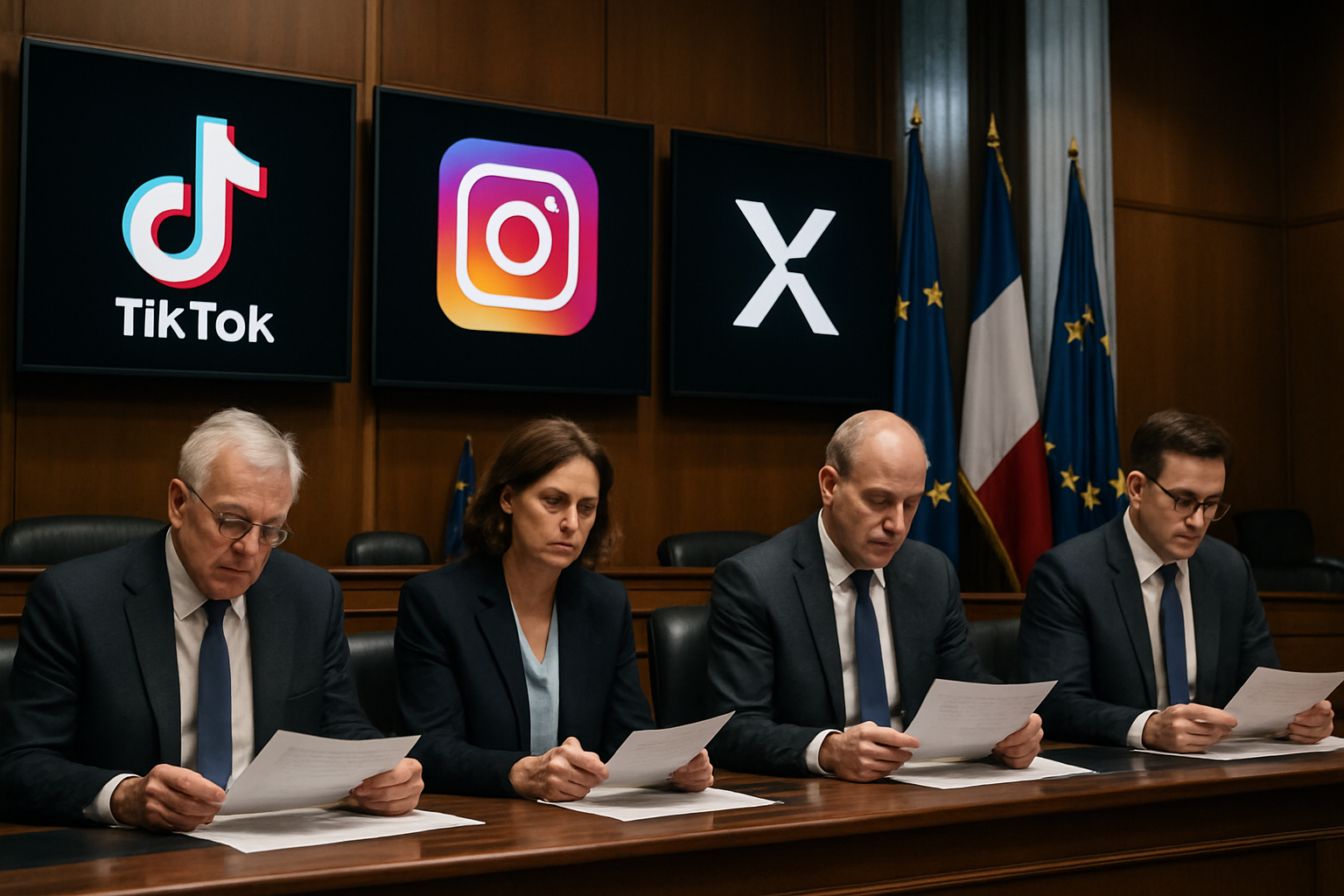
A coordinated global crackdown on social media platforms has reached unprecedented intensity, with European regulators finding TikTok in violation of digital services laws while Instagram's CEO defended the platform against addiction claims in a landmark Los Angeles trial.
The European Commission announced on February 6, 2026, that TikTok breached the Digital Services Act through what investigators termed "addictive design features." These violations include infinite scroll mechanisms, autoplay functionality, push notifications, and highly personalized recommendation systems powered by algorithmic manipulation designed to maximize user engagement over wellbeing.
TikTok Faces Billion-Dollar Penalties
The preliminary investigation findings coincide with landmark legal proceedings in the United States, where social media platforms including Facebook, Instagram, Snap, YouTube, and TikTok face allegations of causing harm to young people through similarly described addictive design features.
TikTok now faces potential penalties up to 6% of its global annual revenue—a figure that could reach billions of dollars for a platform of TikTok's scale. The European Commission has empowered itself to demand specific design modifications, operational changes, and transparency measures beyond financial penalties.
"This is about protecting children and vulnerable adults from design features that deliberately create harmful dependencies."
— European Commission Official, Digital Services Investigation
TikTok has "categorically" rejected the findings, characterizing them as "fundamentally flawed" and promising vigorous legal challenges through all available channels. The company maintains that its features represent standard industry practices enhancing user experience rather than creating harmful dependencies.
Instagram CEO Defends Platform in Historic Trial
Simultaneously in Los Angeles, Instagram head Adam Mosseri testified in what represents one of the most significant legal challenges to social media companies' design practices. The trial centers on allegations that platforms contributed to a youth mental health crisis through deliberately addictive features.
Mosseri's defense strategy focused on distinguishing between clinical addiction—a medically recognized condition—and "problematic use" of social platforms. He argued users cannot be "clinically addicted" to Instagram, challenging the plaintiffs' core addiction allegations.
The case involves a California woman who began using Instagram at age 9 and is suing Meta and Google's YouTube, alleging the companies sought to profit by hooking young children on their services despite knowing social media could harm mental health. She claims the platforms contributed to her depression and body dysmorphia.
Brazil Orders X to Block AI-Generated Content
Adding to the global regulatory pressure, Brazil has ordered Elon Musk's X platform to stop its Grok AI chatbot from creating sexually explicit deepfakes, threatening legal action for non-compliance. This represents another front in the expanding battle over platform accountability and content moderation.
The Brazilian order highlights growing concerns about AI-generated harmful content, particularly non-consensual intimate imagery that can cause severe psychological and social harm to victims.
European Commission's Broader Investigation
The TikTok investigation represents part of a comprehensive European effort to enforce the Digital Services Act, which requires platforms exceeding 45 million European users to implement stronger content moderation and user protection measures. European officials have emphasized protecting children as the primary motivation for the investigation.
Concerns include the impact of addictive design features on developing minds, behavioral patterns, sleep disruption, attention difficulties, and academic performance among young users. Norwegian authorities called the Commission's findings "alarming" and demanded immediate design modifications.
Industry-Wide Implications
The coordinated enforcement actions could establish precedents affecting infinite scroll, autoplay features, and algorithmic curation across all major platforms. Technology observers suggest a fundamental reconsideration is required to balance user engagement with user wellbeing.
Some platforms have already begun reviewing design choices preemptively, recognizing that the regulatory landscape has shifted dramatically toward greater oversight and accountability.
Romanian Official Considers Age Restrictions
Adding to the global momentum, European Commission Executive Vice-President Roxana Mînzatu stated that the Commission does not exclude limiting social media access for children under 15-16 years old to protect their mental health and behavior. This follows successful implementation models in other countries.
"We are currently analyzing all options at the European level. We do not want each country to have different regulations regarding minors' access to networks."
— Roxana Mînzatu, European Commission Executive Vice-President
Global Precedent for Platform Accountability
The simultaneous legal and regulatory actions across multiple jurisdictions represent the most significant challenge to social media platforms since their inception. The European investigation operates under DSA requirements that could result in operational modifications extending far beyond financial penalties.
Research supporting these regulatory actions shows that 96% of children aged 10-15 use social media, with 70% experiencing harmful content exposure and over 50% encountering cyberbullying. These statistics are driving policy changes worldwide as governments seek to balance child protection with digital rights.
Platform Response and Future Timeline
TikTok's response period before final Commission conclusions could require legally binding platform modifications. Appeals through European courts could extend resolution into 2027, though the Commission may demand interim measures for immediate risk mitigation.
The Instagram trial proceedings continue with Meta CEO Mark Zuckerberg expected to testify in coming weeks, while the broader industry faces increasing pressure to demonstrate that user wellbeing considerations factor meaningfully into platform design decisions.
What This Means for Users
The global regulatory crackdown signals a fundamental shift in how governments approach social media governance. Users can expect to see changes in platform features, enhanced content moderation capabilities, and stronger protections for vulnerable populations, particularly minors.
Success in these enforcement efforts could trigger similar regulatory initiatives worldwide, while failure might strengthen industry arguments against government intervention. The stakes extend beyond individual platforms to core questions about democratic governance of technology in the 21st century.
As these unprecedented legal and regulatory challenges unfold simultaneously across continents, they represent a critical test of whether democratic societies can effectively regulate global technology platforms while balancing innovation, user rights, and public safety.