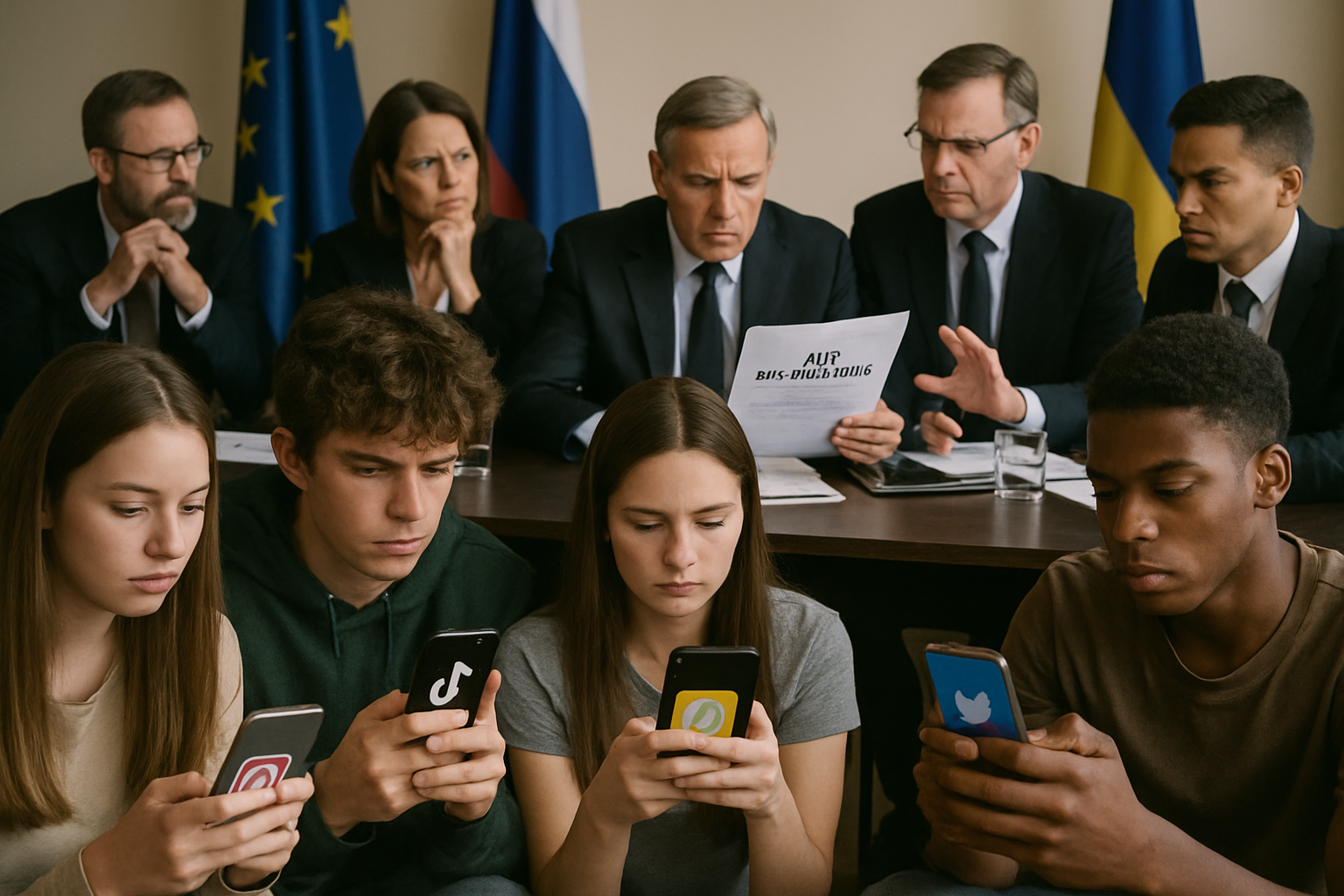
Czech Prime Minister Andrej Babis has added his voice to the growing international movement to restrict social media access for minors, announcing his support for banning children under 15 from social media platforms in a Facebook video posted Sunday.
"I agree," the 71-year-old billionaire declared in the video. "We need to protect our children." This marks the first time the Czech leader has publicly endorsed age-based social media restrictions, joining a coordinated European response that has gained unprecedented momentum in early 2026.
European Leadership in Youth Protection
The Czech Republic's position represents the latest addition to what has become the most significant regulatory wave targeting social media platforms in internet history. The movement is spearheaded by Spain's revolutionary framework announced by Prime Minister Pedro Sánchez at the World Government Summit in Dubai, which includes a complete under-16 social media ban with unprecedented criminal liability for platform executives.
Greece stands "very close" to implementing under-15 restrictions using its Kids Wallet application as an enforcement mechanism, while France, Denmark, and Austria are conducting formal national consultations on similar measures. The United Kingdom has launched official reviews, and Germany's Christian Democrat Union is actively considering restrictions for children under 16.
Slovakia has officially announced plans for an under-15 ban targeting Instagram and TikTok, with Deputy Prime Minister Matej Arčon stating that the "era of unlimited freedom in the online world" may be ending for young Slovaks. Slovenia has followed suit with its own under-15 prohibition plans, making it the latest nation to join the coordinated European response.
Australia's Successful Model Provides Blueprint
The global movement draws inspiration from Australia's groundbreaking success in implementing an under-16 social media ban in December 2025, which eliminated 4.7 million teenage accounts and demonstrated the technical feasibility of age-based restrictions. The Australian model has provided crucial evidence that such measures can be effectively enforced with government commitment and robust age verification systems.
Recent research led by Dr. Ran Barzilay at the University of Pennsylvania has provided scientific support for these restrictions, demonstrating clear connections between early smartphone exposure and sleep disorders, weight problems, and diminished cognitive abilities among children and adolescents. Children exposed to devices before age 5 show significantly higher rates of sleep disruption and decreased physical activity.
Industry Resistance and Government Response
The coordinated regulatory approach has triggered fierce resistance from technology industry leaders. Elon Musk has called Spanish Prime Minister Sánchez a "fascist totalitarian," while Telegram's Pavel Durov sent mass alerts to Spanish users warning of a potential "surveillance state." Tech executives argue that the measures represent government overreach and threaten digital innovation.
"Let the tech oligarchs bark, Sancho, it's a sign we are riding forward."
— Pedro Sánchez, Spanish Prime Minister
European governments have used this industry opposition as evidence supporting the need for regulation, arguing that the coordinated resistance demonstrates the urgency of establishing democratic oversight over global platforms. The opposition has occurred amid Musk's escalating legal troubles in Europe, including French cybercrime raids on X offices and investigations into Grok AI violations.
Unprecedented Criminal Liability Framework
Spain's five-point regulatory framework represents the most aggressive approach to platform regulation in history. Beyond age restrictions, it includes mandatory robust age verification systems, legal definitions of algorithmic manipulation, and unprecedented criminal liability for platform executives. This marks the first global implementation of personal criminal penalties for tech leaders, creating potential imprisonment risks that extend far beyond traditional corporate fines.
The European Commission has found that TikTok violated the Digital Services Act through "addictive design" features including unlimited scrolling, automatic video playback, and personalized recommendations designed to maximize user dependency over wellbeing. Potential penalties could reach 6% of TikTok's global annual revenue, amounting to billions of euros.
Global Spread Beyond Europe
While Europe leads the charge, the movement is gaining traction worldwide. Public opinion polling in Ireland shows 75% voter support for under-16 bans, reflecting broader European sentiment about digital platform harms. The Philippines is actively considering similar restrictions, examining the balance between child protection and digital inclusion.
Research consistently shows that 96% of children aged 10-15 use social media, with 70% experiencing harmful content exposure and over 50% encountering cyberbullying. These statistics have provided compelling evidence for policymakers advocating age-based restrictions across multiple jurisdictions.
Implementation Challenges and Technical Solutions
"Real age verification systems" proposed by European governments suggest requirements for biometric or identity document authentication, going far beyond simple checkbox confirmations. This has raised significant privacy concerns from civil liberties advocates, who warn that verification infrastructure could create comprehensive user databases accessible for broader government surveillance.
Cross-border enforcement presents another significant challenge, requiring sophisticated international cooperation between national authorities. The criminal executive liability framework creates personal legal risks for platform leadership that are unprecedented globally, potentially forcing greater cooperation between platforms and government agencies.
Compliance costs may advantage large platforms over smaller competitors, potentially consolidating market power among established tech giants capable of implementing expensive verification systems.
Digital Rights and Protection Balance
Critics argue that the regulatory wave risks creating a "surveillance state" infrastructure that could be used for broader government monitoring beyond child protection. Privacy advocates emphasize concerns about democratic backsliding and the potential for verification systems to enable comprehensive population surveillance.
However, government officials reject surveillance characterizations, arguing that regulations would actually increase user privacy through enhanced legal scrutiny of existing data collection practices. They point to research showing the psychological harm caused by addictive design features and the urgent need to protect developing minds from commercial manipulation.
Cultural and Educational Responses
Some countries have adopted education-focused approaches as alternatives to regulatory bans. Malaysia's Communications Minister Datuk Fahmi Fadzil launched comprehensive digital safety campaigns emphasizing parental responsibility for children facing cybercrime threats, stressing that parents must control device access rather than using devices as "babysitters."
Oman's Ministry of Education launched the "Smart tech, safe choices" campaign targeting conscious digital awareness and highlighting digital "ambushes" where attackers exploit curiosity to install malicious software. These approaches contrast with Europe's regulatory revolution, representing different philosophical approaches to the same underlying challenges.
Looking Toward Implementation
Parliamentary approval is required across participating European nations throughout 2026 for implementation before year-end. The simultaneous timing of these initiatives is designed to prevent jurisdictional shopping, where platforms might relocate operations to avoid regulatory compliance.
The success or failure of these coordinated European measures will likely determine whether criminal executive liability becomes a global standard for technology regulation. Success could trigger worldwide adoption of similar frameworks, while failure might strengthen industry arguments against government intervention in digital platforms.
This represents the most significant test of democratic governments' ability to regulate multinational technology platforms in the internet era. The resolution will establish precedents affecting millions of families and fundamentally shape the balance between technological innovation and child protection in the digital age.
As Czech Prime Minister Babis's endorsement demonstrates, the movement continues to gain political momentum across diverse European contexts, suggesting that 2026 may mark a watershed moment in the relationship between democratic governance and global technology platforms. The international community is closely monitoring these developments as they could reshape digital childhood and platform accountability worldwide.