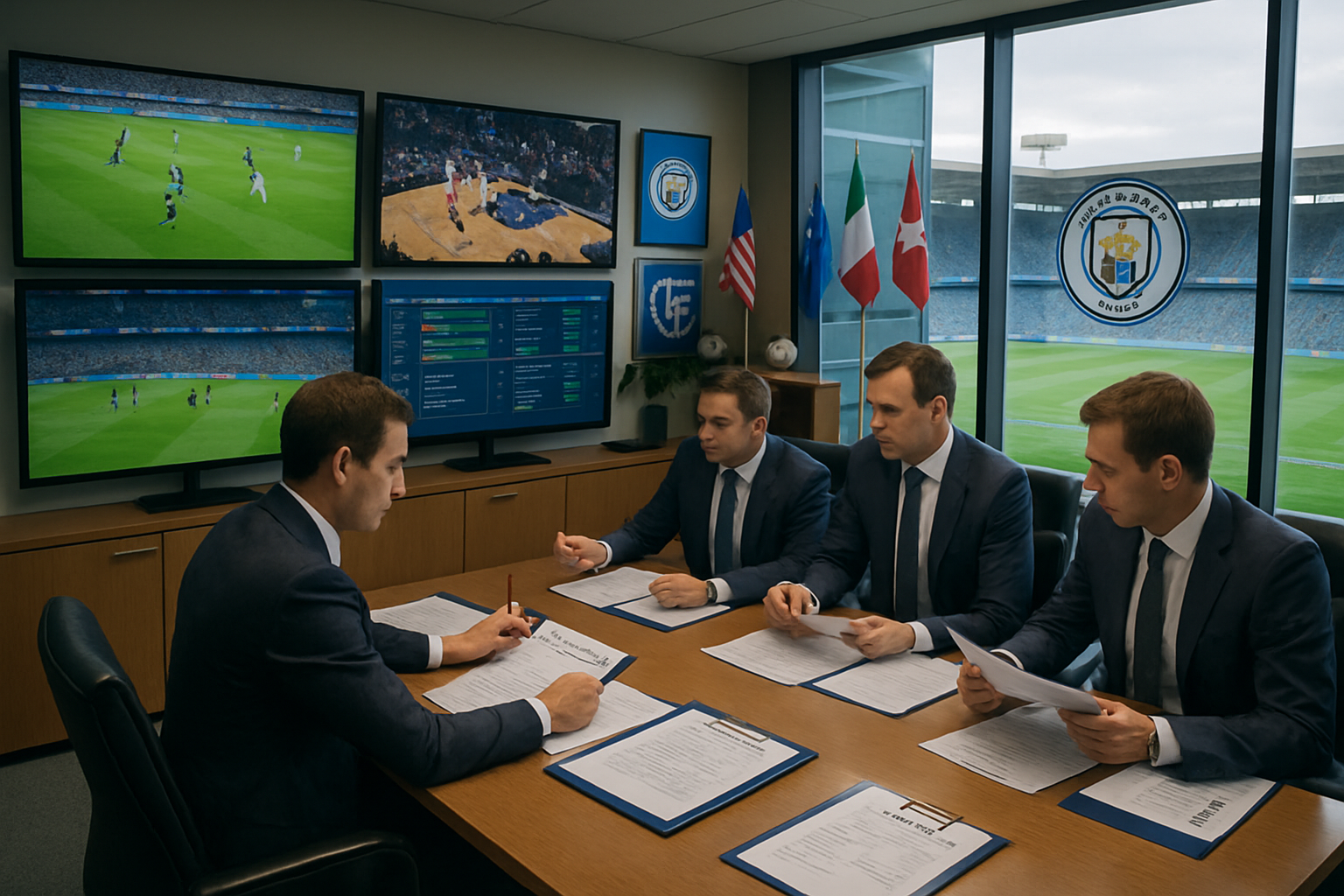
February 2026 has emerged as a pivotal month for the global sports industry, with a wave of high-profile coaching changes, strategic player transfers, and organizational restructuring reshaping competitive landscapes from basketball courts in North America to football pitches across multiple continents.
Basketball's Generational Shift: NBA Legend Chris Paul Retires
One of the most significant developments has been the retirement of NBA icon Chris Paul, marking the end of an era for professional basketball. The legendary point guard, widely regarded as one of the greatest floor generals in NBA history, announced his retirement after being released by the Toronto Raptors.
Paul's departure represents more than just the conclusion of an individual career—it symbolizes a generational transition in the NBA. Sources from both Bosnia and Herzegovina and Lithuania confirmed the retirement, with Lithuanian media describing it as a "painful finish" for the NBA legend. The timing of his release and subsequent retirement decision highlights the harsh realities of professional sports business, where even legendary players must eventually face the economic calculations of team management.
European Football's Coaching Carousel Accelerates
The European football landscape has experienced significant upheaval in its management structures. Nottingham Forest made headlines by appointing Vitor Pereira as their new manager, representing their fourth managerial change this season. The Portuguese tactician, who had been unemployed since his dismissal from Wolves in November, takes over following Sean Dyche's departure after a disappointing 0-0 draw against bottom-of-the-table Wolves.
This rapid succession of coaching changes reflects broader trends in modern football business, where clubs increasingly adopt short-term approaches to management, prioritizing immediate results over long-term development. The appointment of Pereira—a manager with experience in both European and international markets—demonstrates Forest's attempt to bring stability through proven leadership, even as they continue struggling in the Premier League.
South American Football: New Beginnings and Controversies
Argentina's football scene has seen notable developments with Diego Flores officially presented as the new coach of Instituto. The newly appointed manager of "La Gloria" expressed his excitement, stating "It's a dream to coach Instituto," while emphasizing the immediate pressure: "We need a victory on Sunday" ahead of their crucial match against Central Córdoba at the Monumental.
Meanwhile, Ecuadorian football has been marked by both exciting debuts and serious controversies. Kendry Páez made his highly anticipated debut with River Plate, playing 20 minutes in a 1-0 defeat to Argentinos Juniors during the fifth round of the Torneo Apertura 2026. The young talent's introduction to Argentine football represents a significant investment by River Plate and highlights the continuing trend of South American clubs developing young players for both domestic success and potential international transfers.
However, the region has also faced serious challenges. Alianza Lima strongly rejected racist statements made by journalist Gonzalo Núñez against player Eryc Castillo following a missed penalty in the Copa Libertadores 2026. The club's firm stance demanding rectification and apologies reflects growing awareness and action against discrimination in South American football.
"We need a victory on Sunday. This is our immediate priority and the fans deserve nothing less than our complete commitment."
— Diego Flores, Instituto Head Coach
Transfer Market Dynamics and Club Building
The February 2026 transfer window has showcased the evolving strategies of clubs worldwide. Emelec has emerged as a leader in Ecuador's LigaPro transfer market, incorporating coach Vicente Sánchez alongside multiple player reinforcements. The club's aggressive approach to strengthening their squad, while simultaneously conducting internal elections on February 18, demonstrates the complex intersection of sporting and administrative decision-making in modern football management.
This activity reflects broader trends in sports business where clubs must balance immediate competitive needs with long-term organizational stability. Emelec's dual focus on playing staff enhancement and administrative governance exemplifies how successful sports organizations must operate on multiple levels simultaneously.
Basketball Beyond the NBA: European Developments
European basketball has also experienced significant management decisions. Lithuania's Utenos "Juventus" club announced the extension of head coach Kęstutis Kemzūra's contract, demonstrating confidence in the 55-year-old strategist's leadership. This decision contrasts sharply with the rapid coaching changes seen in other sports, suggesting that basketball organizations may pursue more stable, long-term approaches to team management.
The extension represents a strategic investment in continuity, recognizing that successful basketball programs often require time to develop team chemistry and implement complex tactical systems. Juventus's commitment to Kemzūra reflects an understanding that sustainable success in professional basketball demands patience and consistent leadership.
Cricket and International Sports Management
The cricket world has seen its own management transitions, with former Black Caps player Peter Fulton departing as Canterbury head coach to accept a new role with English county side Middlesex. Fulton's move represents the increasingly international nature of sports management, where successful coaches and administrators frequently move between different leagues and countries.
His departure to pursue opportunities in English county cricket highlights how the global sports industry has become increasingly interconnected, with talent—both playing and coaching—flowing between different markets based on opportunity and compensation.
African Football Development and International Representation
African football continues to demonstrate growth and international integration. Senegalese striker Libasse Gueye has made a strong start with Simba SC in Tanzania's Premier League, having already played two matches since his recent arrival. His quick adaptation demonstrates the increasing mobility of African players across the continent and the strengthening of intra-African football networks.
Meanwhile, Ilay Camara is making a strong case for inclusion in Senegal's national team setup. The defender, who missed the recent Africa Cup of Nations due to injury, has recovered and is reportedly "knocking on the door" of the national team selection. His return highlights the competitive nature of international football and the constant evolution of national team squads.
Technical Innovation in Sports: The Panenka Technique Revisited
In an interesting intersection of sports history and current analysis, Antonín Panenka, the inventor of the famous penalty-taking technique that bears his name, provided commentary on Real Madrid's Brahim Díaz's missed penalty attempt. On the 50th anniversary of his famous technique, Panenka offered technical analysis of why the attempt failed, demonstrating how sports knowledge and expertise continue to evolve and inform current practice.
This development illustrates how sports business extends beyond immediate competitive concerns to include the preservation and application of historical knowledge and technique development.
Economic and Strategic Implications
The developments observed in February 2026 reveal several key trends shaping the sports industry:
- Increased Manager Turnover: Football clubs are demonstrating decreased patience with underperforming coaches, leading to more frequent changes that carry significant financial costs.
- International Talent Mobility: Players and coaches are increasingly mobile across borders, creating more complex contractual and regulatory environments.
- Youth Development Investment: Clubs are making substantial investments in young talent, as demonstrated by Kendry Páez's move and development.
- Social Responsibility: Organizations are taking stronger stances on discrimination and social issues, as seen in Alianza Lima's response to racist comments.
Future Outlook and Industry Evolution
The sports business landscape in February 2026 reflects an industry in rapid transition. The retirement of legends like Chris Paul signals generational change, while the constant movement of coaches and players indicates an increasingly dynamic and competitive environment.
Organizations that successfully balance short-term competitive pressures with long-term strategic planning—such as Juventus with their coach extension or Emelec with their comprehensive squad building—appear best positioned for sustainable success. Meanwhile, the industry's growing attention to social issues and international cooperation suggests that future success will require not just athletic and business excellence, but also social responsibility and global perspective.
The continued internationalization of sports management, combined with increased emphasis on youth development and social consciousness, suggests that the sports industry is evolving beyond pure entertainment toward a more complex ecosystem balancing competitive excellence, business sustainability, and social impact.
As February 2026 concludes, these developments establish important precedents for how sports organizations will navigate the challenges and opportunities of an increasingly globalized and socially conscious sporting environment. The success or failure of current strategies will likely influence industry practices for years to come.