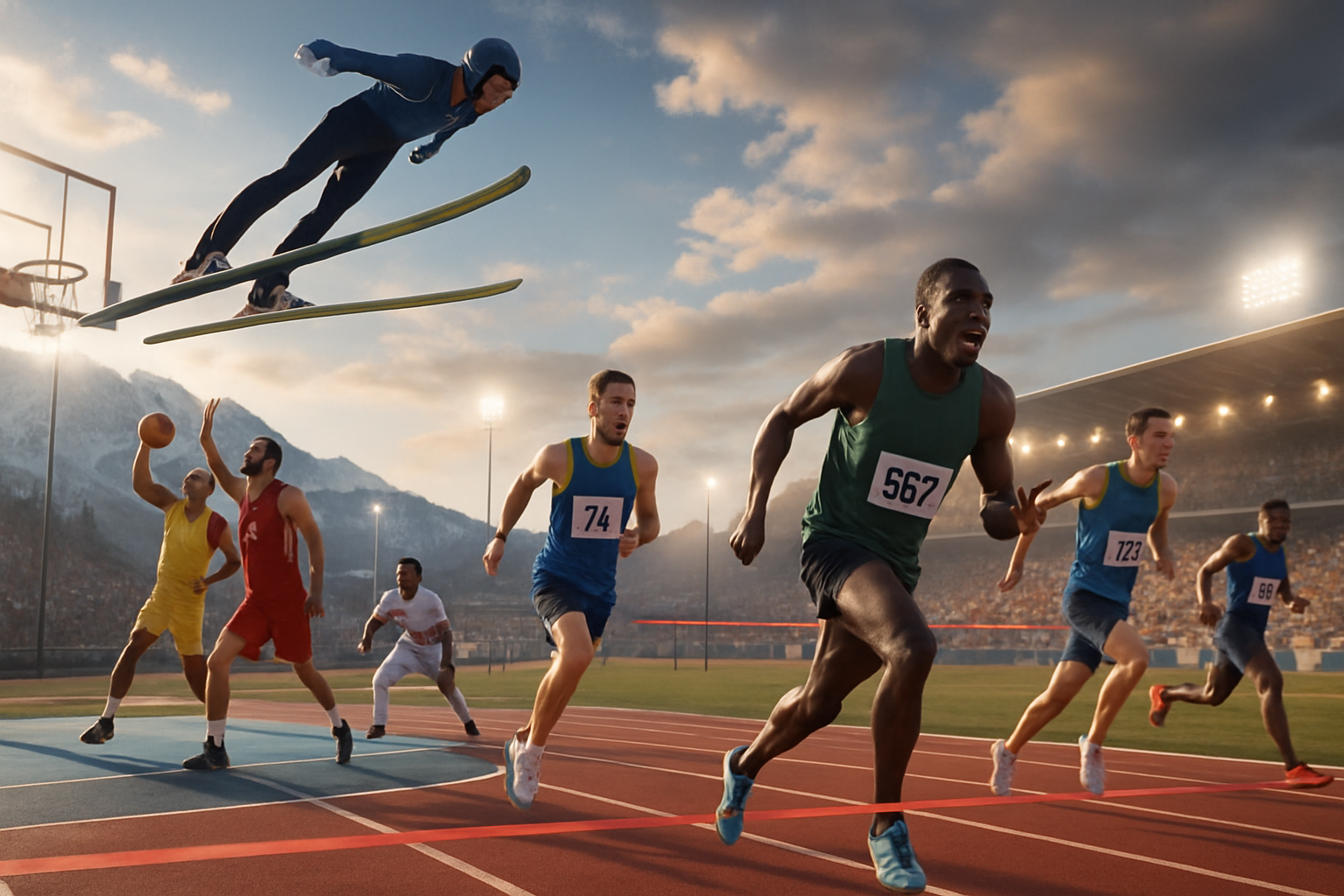
The global sports calendar is reaching fever pitch in March 2026, with basketball World Cup qualifiers delivering dramatic upsets, young biathlon champions making history in Germany, and football nations fine-tuning preparations for the upcoming FIFA World Cup amid unprecedented challenges.
From Lithuania's desperate quest to salvage their basketball World Cup dreams against an upstart Iceland team, to Latvia's golden moment in biathlon, the month has showcased both the unpredictable nature of elite competition and the emergence of new sporting powers challenging traditional hierarchies.
Basketball World Cup Qualifiers: David vs. Goliath Stories
Perhaps nowhere is the changing landscape of international basketball more evident than in Lithuania's struggle against Iceland in the FIBA World Cup 2027 qualifiers. The Lithuanian team, coached by Rimas Kurtinaitis, finds itself in an almost impossible position after suffering a shocking 85-86 defeat to Iceland in an away fixture - a result that has sent tremors through European basketball.
Iceland, a nation that has never before participated in a Basketball World Cup, has completely disrupted Lithuania's plans in Group D. The Icelanders' sensational victory has left the Lithuanians facing the possibility of missing their first World Cup since the sport's global expansion, a scenario that would have seemed unthinkable just months ago.
"They are already disrupting all possible plans of the Lithuanian national team - even the possibility of winning a ticket to the planet's championships."
— Lithuanian Sports Media
The situation highlights basketball's continued democratization, with smaller nations like Iceland capitalizing on improved coaching, player development programs, and strategic planning to compete with traditional powerhouses. Lithuania's predicament serves as a stark reminder that in modern international basketball, reputation alone guarantees nothing.
Meanwhile, other European nations are experiencing similar challenges. Estonia suffered a home defeat to Sweden 69-79 in their World Cup qualifier, while Croatia continues to impress against traditional powers like Germany, keeping their World Cup dreams alive through systematic improvement and tactical discipline.
Biathlon's Golden Generation Emerges
While basketball nations battle for World Cup spots, Latvia is celebrating a historic triumph in biathlon. The nation's mixed relay team achieved something extraordinary at the World Youth and Junior Championships in Germany, claiming gold in the junior competition - a victory that signals the emergence of a new generation of winter sports talent.
The success comes at a perfect time for Latvia, which has been investing heavily in winter sports infrastructure and youth development programs. The mixed relay format, which combines technical skiing ability with precision shooting under pressure, has become increasingly competitive as more nations recognize biathlon's growing global appeal.
This breakthrough follows Latvia's remarkable showing at the Milano-Cortina 2026 Winter Olympics, where the nation sent a record 68-athlete delegation and consistently competed at the highest levels across multiple disciplines. The youth championship success suggests this winter sports momentum will continue into the next Olympic cycle.
Football World Cup Preparations Intensify
As the FIFA World Cup 2026 approaches, national teams are using every available window to fine-tune their preparations. Algeria has scheduled a crucial friendly against the Netherlands on June 3 in Rotterdam's Feyenoord Stadium, marking their final preparation match before entering the tournament's intense atmosphere.
The match represents more than just tactical preparation for Algeria. It's an opportunity to test their systems against a European powerhouse known for technical excellence and systematic approach to the game. For the Netherlands, meanwhile, it's a chance to assess their own preparations against a North African team that brings a different style and tactical approach.
These preparation matches have taken on added significance given the ongoing challenges facing World Cup 2026. The tournament continues to face security concerns in Mexico, visa complications for various nations, and logistical challenges inherent in the first-ever three-country World Cup format across the United States, Canada, and Mexico.
Rising Stars and Award Recognition
Individual excellence continues to shine through across various sports. Malawi's football scene celebrated Temwa Chawinga at the Malawi Sport Awards, recognizing outstanding achievement in women's football. These national sports awards ceremonies serve as crucial platforms for acknowledging athletic excellence and inspiring the next generation of competitors.
Such recognition events have become increasingly important in developing sports nations, where individual success stories can catalyze broader sporting development and inspire investment in youth programs and infrastructure.
The Evolution of Tournament Formats
Norwegian sports media has been analyzing new tournament formats that could revolutionize competitive structures across multiple sports. These format innovations reflect ongoing efforts to balance competitive integrity with commercial viability and fan engagement, particularly as sports organizations adapt to changing viewing habits and global market demands.
The discussion around tournament formats extends beyond single sports, as organizations worldwide grapple with how to maintain traditional sporting values while embracing necessary modernization for global growth and accessibility.
Olympic Legacy Continues
The success stories emerging in March 2026 build directly on the revolutionary Milano-Cortina Winter Olympics that concluded in February. The Games demonstrated that athletic excellence transcends traditional geographic and economic boundaries, a lesson being reinforced by current competitions across basketball, biathlon, and football.
Latvia's biathlon success, Iceland's basketball breakthrough, and continued international football development all reflect the democratization of global sports that was so prominently displayed during the Winter Olympics. Nations are increasingly capable of competing at the highest levels through strategic investment, improved coaching education, and international cooperation.
Looking Ahead: The Global Sports Landscape
As March 2026 unfolds, several key themes emerge from international sports competition. Traditional powerhouses face unprecedented challenges from emerging nations who have invested systematically in athlete development and coaching infrastructure. The gap between established and developing sports nations continues to narrow across multiple disciplines.
The success of smaller nations like Iceland in basketball and Latvia in biathlon demonstrates that modern sports success increasingly depends on strategic planning, proper resource allocation, and systematic development rather than just traditional sporting heritage or large population bases.
These developments suggest that the upcoming FIFA World Cup 2026 and future international competitions will feature more competitive balance than ever before. The era of predictable outcomes and traditional hierarchies appears to be giving way to a more dynamic, globally competitive landscape where any prepared nation can achieve breakthrough results.
For sports fans worldwide, this evolution promises more dramatic competitions, unexpected outcomes, and inspiring stories of national sporting achievement that transcend traditional boundaries and expectations.