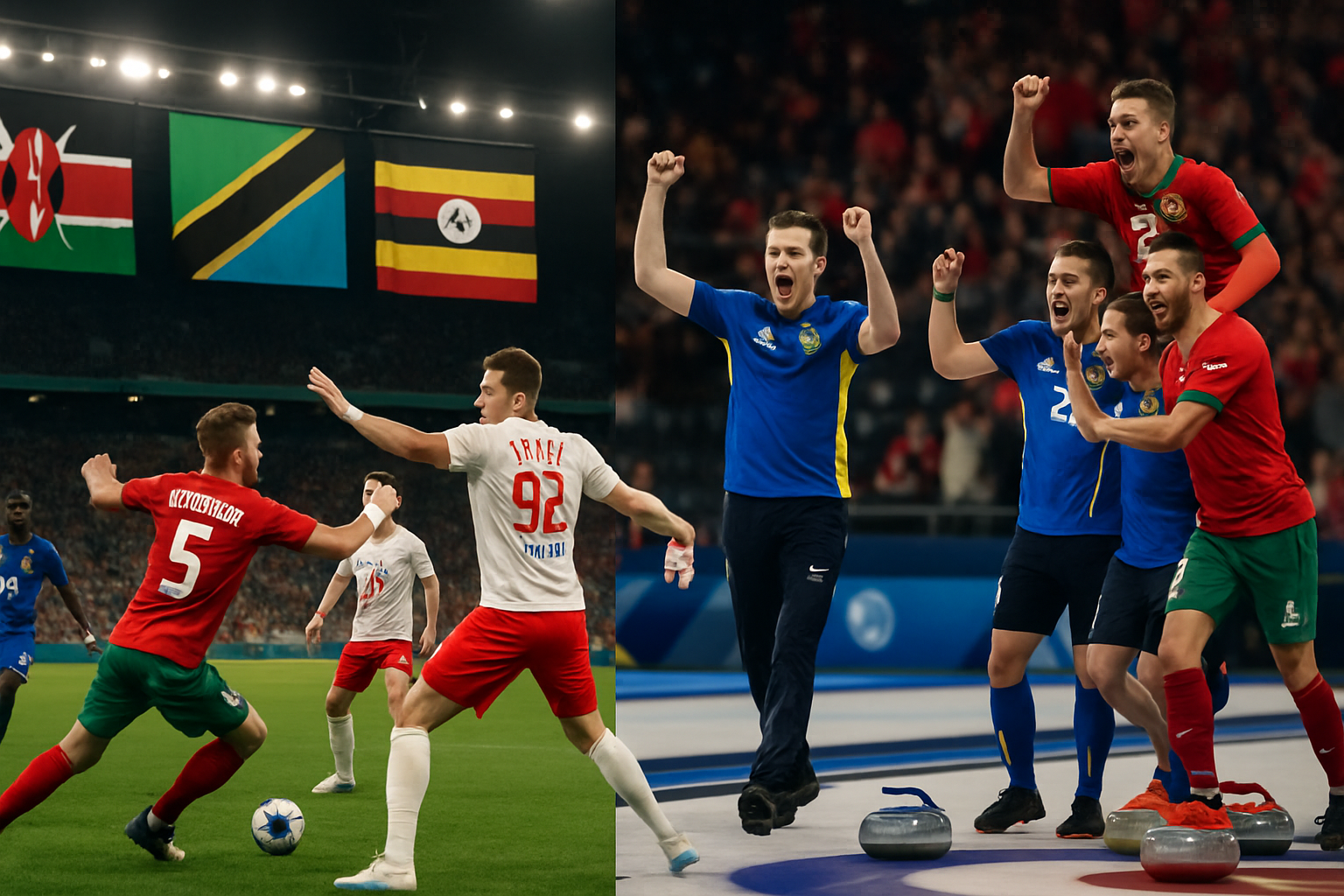
International sports competitions across multiple disciplines are experiencing significant developments as Kenya faces potential loss of AFCON 2027 hosting rights, Sweden secures crucial curling advancement, Latvia suffers setbacks in handball qualifications, and controversial decisions continue to shape continental football governance.
Kenya's AFCON 2027 Hosting Crisis Deepens
Kenya, alongside co-hosts Tanzania and Uganda, stands on the verge of losing rights to host the 2027 Africa Cup of Nations after failing to meet critical financial obligations. The historic tri-nation tournament, scheduled for June 19 to July 18, 2027, would mark the first time three countries have jointly hosted Africa's premier football competition.
According to sources close to the Confederation of African Football (CAF), Kenya has yet to pay approximately KSh 35 billion in hosting fees, putting the entire hosting arrangement in jeopardy. This financial shortfall threatens not only Kenya's participation as a host nation but could also impact the broader East African hosting model that was viewed as a revolutionary approach to continental tournament organization.
The potential loss of hosting rights comes at a particularly sensitive time for African football governance, following the ongoing AFCON 2025 title controversy between Morocco and Senegal that has severely damaged CAF's institutional credibility on the international stage.
Sweden's Curling Success Amid Global Winter Sports Evolution
In a significant achievement for Swedish winter sports, the national curling team led by Isabella Wranå secured their place in the World Championship playoffs with a narrow 8-6 victory over Turkey. The triumph represents Sweden's continued excellence in curling following their impressive performance at Milano-Cortina 2026 Winter Olympics, where the Wranå siblings claimed gold in mixed doubles competition.
The advancement to the World Championship semifinals demonstrates the sustained quality of Swedish curling programs and builds on the momentum from their Olympic success. The victory over Turkey, while close, showcased the tactical discipline and technical precision that have become hallmarks of Swedish curling excellence.
"This advancement represents the culmination of years of systematic development in Swedish curling. The team's ability to perform under pressure continues to set the standard for international competition."
— Swedish Curling Federation representative
Latvia's Handball World Cup Qualifying Setback
Latvia's men's handball team suffered a disappointing 24-33 defeat to Poland in the second round of 2027 World Championship qualifications, played at home in Jelgava. The 12-17 halftime deficit proved insurmountable as Poland demonstrated superior tactical execution and physical preparation throughout the encounter.
The loss significantly complicates Latvia's path to the 2027 World Championship, requiring the team to regroup and secure victories in remaining qualifying fixtures. The defeat highlights the increasing competitiveness of European handball, where traditional powerhouses face sustained challenges from developing handball nations investing heavily in systematic player development and coaching infrastructure.
Poland's victory continues their strong qualification campaign and reinforces their status as one of Europe's emerging handball forces, building on recent successes in continental competitions.
Morocco's Continental Football Controversy Continues
The ongoing AFCON 2025 title controversy reached new heights as CAF President Patrice Motsepe defended the organization's decision to strip Senegal of their championship and award the title to Morocco. The decision, made months after the tournament's conclusion in Rabat on January 18, represents an unprecedented intervention in African football governance.
Motsepe's statement that the organization's "disciplinary and appeals panels had acted independently" has been met with widespread international skepticism, with critics arguing that the decision undermines the fundamental principle of sporting result finality. The controversy has generated diplomatic tensions between Morocco and Senegal while raising broader questions about CAF's institutional integrity.
International football experts have described the situation as potentially setting a dangerous precedent for post-tournament administrative reversals, with implications extending far beyond African football. The case is currently under appeal at the Court of Arbitration for Sport (CAS), where Senegal maintains their position that they "will not surrender the trophy."
Broader Implications for International Sports Governance
These developments across different sports disciplines reflect broader challenges facing international athletic governance in an increasingly complex global environment. From financial obligations in tournament hosting to controversial administrative decisions and qualification system pressures, sporting federations are navigating unprecedented challenges.
The Kenya hosting crisis demonstrates the financial realities of modern tournament organization, where massive infrastructure investments and operational costs can overwhelm even committed host nations. The situation mirrors similar challenges faced during recent major sporting events, where economic pressures have threatened tournament integrity.

Meanwhile, the success of Swedish curling and the challenges facing Latvian handball illustrate the evolving competitive landscape in European sports. Traditional powerhouse nations face increasing pressure from systematic development programs in smaller countries, creating more competitive and unpredictable international tournaments.
Looking Forward: Challenges and Opportunities
As international sports competitions continue to expand in scope and complexity, these recent developments highlight both the opportunities and challenges facing global athletic governance. The potential resolution of Kenya's AFCON hosting crisis will establish important precedents for future multi-nation tournament arrangements and financial responsibility sharing.
For European sports, the contrasting fortunes of Swedish curling success and Latvian handball struggles demonstrate the importance of sustained investment in athletic infrastructure and coaching development. The increasing competitiveness across all levels suggests that future international competitions will feature more unpredictable results and breakthrough performances from traditionally smaller sporting nations.
The resolution of Morocco's AFCON title controversy will likely influence how continental football federations handle post-tournament disputes and establish frameworks for maintaining sporting integrity while addressing legitimate procedural concerns. The international attention focused on this case underscores the global significance of regional sporting decisions in an interconnected athletic world.
As these stories continue to develop, they collectively illustrate the dynamic nature of international sports governance and the ongoing evolution of competitive athletic landscapes across multiple continents and disciplines.