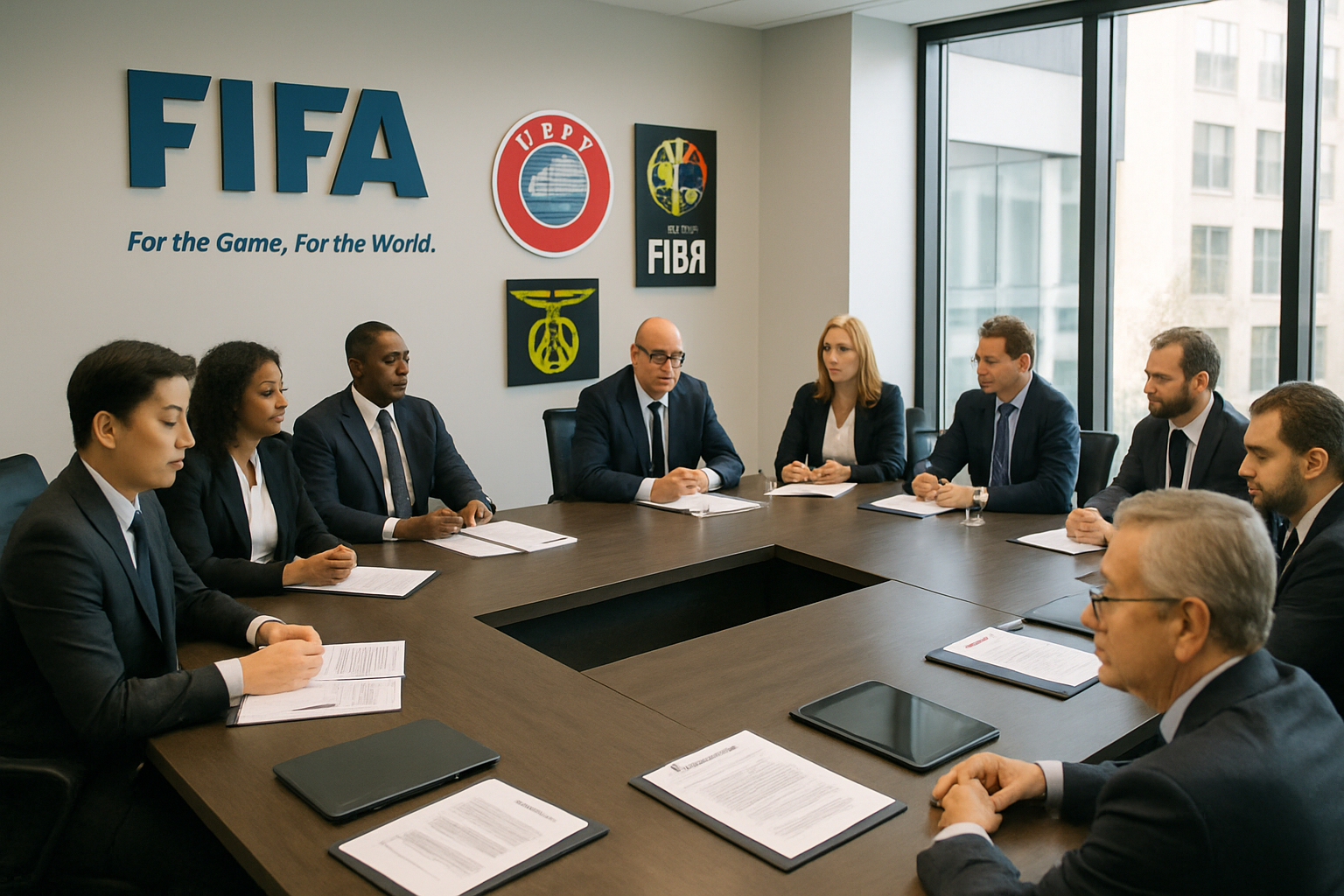
Sports governance across the globe is experiencing a seismic shift as February 2026 witnesses unprecedented challenges to traditional administration structures, with leadership elections, corruption investigations, and policy controversies reshaping how sporting bodies operate at the highest levels.
Ecuador's Electoral Transformation Sets Democratic Precedent
The Ecuadorian Football Federation (FEF) announced a comprehensive electoral calendar for its new Board of Directors, scheduled for March 17, 2026, in Guayaquil. This democratic process comes amid strict deadlines for candidatures and administrative stages that began immediately, representing a commitment to transparent governance following years of institutional challenges.
The elections signal a broader movement across Latin American sporting federations toward enhanced accountability and democratic participation. Ecuador's approach, with its emphasis on rigorous administrative oversight and clear timelines, could serve as a template for other national federations seeking to modernize their governance structures.
Argentina's Tax Scandal Exposes Systemic Issues
The Argentine Football Association (AFA) finds itself embroiled in a serious financial misconduct investigation as President Claudio Tapia faces legal proceedings over improper retention of employee tax contributions. Prosecutors and ARCA (Argentina's tax authority) rejected Tapia's dismissal request, arguing that existing judicial resolutions did not extend to mandatory contribution requirements.
"This represents a serious breach of fiduciary responsibility with potential criminal charges."
— Argentine Legal Expert
The case demonstrates the vulnerability of sports federation structures to corruption despite their significant resources and public responsibilities. Tax authorities are taking an increasingly aggressive stance against financial irregularities, reflecting growing intolerance for misconduct at the highest levels of sports administration.
Slovakia's Procurement Scandal Highlights Due Diligence Failures
The Slovak Football Federation (SFZ) became embroiled in a multi-million procurement scandal involving a convicted businessman's company for mobile phone acquisitions. The deals collapsed amid financial difficulties, with the federation accumulating substantial debts through questionable business relationships.
This scandal raises serious concerns about due diligence processes and oversight mechanisms within national football governance. The involvement of convicted individuals in federation business transactions exposes fundamental weaknesses in procurement protocols and financial oversight systems.
FIFA's Controversial Stance on Russian Participation
FIFA President Gianni Infantino faced fierce international criticism for suggesting Russia's competition ban should be lifted despite the ongoing Ukraine conflict. Infantino argued that the four-year ban imposed after Russia's invasion "has not achieved anything, it has just created more frustration and hatred."
The statement drew immediate condemnation from Ukrainian and European sources, particularly given the context of continued Russian attacks on civilian infrastructure. European football federations maintain strong opposition to lifting the ban, citing over 10,000 Russian drones and bombs launched in January 2026 alone.
Caribbean Sports Governance Breakthrough
In a positive development for regional representation, Saint Lucia achieved a historic breakthrough with Lyndon Cooper, SLFA president, being elected CONCACAF Vice President. This appointment represents unprecedented Caribbean representation in confederation leadership and reflects the democratization of sports governance with greater regional participation.
Cooper's election demonstrates how smaller nations can achieve breakthrough successes in sports administration through strategic development and focused leadership approaches. This success challenges traditional power structures within continental federations.
Global Implications and Reform Patterns
These developments reflect broader patterns affecting sports governance worldwide. Traditional powers face mounting pressure for reform while institutional barriers often resist necessary changes. The intersection of politics and sports administration has become increasingly complex, with geopolitical tensions affecting sporting relationships and governance decisions.
Democratic Evolution in Sports Bodies
Ecuador's structured electoral approach and the Caribbean's enhanced representation signal an evolution toward more democratic sports governance. These changes suggest that traditional, centralized power structures are giving way to more inclusive and accountable systems.
Corruption and Accountability Measures
The Argentina and Slovakia cases demonstrate that sports federations can no longer operate with impunity regarding financial irregularities. Tax authorities and prosecutors are increasingly willing to pursue criminal charges against sports officials, setting important precedents for future accountability measures.
Technology and Modern Governance Challenges
Modern sports governance must also contend with technological challenges, including AI-generated disinformation campaigns that affected recent elections in Japan and other democratic processes. Enhanced fact-checking and digital literacy have become essential components of maintaining electoral integrity in sports administration.
The global sports community is witnessing the emergence of more sophisticated governance mechanisms that combine traditional administrative functions with modern technological safeguards and democratic accountability measures.
Looking Forward: The Future of Sports Administration
As February 2026 continues to unfold, the sports world faces critical decisions about the direction of institutional governance. The success or failure of reforms in Ecuador, the resolution of corruption cases in Argentina and Slovakia, and the international community's response to controversial positions like FIFA's Russia stance will shape sports administration for years to come.
These developments occur within a broader context of global democratic stress, where sports institutions serve as both mirrors of and influences on wider political and social trends. The challenge for sports governance is to maintain the integrity and universality of sport while adapting to contemporary demands for transparency, accountability, and inclusive representation.
The outcomes of these various governance challenges will likely establish precedents for how sports federations worldwide handle similar issues in an increasingly interconnected and politically complex global environment.