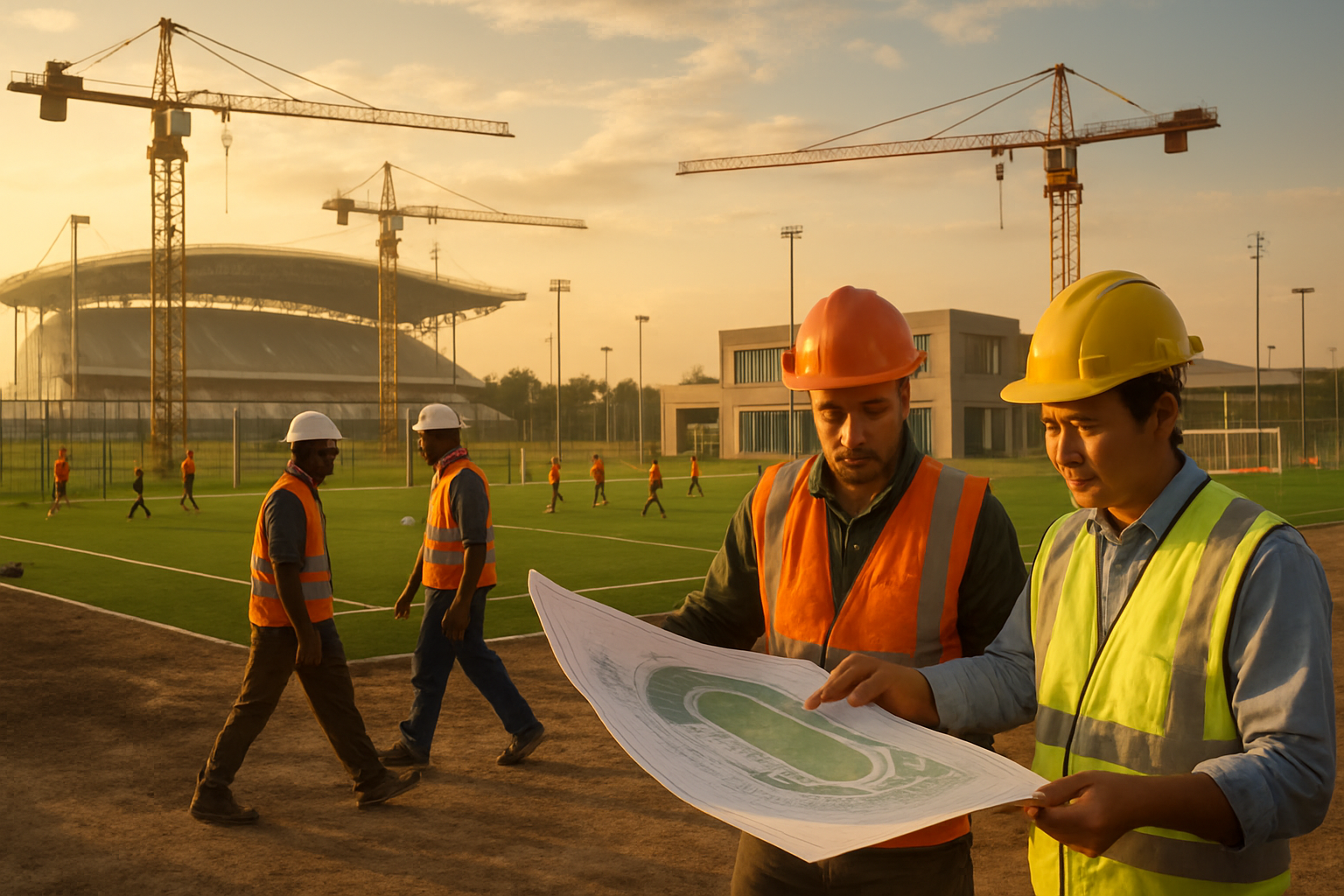
A coordinated surge in sports infrastructure investment and development programs across multiple nations is fundamentally reshaping athletic opportunities and community development, with projects spanning from world record attempts in Azerbaijan to comprehensive youth development initiatives across the Caribbean and Pacific regions.
Recent developments across Azerbaijan, Guyana, Papua New Guinea, and the Philippines reveal a sophisticated understanding of sports infrastructure as essential economic and social catalyst, moving beyond traditional views of athletic facilities as luxury amenities to recognition as strategic community assets.
Azerbaijan's World Record Ambitions
Azerbaijan's sports development efforts have captured international attention with table tennis player Nihad Mammadov approaching entry into the Guinness World Records, as reported by the Azerbaijan Table Tennis Federation. This achievement represents the culmination of systematic investment in specialized sporting disciplines, demonstrating how focused development programs can elevate athletes to global recognition levels.
The pursuit of world records serves multiple functions beyond individual achievement, generating international media attention that positions Azerbaijan as a serious competitor in global sports while inspiring domestic participation in table tennis and other athletic disciplines. Such achievements create template effects, showing young athletes that world-class performance is achievable through dedicated training and proper support systems.
Caribbean Cricket Development Renaissance
Guyana's cricket development ecosystem demonstrates the sophisticated integration of private sector partnerships with grassroots sporting programs. The Rose Hall Town Youth and Sports Club received substantial support from Panthera Solutions, including pitch covers and equipment that directly address infrastructure challenges limiting training consistency and match quality.
"Panthera Solutions is very pleased to be associated with the Rose Hall Town Youth and Sports Club, as it is a dynamic and very progressive organisation. We are confident that this contribution would play a major role in the continued development of the club cricket teams on and off the cricket field," stated Tony Turnbull, General Manager of Panthera Solutions, during the equipment presentation.
This partnership model represents emerging trends in sports development financing, where private companies recognize the economic and social returns from supporting community athletic programs. Such investments create employment opportunities, enhance local reputation, and contribute to broader tourism development strategies that position cricket-playing regions as attractive destinations for sports tourism.
Simultaneously, Guyana's participation in the West Indies Championships demonstrates the effectiveness of systematic talent development. Gudakesh Motie's outstanding bowling performance, claiming six wickets on the opening day, exemplifies how individual excellence emerges from sustained investment in coaching, facilities, and competitive opportunities that allow athletes to develop skills against high-level opposition.
Pacific Innovation in Talent Pipeline Development
Papua New Guinea's approach to sports development showcases innovative strategies for addressing geographical and demographic challenges through the "U19 Gap" initiative. This program specifically targets the critical transition period when young athletes move from youth competitions to senior professional opportunities, a gap that historically resulted in talent loss due to insufficient developmental pathways.
The PNG Chiefs' comprehensive strategy involves active discussions to involve Under-19 talent in structured programs that bridge amateur and professional athletics. This approach recognizes that raw talent requires sustained support systems, competitive opportunities, and professional guidance to achieve international competitiveness.
Papua New Guinea's mountainous terrain and diverse linguistic landscape create unique challenges for sports development, with over 800 languages spoken across remote communities. The success of programs like the Chiefs' talent pipeline demonstrates adaptive management strategies that overcome geographical constraints through innovative transportation, communication, and coaching deployment methods.
Philippines Sports Hall of Fame Institutional Recognition
The Philippines' approach to sports development emphasizes institutional recognition and historical continuity through the Philippine Sports Hall of Fame's fifth induction ceremony. Basketball legend Ramon Fernandez and Olympic boxing silver medalist Mansueto "Onyok" Velasco lead seven new inductees, representing decades of athletic excellence across multiple disciplines.
"The Philippine Sports Hall of Fame is more than an honor roll of medals — it is a living ledger of greatness to honor those who have defined what it means to be Filipino in sports," explained PSC chairman Patrick "Pato" Gregorio, highlighting the intersection of athletic achievement with cultural identity and national pride.
This institutional approach serves multiple development functions, providing role models for emerging athletes, preserving sporting heritage knowledge, and creating networking opportunities that connect established champions with current athletes seeking guidance and mentorship.
The inclusion of athletes from diverse disciplines - basketball, boxing, taekwondo, tennis, para powerlifting, and athletics - demonstrates the Philippines' comprehensive approach to sporting excellence that values achievement across the full spectrum of athletic competition rather than focusing exclusively on traditionally dominant sports.
Global Context and Emerging Trends
These developments occur within a broader context of unprecedented global sports infrastructure investment, building on the success of the Milano-Cortina 2026 Winter Olympics model that demonstrated how innovative management can overcome traditional hosting challenges including venue construction, transportation limitations, and power infrastructure constraints.
The economic implications of sports infrastructure investment extend far beyond immediate construction employment and athlete development. Research demonstrates that comprehensive sports facilities generate sustained economic benefits through tourism attraction, media exposure, youth development programs that address broader social challenges, and legacy recreational facilities that serve communities for decades after initial construction.
Technology integration represents another crucial development trend, with facilities incorporating artificial intelligence systems for performance analysis, advanced broadcasting capabilities that were previously limited to wealthy nations, and digital training tools that democratize access to elite coaching methods through online platforms and virtual reality systems.
International Cooperation and Knowledge Transfer
The success of sports infrastructure development increasingly depends on international cooperation and knowledge transfer opportunities. Institutional partnerships like Ghana's Sports Writers Association collaboration with government policy makers, PNG's preparation for NRL entry based on established league standards, and Zimbabwe's integration of sports development with tourism economic objectives create rich knowledge bases for cross-national learning.
This cooperation enables smaller nations to access expertise and resources that would be prohibitively expensive to develop independently, while contributing unique innovations back to global knowledge networks. The Caribbean's cricket development partnerships, Pacific rugby league expansion models, and Asian table tennis excellence programs provide complementary approaches to systematic athletic development.
Sustainability and Long-term Development
The sustainability of current sports infrastructure investments depends on several critical factors identified across successful programs. Sustained political commitment that survives leadership changes represents the most crucial element, as sports development requires multi-year implementation periods that extend beyond typical electoral cycles.
Effective project management that addresses both technical requirements and community engagement ensures that facilities serve broad populations rather than elite-only constituencies. International cooperation provides resilience against single-nation resource constraints while maintaining competitive standards attractive to global sporting audiences.
Community ownership of sporting programs creates lasting engagement that transforms sports facilities from occasional-use venues into daily community gathering spaces that contribute to social cohesion, youth development, and economic activity throughout the year.
Future Implications and Strategic Significance
The current wave of sports infrastructure development represents a fundamental shift toward understanding athletic facilities as strategic infrastructure that contributes to economic development, international competitiveness, and community resilience. Success stories from Azerbaijan's world record pursuits to Papua New Guinea's talent pipeline innovations provide practical templates that other nations can adapt to their specific cultural, economic, and geographical circumstances.
The emphasis on youth development programs addresses broader social challenges while building athletic excellence, creating comprehensive approaches that justify infrastructure investment through multiple benefit streams. Whether through Guyana's private-public cricket partnerships or the Philippines' institutional recognition programs, successful initiatives demonstrate sophisticated integration of sporting goals with community development objectives.
As these programs mature throughout 2026, they will provide crucial evidence for the effectiveness of coordinated international investment in sports development. The outcomes will influence future infrastructure decisions, international cooperation frameworks, and policy approaches that could reshape regional sporting landscapes for generations.
The convergence of technological innovation, international cooperation, and community-centered development approaches suggests that 2026 may represent a turning point in global sports infrastructure development, establishing new standards for how nations can build sporting excellence while contributing to broader economic and social development goals.