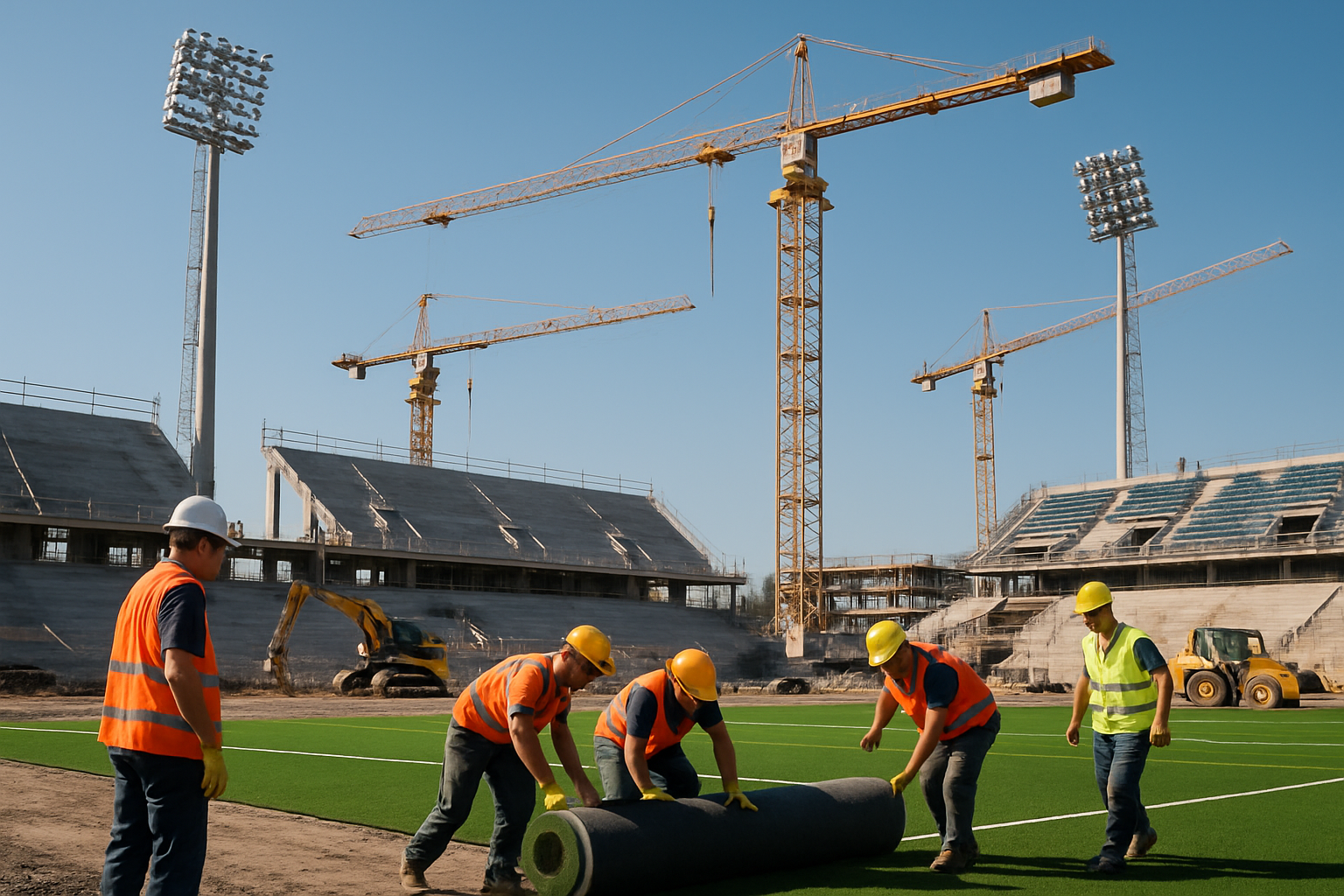
A wave of major sports infrastructure investments is transforming athletic development across multiple continents, with Barbados leading a Caribbean renaissance through a $50 million commitment to six major projects while lighting upgrades and facility repairs demonstrate the global scope of this unprecedented expansion.
Minister of Sports and Community Empowerment Charles Griffith announced during Parliament's Estimates of Revenue and Expenditure 2026-2027 that Barbados is implementing what represents the island's most ambitious sports infrastructure initiative in decades. The comprehensive package encompasses six major projects designed to modernize and enhance the nation's sporting capabilities.
Caribbean Sports Infrastructure Renaissance
The Barbados investment forms part of a broader Caribbean infrastructure renaissance that has gained momentum throughout 2026. Following Afreximbank's commitment to increase Caribbean investment allocation from $3 billion to $5 billion USD, the region is experiencing unprecedented development in sports facilities and athletic programs.
Complementing the major infrastructure projects, Barbados is simultaneously launching an "aggressive lighting programme" across state-owned playing fields. Senior Superintendent of Works at the National Sports Council Nicholas Matthias confirmed that this systematic approach will ensure all government sports facilities meet modern standards for extended play and enhanced safety.
The lighting initiative reflects sophisticated understanding of modern sports development requirements. Contemporary athletic facilities must accommodate extended training schedules, evening competitions, and community programs that depend on reliable infrastructure. The systematic approach—prioritizing state-owned facilities first—demonstrates strategic resource allocation ensuring maximum impact.
International Facility Developments
The global nature of current sports infrastructure development is exemplified by major renovations at Democratic Republic of Congo's Tout Puissant Mazembe stadium in Lubumbashi. Following crowd troubles during a March 8 derby against Lupopo, the club launched comprehensive repair work on March 12 at their Kamalondo commune facility.
The Mazembe stadium rehabilitation represents broader African sports infrastructure transformation. The club, one of Africa's most successful football institutions, requires world-class facilities to maintain competitive standards in continental and international competitions. The repairs demonstrate how sports infrastructure investment extends beyond new construction to systematic maintenance of existing facilities.
"These projects are part of government's multi-faceted approach to modernise and improve the sporting sector."
— Charles Griffith, Minister of Sports and Community Empowerment, Barbados
Technology Integration and Modern Standards
Contemporary sports infrastructure development incorporates advanced technology as standard rather than premium features. Modern facilities integrate digital monitoring systems, energy-efficient lighting, broadcast capabilities, and performance analysis tools that were previously available only to elite venues.
The lighting programs, in particular, demonstrate technological advancement democratization. LED systems with programmable controls, remote monitoring, and energy management capabilities are becoming standard across community-level facilities. This technological integration enables venues to host professional competitions while serving community recreation needs.
Infrastructure projects increasingly emphasize sustainability and environmental responsibility. Modern facilities incorporate renewable energy sources, water conservation systems, and environmentally responsible materials. The approach reflects growing recognition that sports facilities must serve as community assets supporting long-term development rather than short-term hosting capabilities.
Regional and Global Context
The current sports infrastructure surge occurs within documented global investment patterns. Recent analysis reveals over $570 billion in worldwide infrastructure development, with sports facilities representing significant portions of national development strategies. Countries recognize sports infrastructure as economic multiplier engines rather than luxury amenities.
The Caribbean's approach, exemplified by Barbados' comprehensive strategy, provides templates for small island developing states worldwide. The integration of major facility construction with systematic lighting upgrades demonstrates coordinated planning that maximizes investment impact while ensuring equitable access across communities.
Historical context from previous Caribbean sports development shows the importance of sustained political commitment and comprehensive stakeholder engagement. Successful projects combine international cooperation with local ownership, traditional community structures with modern technical requirements.
Economic and Social Impact
Sports infrastructure investment generates substantial economic multiplier effects through direct construction employment, enhanced tourism capabilities, and improved quality of life indicators. Modern facilities attract international competitions, training camps, and sporting events that provide sustained revenue beyond initial construction benefits.
The social dimension proves equally significant. Enhanced sports facilities provide youth development opportunities, community gathering spaces, and recreational outlets that contribute to public health and social cohesion. Investment in sports infrastructure represents investment in community resilience and human development.
For nations like Barbados, sports infrastructure development supports broader economic diversification strategies. World-class facilities enable hosting international competitions that generate tourism revenue, media exposure, and enhanced global visibility that benefits multiple economic sectors.
Implementation Challenges and Success Factors
Successful sports infrastructure development faces universal challenges including funding sustainability, technical capacity building, and climate adaptation requirements. Projects must accommodate extreme weather events, supply chain disruptions, and evolving technical standards while maintaining budget discipline and community benefits.
The Barbados approach demonstrates key success factors: comprehensive planning integrating multiple project types, sustained political commitment spanning electoral cycles, and stakeholder engagement ensuring community ownership. The combination of major facility construction with systematic lighting upgrades reflects sophisticated resource allocation balancing immediate visibility with practical functionality.
International cooperation plays crucial roles in successful implementation. Technical assistance, knowledge sharing, and equipment procurement benefit from regional coordination and global best practice adoption. The Caribbean's emergence as a sports infrastructure leader results partly from effective international partnership utilization.
Future Implications
The current sports infrastructure development wave represents fundamental shift in global development priorities. Countries increasingly recognize sports facilities as essential infrastructure supporting economic development, public health, and international competitiveness rather than optional amenities.
March 2026 developments establish precedents for continued expansion. Success in current projects influences future investment decisions and international cooperation frameworks. The integration of community access with professional standards creates sustainable models for sports development that benefit entire populations rather than elite athletes exclusively.
Looking ahead, sports infrastructure development will likely continue emphasizing technology integration, environmental sustainability, and community engagement. The current investment wave positions leading nations as regional hubs for athletic development, international competition hosting, and sports tourism.
The convergence of major facility investments with systematic infrastructure upgrades suggests a maturing understanding of sports development requirements. Countries implementing comprehensive approaches—like Barbados' combination of major projects with lighting programs—demonstrate strategic thinking that maximizes public investment impact while building foundations for sustained athletic excellence and community empowerment.