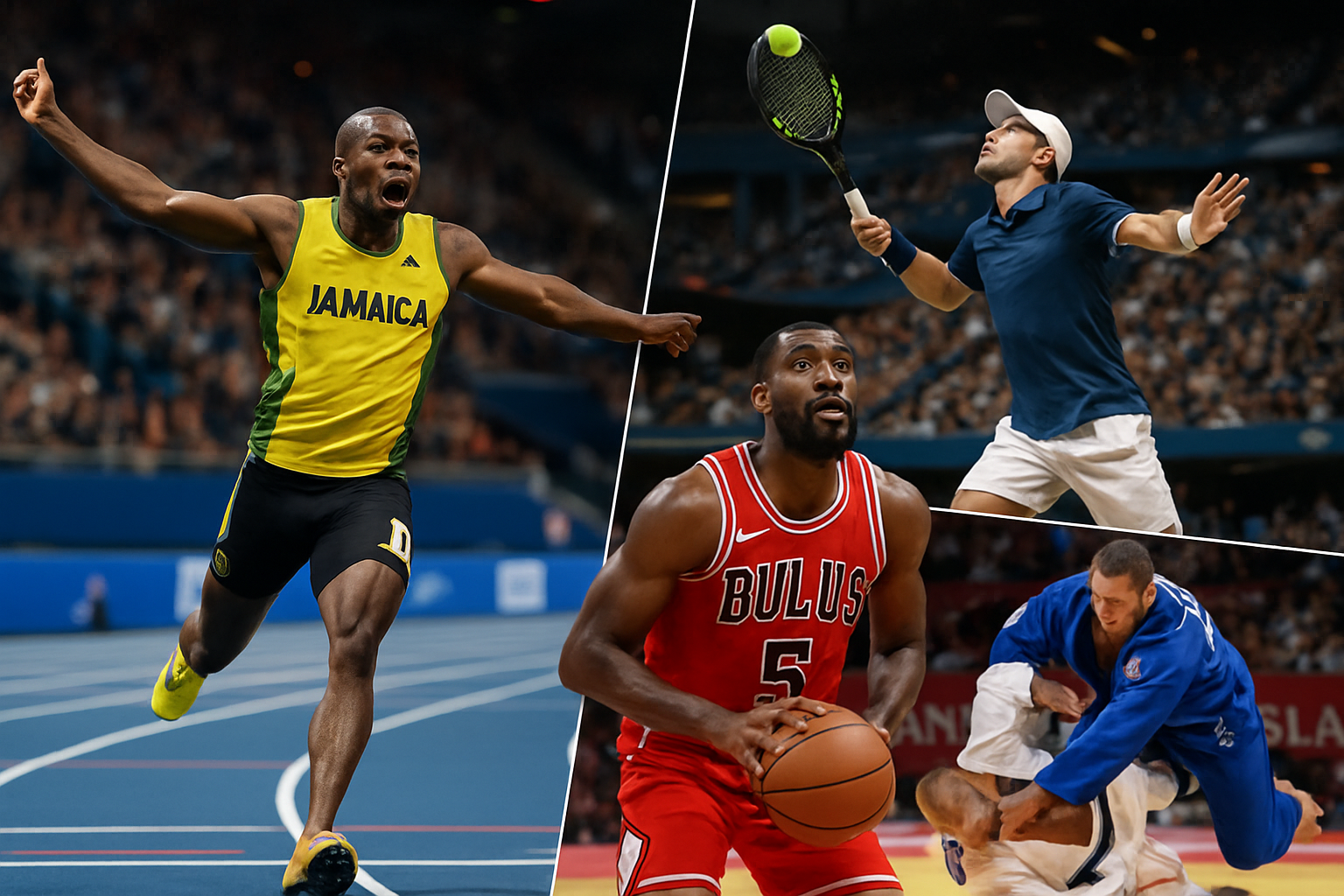
A remarkable weekend of international sporting competition saw breakthrough achievements from Caribbean athletes while European stars faced unexpected challenges, underscoring the increasingly competitive nature of global athletics in 2026.
The World Athletics Indoor Championships in Toruń, Poland delivered historic moments for Jamaican track and field, with two athletes achieving unprecedented milestones that will reshape their nation's sporting legacy for years to come.
Jamaica's Historic Double Breakthrough
Kishane Thompson captured silver in the men's 60m final with a personal best time of 6.45 seconds, marking his third consecutive silver medal across major global championships. The achievement extends a remarkable streak that began with his Olympic silver in Paris 2024 and continued through the World Athletics Championships in Tokyo 2025.
Thompson's consistency at the highest level demonstrates the evolution of Jamaican sprinting beyond its traditional outdoor dominance into indoor competition excellence. His performance came despite American Jordan Anthony's upset victory in a world-leading 6.41 seconds, with compatriot Trayvon Bromell completing the podium.
Even more significant was Jordan Scott's groundbreaking achievement in the triple jump, where he became the first Jamaican man to earn a medal in the event at World Indoor Championships. His silver medal performance of 17.33m represents a season's best and caps a brilliant competitive series in only his second outing of 2026.
"Scott's achievement etches his name in Jamaican track and field history through systematic improvement across all six attempts, demonstrating the technical excellence now characterizing Caribbean athletics."
— Paul A Reid, Athletics Correspondent
Scott's progression throughout the competition—17.29m, 17.30m, then 17.33m—showcased the methodical approach that has elevated Jamaica from a purely sprint-focused athletics nation to one competing successfully across field events.
European Tennis and Basketball Struggles
While Jamaica celebrated historic achievements, European athletes faced mixed fortunes across multiple disciplines. Latvia's tennis star Aļona Ostapenko advanced to the third round of the Miami WTA 1000 tournament, maintaining her position among elite players despite challenging conditions.
However, basketball provided a stark reminder of the physical demands facing modern professional athletes. Kristaps Porziņģis, representing Latvia in the NBA with the Golden State Warriors, was forced to leave a crucial game after just one half due to injury concerns. The 7-foot center managed only five points before being sidelined, highlighting the ongoing challenge of managing player health across an increasingly demanding professional basketball calendar.
The situation reflects broader concerns about athlete welfare in professional sports, where international competitions, domestic leagues, and playoff schedules create unprecedented physical demands on elite performers.
Azerbaijan's Judo Excellence
Azerbaijan's national judo team made an immediate impact at the Judo Grand Slam Tbilisi, with their athletes claiming silver medals on the opening day of competition. The performance continues Azerbaijan's strong tradition in combat sports and demonstrates the systematic development programs that have elevated the nation's standing in international judo competition.
The Grand Slam tournament serves as a crucial qualification event for major championships, making Azerbaijan's early success particularly significant for their Olympic and World Championship aspirations throughout 2026.
The Changing Landscape of Global Competition
These results reflect the broader democratization of international sports that has characterized 2026 following the revolutionary Milano-Cortina Winter Olympics. Traditional sporting hierarchies continue to face challenges from nations implementing strategic development programs and leveraging improved coaching access.
Jamaica's field event breakthrough exemplifies this trend, showing how sustained investment in technical coaching and training infrastructure can expand a nation's competitive capabilities beyond historical strengths. Similarly, Azerbaijan's continued judo success demonstrates the impact of systematic athlete development programs in creating consistent international competitiveness.
The weekend's events also highlighted the physical demands facing modern athletes across all sports. From indoor track competition requiring explosive power to professional basketball's grinding schedule, athletes must navigate increasingly sophisticated performance demands while maintaining peak physical condition.
Looking Ahead
As the international sporting calendar progresses through March 2026, these results establish important precedents for upcoming major competitions. Jamaica's historic achievements in field events suggest expanded medal potential for future championships, while the ongoing challenges facing European athletes in various sports indicate the increasingly competitive nature of global athletics.
The combination of breakthrough performances and persistent challenges demonstrates that success in modern international sport requires not only individual talent but also systematic support, strategic planning, and adaptive approaches to athlete development and competition management.
With major sporting events continuing throughout the spring, the weekend's results provide compelling evidence that 2026 remains a year where sporting excellence transcends traditional boundaries, creating opportunities for athletes from diverse backgrounds to achieve unprecedented success on the global stage.