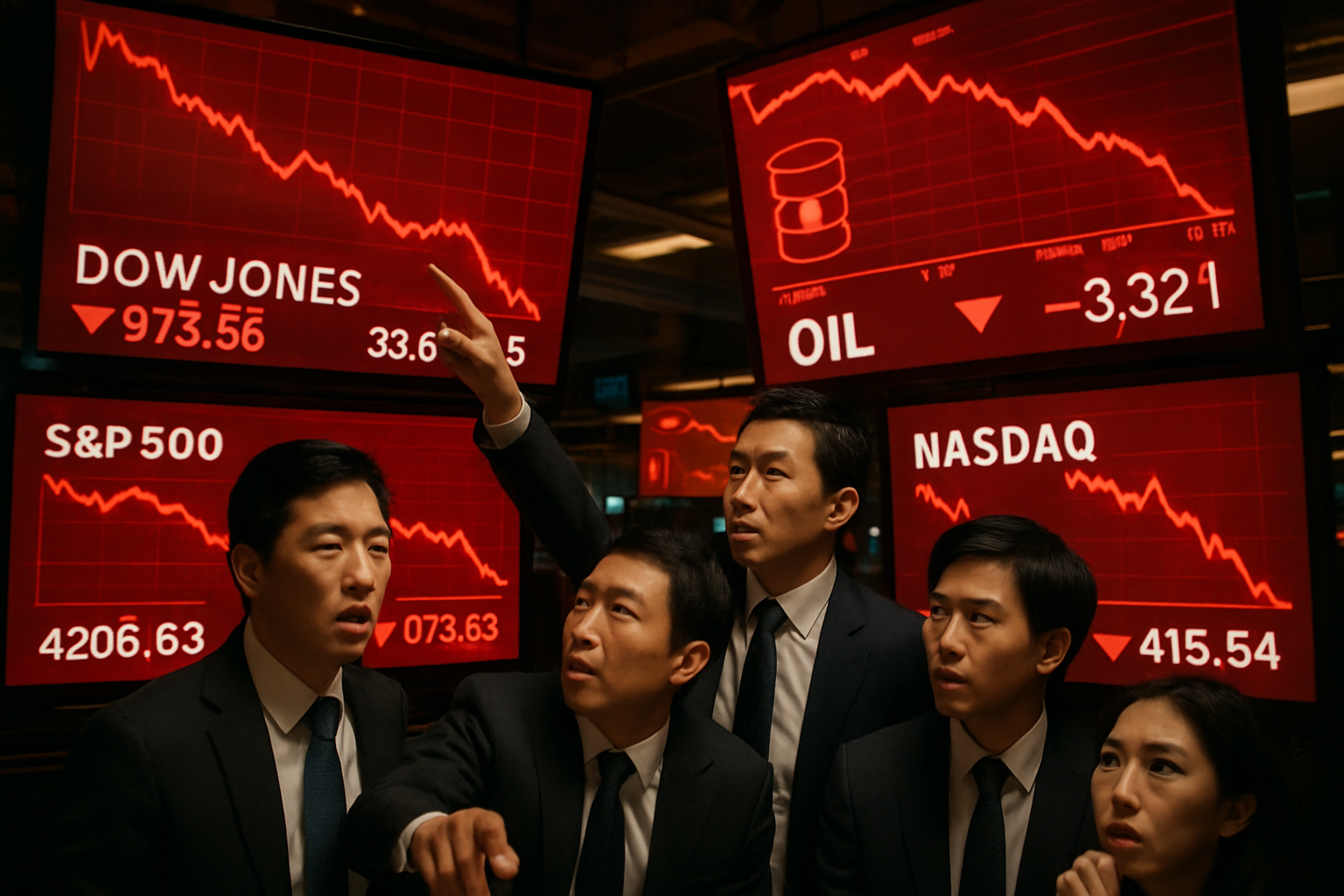
Global stock markets suffered their worst losses in years as the escalating Iran crisis sent shockwaves through financial systems worldwide, with Asian markets leading the plunge amid fears of prolonged Middle East conflict disrupting energy supplies and international trade.
Asian markets opened in chaos Monday morning following the weekend's "Operation Epic Fury" military strikes, with China's benchmark indices dropping sharply as investors fled to safe-haven assets. The Pakistan Stock Exchange suffered catastrophic losses, with the KSE-100 index plummeting over 15,000 points in a single session—a devastating 8.97% decline that forced trading suspensions.
Energy Markets in Turmoil
Oil prices surged past $80 per barrel as concerns mounted over the Strait of Hormuz—the world's most critical energy chokepoint handling 40% of global seaborne oil transit. Iran's declaration that the waterway was "unsafe" following the military strikes triggered panic across energy markets, with major shipping companies Maersk and MSC immediately suspending operations in the Persian Gulf.
Natural gas prices experienced unprecedented volatility, jumping 24% in European markets and a staggering 78% in US trading sessions. The crisis highlighted the vulnerability of global energy supply chains to geopolitical tensions in the Middle East, with over 150 oil and liquefied natural gas tankers stranded in the Persian Gulf representing billions of dollars in trapped cargo.
Aviation Industry Faces Unprecedented Crisis
The airline industry confronted its most severe disruption since the COVID-19 pandemic, with Iran, Iraq, Israel, UAE, Qatar, Syria, Kuwait, and Bahrain simultaneously closing their airspace to civilian traffic. Over 18,000 flights were cancelled worldwide in what aviation experts described as the most comprehensive regional airspace closure in modern history.
Dubai International Airport, the world's busiest hub handling over 86 million passengers annually, was forced to shut down completely after sustaining missile damage during Iranian retaliation strikes. The closure severed a critical Europe-Asia transit connection, stranding hundreds of thousands of passengers globally and forcing airlines to implement emergency rerouting procedures.
"This is unlike weather-related disruptions where we can predict recovery timelines. The geopolitical nature of this crisis makes it impossible to forecast when normal operations will resume."
— Aviation Industry Executive
Global Market Contagion
The crisis demonstrated how rapidly geopolitical tensions can cascade through interconnected global financial systems. Japanese markets fell 2.28% as analysts attributed investor caution to increased regional risks, while Nintendo shares specifically declined on concerns about rising shipping costs for its console manufacturing and distribution networks.
US Dow futures plummeted 400-570 points overnight, with S&P 500 futures down 1% and Nasdaq futures declining more than 1%. The selling pressure reflected growing concerns that the Middle East conflict could trigger a broader economic slowdown through disrupted supply chains and elevated energy costs.
Diplomatic Breakdown Context
The market turmoil occurred against the backdrop of a complete collapse in US-Iran nuclear negotiations, despite previous diplomatic breakthroughs that had achieved "broad agreement on guiding principles" in Geneva talks. The rapid transition from diplomatic progress to military confrontation caught investors off-guard, highlighting the fragility of geopolitical stability in an increasingly multipolar world.
The nuclear diplomacy failure represented a particularly bitter disappointment, as the Geneva framework had represented the most significant progress since the 2018 JCPOA collapse. However, fundamental disagreements over the scope of negotiations—with Iran excluding ballistic missiles and regional proxies as "red lines" while the US demanded comprehensive agreements—proved insurmountable.
Corporate and Supply Chain Impact
Major corporations with exposure to Middle East operations or global supply chains faced immediate pressure. Airlines including Emirates, Air France-KLM, Wizz Air, and Bulgaria Air suspended all Middle East operations, while shipping companies scrambled to find alternative routes around the affected region.
The crisis particularly impacted companies reliant on Persian Gulf transit routes for their supply chains. Technology manufacturers, automotive companies, and retailers dependent on Asian production faced potential delays and increased costs as traditional shipping lanes became inaccessible.
Energy Security Implications
The market panic underscored the continued importance of Middle Eastern energy supplies despite years of diversification efforts. The Strait of Hormuz's strategic significance as a chokepoint for global oil and gas flows became starkly apparent as prices spiked on supply disruption fears.
European markets faced particular vulnerability given their dependence on energy imports, with natural gas futures reaching levels not seen since previous geopolitical crises. The situation highlighted the challenges facing energy security in an interconnected global economy where regional conflicts can have worldwide implications.
International Response and Recovery Efforts
Central banks and financial regulators worldwide moved quickly to monitor market conditions and prepare intervention measures if necessary. The European Central Bank, Bank of Japan, and other major institutions coordinated responses to ensure liquidity remained available during the crisis.
Government officials across multiple countries issued emergency travel advisories and began coordinating evacuation efforts for nationals stranded in the affected region. The scale of the international response reflected the global nature of the crisis's impact on both financial markets and civilian populations.
As markets continued to experience volatility, investors and policymakers faced the challenge of navigating an uncertain geopolitical landscape where diplomatic solutions had given way to military confrontation. The crisis served as a stark reminder of how quickly regional conflicts can escalate into global economic disruption in an interconnected world.