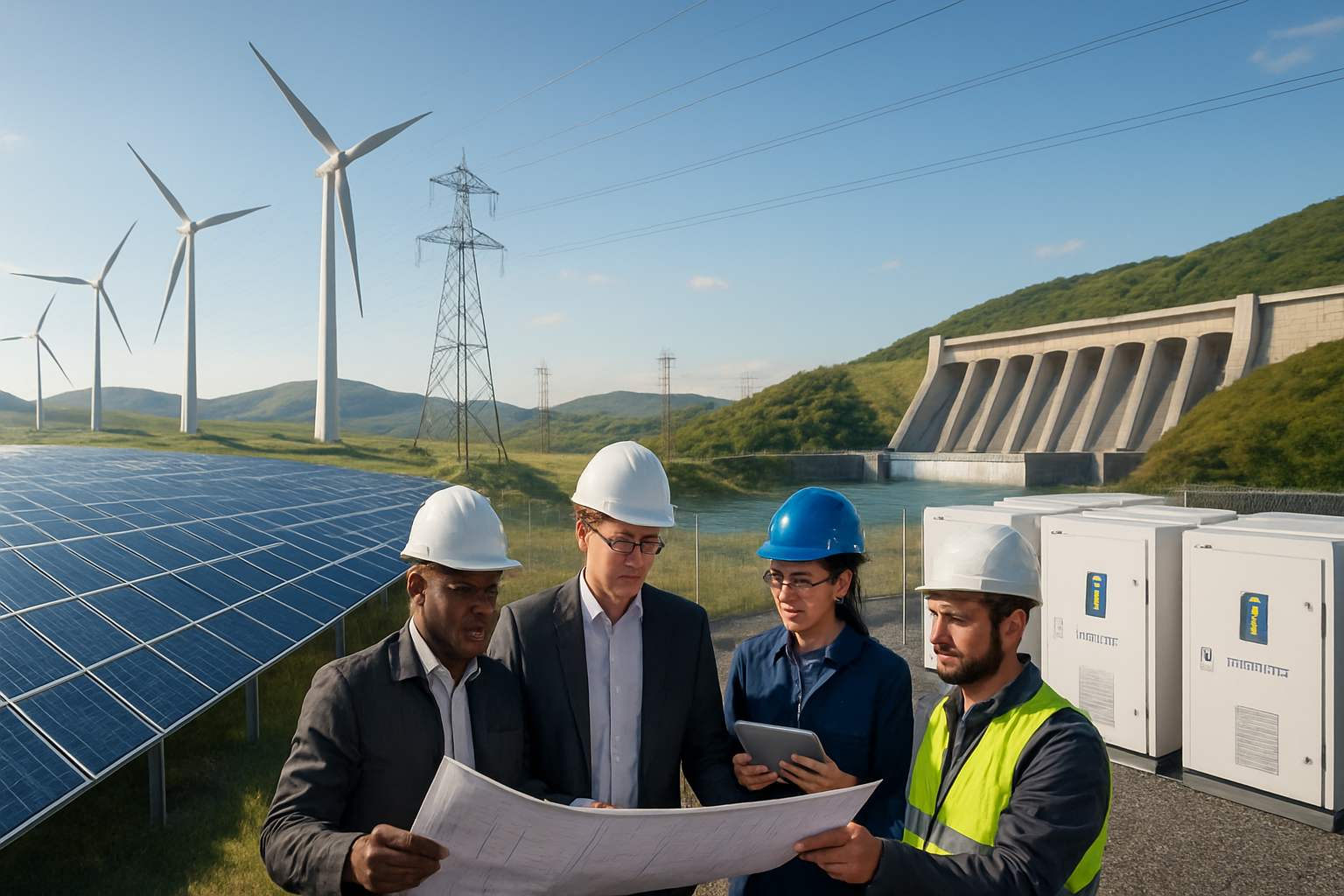
A coordinated global surge toward renewable energy is reshaping the international landscape as nations from Southeast Asia to Central America pursue aggressive clean technology deployment, driven by both climate urgency and unprecedented economic opportunities that could save billions while securing energy independence.
The Association of Southeast Asian Nations (ASEAN) stands at the forefront of this transformation, with new analysis from global energy think tank Ember revealing that the region could save $67 billion by replacing $109 billion worth of planned gas expansion with solar energy. This dramatic cost advantage — solar delivering the same electricity capacity at just $42 billion, half the cost of gas infrastructure — comes as geopolitical tensions continue to destabilize global oil markets.
ASEAN's Solar Economic Revolution
"Developing and emerging economies in Asia will be at higher risk if energy prices continue to escalate," warned Dinita Setyawati, senior analyst at Ember. "While energy saving can be an initial short-term solution, the pivot to homegrown renewables can provide more options to buffer future energy shocks."
The analysis arrives during a critical period for global energy security, with ongoing conflicts affecting major oil trade routes and driving energy costs to unsustainable levels for many developing economies. ASEAN's potential solar revolution represents more than just economic savings — it signals a fundamental shift toward energy sovereignty that could insulate the region from volatile international commodity markets.
Breaking the dependence on oil and gas represents what energy analysts describe as "a full economic transformation," extending far beyond simple energy switching to encompass industrial policy, job creation, and technological innovation. The $67 billion in potential savings could be redirected toward infrastructure development, education, and social programs across the ten-member bloc.
Portugal Pioneers 'Clean Flexibility' Solutions
In Europe, Portugal is advancing sophisticated grid management solutions that address one of renewable energy's greatest challenges: intermittency. The concept of "clean flexibility" — the ability of an electrical system to rapidly and efficiently adjust production and consumption using low or zero-carbon sources — represents the next evolution in renewable energy infrastructure.
Portuguese grid operators are implementing advanced systems that can balance variable renewable generation with demand in real-time, eliminating the need for fossil fuel backup power that has traditionally been required to maintain grid stability. This technological breakthrough could serve as a template for other nations seeking to achieve 100% renewable electricity systems.
The Portuguese model demonstrates how sophisticated energy management can overcome traditional limitations of wind and solar power, using a combination of battery storage, demand response systems, and smart grid technologies to maintain reliable electricity supply even during periods of low renewable generation.
El Salvador's Solar Investment Milestone
Central America is experiencing its own renewable energy renaissance, exemplified by El Salvador's inauguration of the Kinich Energy Olocuilta solar project in the La Paz Oeste region. Economy Minister María Luisa Hayem joined regional officials to launch the $44 million initiative, which represents a significant step toward diversifying the nation's energy matrix.
Luis Rodríguez, executive director of COAMSS/OPAMSS, emphasized the strategic importance of private sector renewable investments for economic growth. "The construction sector is experiencing important dynamism, where energy availability becomes a key factor for expansion," he noted during the inauguration ceremony.
The project reflects broader regional momentum in Central America, where governments are increasingly recognizing renewable energy as essential infrastructure for economic development rather than merely an environmental obligation. El Salvador has attracted over $5.5 billion in private investment to the San Salvador Metropolitan Area, with an additional $3 billion in projects currently under development.
Technology Integration Drives Innovation
Modern renewable energy projects increasingly incorporate cutting-edge technologies that were unavailable just a few years ago. Digital monitoring systems, automated control mechanisms, and artificial intelligence-powered optimization are becoming standard features of new installations, enabling unprecedented efficiency and reliability.
Estonia continues to lead European renewable deployment with 88% renewable electricity and continental Europe's largest battery storage facility serving 90,000 households. This technological sophistication allows countries to maintain grid stability while achieving remarkable renewable energy percentages that would have been impossible with previous generations of technology.
Smart grid management systems can now predict energy demand patterns, weather conditions, and equipment performance with extraordinary accuracy, enabling operators to optimize renewable energy integration while minimizing costs and maintaining service reliability.
Economic Multiplier Effects
The sustainable energy transition is generating substantial economic multiplier effects beyond direct energy savings. Digital infrastructure investments typically generate $3-4 in economic returns for every dollar invested over a decade, while renewable energy projects create both immediate construction employment and permanent operational jobs.
Countries implementing comprehensive renewable energy strategies demonstrate greater economic resilience and attract sustainable investment across multiple sectors including green technology manufacturing, eco-tourism, and environmental services. The economic benefits extend through improved public health, enhanced agricultural productivity, and reduced infrastructure costs from climate adaptation.
Regional integration opportunities are expanding as countries develop cross-border renewable energy trading systems. Nations with excess renewable generation can export clean electricity to neighbors, creating new revenue streams while enhancing overall regional energy security.
Supply Chain Challenges and Solutions
Despite remarkable progress, the global renewable energy transition faces significant supply chain vulnerabilities. China controls approximately 60% of critical materials production and 90% of refining capacity for lithium, cobalt, and rare earth elements essential for renewable infrastructure. Memory chip shortages have driven prices up sixfold, affecting smart grid and renewable control systems until new fabrication facilities come online in 2027.
The US-EU-Japan Critical Minerals Partnership, involving 55 countries and seven African alternative suppliers, represents a coordinated response to these strategic dependencies. Japan's breakthrough in deep-sea mining at Minamitorishima, with 20 times terrestrial concentrations of critical materials at 6,000-meter depths, could provide long-term supply security.
African nations including Angola, Democratic Republic of Congo, Guinea, Kenya, Morocco, Sierra Leone, and Zambia are positioning themselves as key alternative suppliers, potentially transforming global supply chains while providing substantial development opportunities for the continent.
Climate Urgency Accelerates Deployment
The renewable energy surge occurs during Earth's most challenging environmental period in recorded history. January 2026 marked the 19th consecutive month with global temperatures exceeding the critical 1.5°C pre-industrial threshold, demonstrating that human-induced climate change has fundamentally altered atmospheric systems beyond natural recovery mechanisms.
This sustained warming creates cascading environmental effects that traditional energy systems struggle to address: rising sea levels threaten coastal power infrastructure, changing precipitation patterns affect hydroelectric generation, and increased extreme weather frequency disrupts both renewable and fossil fuel energy production.
The climate crisis provides additional urgency for energy transition while demonstrating the economic risks of continued fossil fuel dependence. Countries with diversified renewable energy portfolios show greater resilience to climate impacts and energy price volatility.
International Cooperation Frameworks
Success in sustainable energy transition increasingly depends on sophisticated international cooperation frameworks that go beyond traditional aid models. South-South cooperation is expanding as developing nations become environmental solution providers, leveraging indigenous knowledge, renewable resources, and innovative governance approaches.
Technology transfer mechanisms are evolving to support rapid renewable infrastructure scaling while respecting local autonomy and cultural priorities. Countries like Estonia and Portugal are sharing technical expertise and operational experience with nations beginning their renewable energy transitions.
Financial mechanisms are adapting to support the massive investment requirements of global energy transformation. Green bonds, climate finance, and innovative public-private partnerships are enabling developing nations to access capital for renewable infrastructure without compromising fiscal sustainability.
Implementation Challenges and Opportunities
Despite remarkable momentum, sustainable energy transition faces substantial implementation challenges. Funding sustainability remains critical for developing nations where immediate economic pressures can override long-term environmental considerations. Technical capacity building requires sustained investment in education, training, and institutional development.
Climate change itself disrupts project timelines, requiring adaptive management approaches that can respond to rapidly changing environmental conditions while maintaining long-term sustainability goals. Political sustainability across electoral cycles proves crucial for long-term policy success.
However, opportunities abound through enhanced international partnerships, accelerated technology transfer, and innovative financing mechanisms that recognize ecosystem services' economic value. The diversity of approaches provides resilience against single-solution dependencies, offering multiple adaptation pathways for complex environmental challenges.
Future Trajectory and Global Impact
March 2026 represents a critical juncture in global energy policy, where the choice between reactive crisis management and proactive ecosystem service management could determine whether clean energy deployment keeps pace with accelerating environmental change during this decisive climate action decade.
The tools, knowledge, and cooperation frameworks exist for comprehensive sustainable energy transformation. Countries across ASEAN, Europe, and Central America are demonstrating that renewable energy transitions are not only environmentally necessary but economically advantageous and socially beneficial.
Success depends on sustained international cooperation, enhanced coordination across sectors, and increased financial commitments that recognize environmental protection as essential infrastructure for human prosperity and planetary sustainability. The renewable energy revolution of 2026 could establish templates for global energy transformation that influence international development for generations to come.