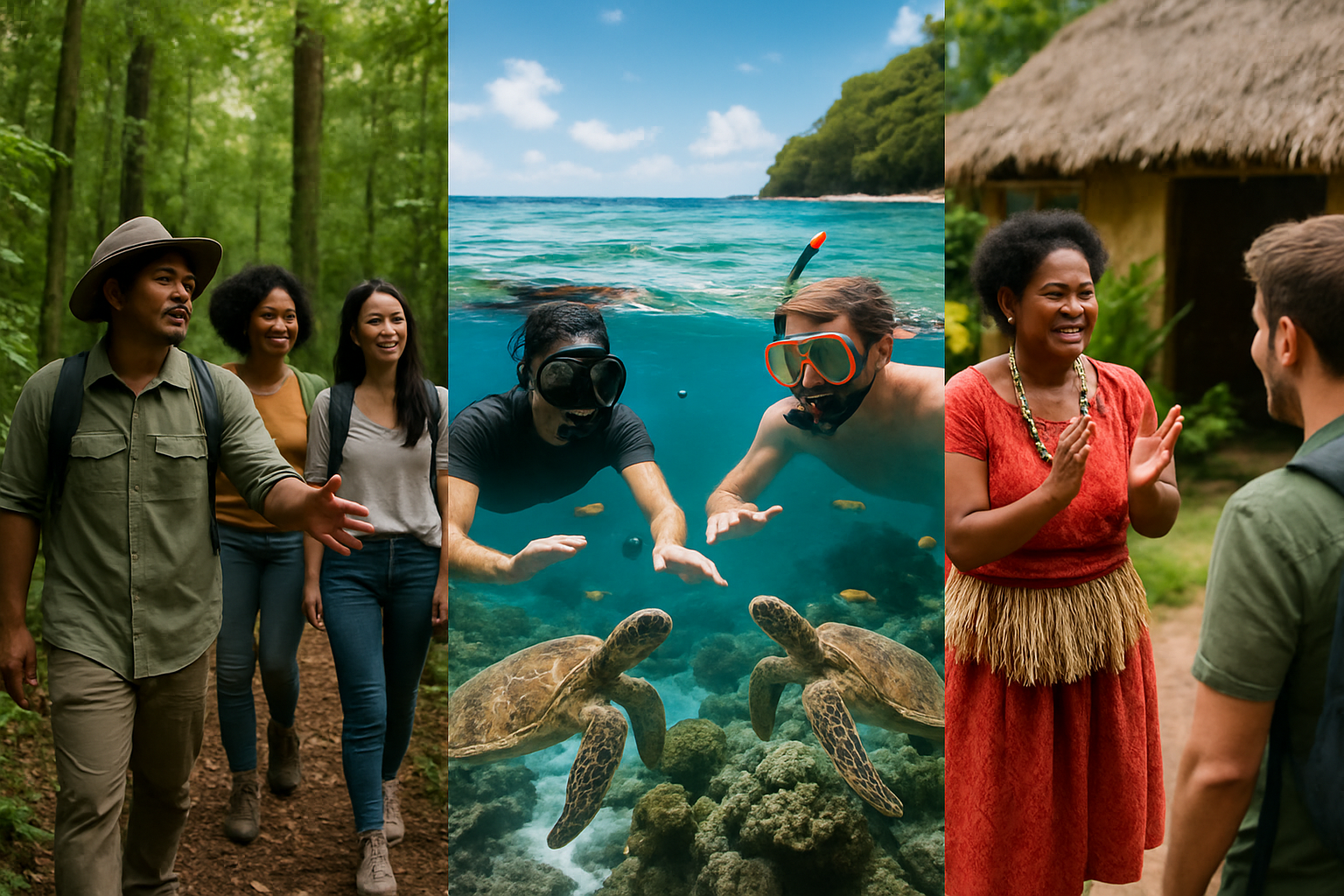
As the global tourism industry surpasses pre-pandemic levels with unprecedented $570 billion infrastructure investment, countries across three continents are pioneering revolutionary sustainable tourism models that prioritize environmental protection, community engagement, and authentic cultural experiences over traditional volume-based approaches.
The shift represents a fundamental transformation in how destinations manage tourism growth, building on successful initiatives like Rome's Trevi Fountain €2 entry system generating €6 million annually while managing overcrowding, and Capri's revolutionary overtourism management limiting tour groups to 40 people.
Brazil's Carbon-Neutral Tourism Breakthrough
Bonito, a town of 23,000 residents in central-western Brazil, has achieved a historic milestone by becoming the world's first ecotourism destination certified as carbon-neutral by a UN-recognized body. The small municipality's visitor management model is now being studied by over 40 countries seeking to replicate its success.
Since 1995, Bonito has implemented a revolutionary "single voucher" system requiring all tourists to obtain timed, name-specific permits before entering any attraction. This comprehensive approach has effectively solved overtourism challenges before they began, demonstrating that proactive management can preserve environmental integrity while supporting economic development.
"Bonito represents the future of sustainable tourism – a destination that has proven economic prosperity and environmental protection are not only compatible but mutually reinforcing."
— Tourism Industry Analyst
The success of Bonito's model lies in its integrated approach combining visitor capacity limits, environmental monitoring, community engagement, and authentic experience delivery. The town's sustainable tourism framework has created a template for destinations worldwide facing similar challenges of balancing growth with conservation.
Malaysia's Sustainable Development Vision
Malaysia is strengthening its global sustainable tourism presence through Sarawak's participation at Mobile World Congress Barcelona 2026, where the state government is positioning itself as a forward-looking, investment-ready economy. The Ministry of Utility and Telecommunication is presenting Sarawak's development agenda toward 2030, outlining priority investment areas that integrate technology advancement with environmental sustainability.
This initiative represents a sophisticated approach to sustainable tourism development, where digital infrastructure investment supports both economic growth and environmental monitoring capabilities. Sarawak's emphasis on connectivity and technology demonstrates how emerging destinations can leapfrog traditional development models to implement sustainable practices from the outset.
The Malaysian approach aligns with broader regional trends where Asia-Pacific markets continue leading global tourism recovery, with Singapore exceeding $29-30.5 billion revenue forecasts and Hong Kong expecting 6% Chinese visitor growth. However, Malaysia's focus on sustainable development distinguishes it from purely volume-driven approaches.
Oman's Maritime Tourism Strategy
The Sultanate of Oman is pursuing a strategic approach to sustainable tourism through its comprehensive study of the cruise ship and yacht sector. The Ministry of Heritage and Tourism reported that 137,330 tourists visited via cruise ships and yachts in 2025, demonstrating the sector's growing contribution to national tourism performance.
Oman's initiative involves partnerships with specialized consulting firms to develop a comprehensive strategic roadmap for maritime tourism that balances economic opportunities with marine ecosystem protection. This approach recognizes the delicate balance required in coastal tourism development, particularly in regions with sensitive marine environments.
The country's focus on maritime tourism reflects broader industry trends toward specialized, high-value tourism segments that generate greater economic benefits per visitor while maintaining lower environmental impact compared to mass tourism models.
Global Context and Industry Transformation
These initiatives emerge within a broader context of tourism industry transformation driven by Generation Z travelers, who represent 50% of those making two trips over five days in 2025. This demographic demands AI-integrated travel planning combined with authentic cultural experiences and sustainable development models that prioritize community involvement and environmental protection.
The evolution from reactive crisis management to proactive ecosystem service management represents a fundamental shift in tourism development philosophy. Countries implementing comprehensive sustainable tourism strategies demonstrate greater economic resilience and attract sustainable investment, positioning themselves competitively for long-term success.
Technology Integration and Community Engagement
Successful sustainable tourism initiatives consistently demonstrate sophisticated integration of cutting-edge technology with traditional ecological knowledge and community-based management. Brazil's Bonito combines environmental monitoring systems with local community stewardship, while Malaysia integrates digital infrastructure with cultural preservation initiatives.
The economic dimensions of sustainable tourism extend beyond immediate visitor spending to comprehensive community support including transportation improvements, cultural industry development, artisan networks, and year-round employment creation. This holistic approach generates sustainable economic foundations while preserving cultural authenticity and environmental integrity.
International Cooperation and Best Practices
The success of sustainable tourism initiatives increasingly depends on international cooperation and knowledge sharing. Bonito's model being studied by 40+ countries demonstrates how successful approaches can be adapted across different cultural and environmental contexts.
Regional cooperation models are replacing individual destination competition through coordinated marketing efforts, collaborative infrastructure development, and shared best practices. The Caribbean's sophisticated cruise coordination, European destinations' visitor management strategies, and Pacific Island partnerships exemplify this collaborative approach.
Croatia's implementation of 62 tourist medical clinics for the 2026 season represents Europe's most extensive seasonal healthcare network, demonstrating how destinations are expanding beyond traditional hospitality to comprehensive visitor support services that enhance safety and satisfaction.
Climate Resilience and Environmental Protection
Sustainable tourism development occurs during unprecedented environmental challenges, with January 2026 marking the 18th consecutive month of global temperatures exceeding 1.5°C pre-industrial levels. Climate resilience has become central to tourism infrastructure planning, requiring destinations to demonstrate environmental sustainability for long-term competitiveness.
Environmental protection functions as an economic development strategy rather than a regulatory burden. Countries with comprehensive environmental protection show greater economic resilience, attract sustainable investment, and position themselves as premium destinations for environmentally conscious travelers.
Future Implications and Success Factors
The sustainable tourism initiatives emerging in 2026 establish new standards for the industry, emphasizing quality-focused strategies over volume-based approaches. Success factors consistently include cultural authenticity preservation, enhanced visitor experiences, climate-resilient infrastructure, meaningful community involvement, and international cooperation.
The tourism transformation toward sustainable community-focused development balances economic objectives with community benefits, cultural preservation, and environmental responsibility. This comprehensive approach creates competitive advantages for destinations willing to invest in long-term sustainability over short-term gains.
As the global tourism industry continues its recovery and transformation, the pioneering sustainable tourism models implemented by Brazil, Malaysia, Oman, and other forward-thinking destinations provide templates for addressing the complex challenges of 21st-century travel. Their success demonstrates that sustainable tourism is not only environmentally necessary but economically advantageous, creating a foundation for the industry's future development.