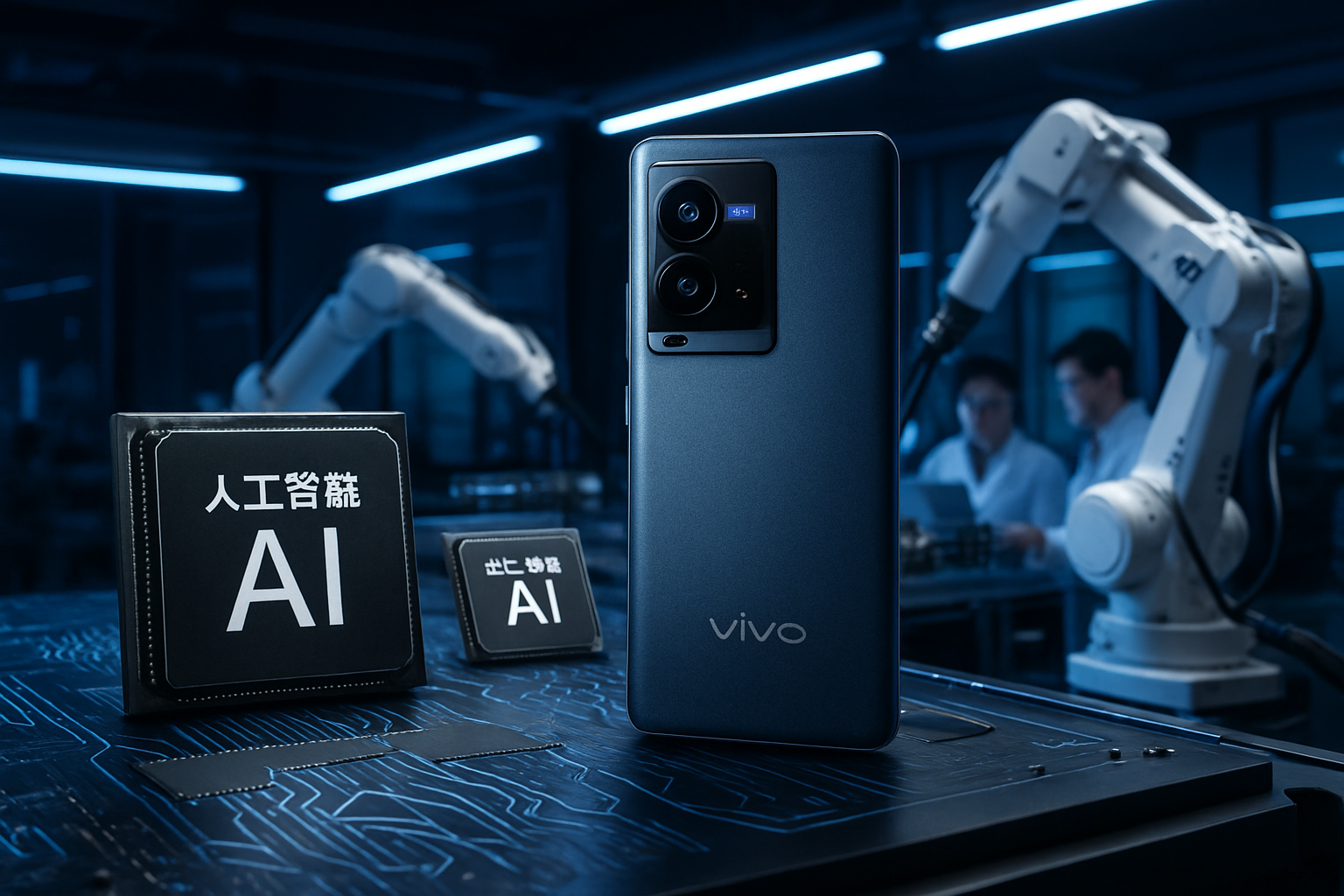
China's semiconductor industry is pushing for stronger state support in AI chip development while global smartphone manufacturers face an intensifying technology race and industrial robotics reaches new automation milestones, marking what industry analysts describe as the most significant technology transformation period since the internet revolution.
The convergence of these three critical developments—semiconductor sovereignty, mobile innovation, and industrial automation—represents more than isolated market trends. They signal a fundamental restructuring of global technology supply chains, competitive dynamics, and the relationship between human workers and intelligent machines.
China's Semiconductor Push Intensifies
Representatives from China's semiconductor industry delivered a unified message during the recent "two sessions" parliamentary meetings: the nation needs accelerated state backing for artificial intelligence chips and critical materials to achieve technological independence. Industry leaders urged Beijing to leverage China's strategic advantages in chip raw materials while fast-tracking commercial AI applications.
The push comes amid ongoing global semiconductor constraints that have seen memory chip prices surge sixfold, affecting major manufacturers including Samsung, SK Hynix, and Micron. This supply crisis, expected to persist until 2027 when new fabrication facilities come online, has inadvertently created opportunities for nations seeking to build domestic chip capabilities.
"We must accelerate core technology breakthroughs and secure our position in the global AI race,"
— Industry representative, China's National People's Congress
The semiconductor sovereignty drive reflects broader geopolitical tensions over technology leadership, with previous investigations revealing Chinese companies like DeepSeek successfully training AI models on restricted Nvidia Blackwell chips despite export controls. This technological circumvention demonstrates systematic approaches to accessing advanced capabilities while building indigenous alternatives.
Vivo Challenges Smartphone Giants
Chinese smartphone manufacturer Vivo is preparing a significant market offensive with its anticipated Vivo X300 Ultra release, directly targeting Samsung and Xiaomi's market positions. Industry speculation suggests the company may simultaneously launch the Vivo X300 Max, creating a two-pronged premium strategy to capture market share during a period of global smartphone market uncertainty.
The timing proves strategic as established manufacturers face multiple challenges. Samsung recently lost its leading position in global television markets for the first time in over two decades, while the broader smartphone industry confronts what analysts term an "unprecedented crisis" of marginal improvements amid rapidly rising costs.
Global memory shortages have driven consumer electronics prices up 20-30% over the past year, creating opportunities for manufacturers with efficient designs and innovative approaches to component utilization. Vivo's entry into premium segments coincides with growing consumer demand for AI-integrated features and enhanced privacy capabilities.
Industrial Robotics Revolution Accelerates
The third major development involves ABB's strategic partnership with Nvidia to enhance factory robot training capabilities, representing the latest milestone in industrial automation's rapid evolution. This collaboration aims to improve machine learning algorithms that enable robots to perform complex manufacturing tasks with greater precision and adaptability.
The partnership occurs within a broader context of robotics advancement, with Chinese companies like Unitree Robotics scaling humanoid robot production from 5,500 units to potential ranges of 10,000-20,000 units following successful public demonstrations. These developments mark the transition from experimental robotics to commercial deployment across manufacturing sectors.

The collaboration between established industrial automation leader ABB and AI chip giant Nvidia demonstrates how traditional manufacturing companies are partnering with technology innovators to remain competitive. Enhanced robot training capabilities could accelerate automation adoption across industries seeking to address labor shortages and improve production efficiency.
Global Supply Chain Implications
These developments unfold against the backdrop of persistent global supply chain challenges that continue reshaping technology markets. The semiconductor shortage has created what analysts describe as a "critical vulnerability window" until 2027, forcing companies to develop more efficient algorithms and creative deployment strategies.
Despite infrastructure constraints, massive corporate investments continue. Alphabet has committed $185 billion to AI infrastructure development in 2026, while Amazon's AI development plans exceed $1 trillion. These investments reflect industry confidence in permanent technological transformation, even as supply limitations constrain immediate implementation.
The memory crisis has paradoxically accelerated innovation in memory-efficient algorithms and hybrid processing approaches. Companies are learning to maximize AI capabilities while minimizing hardware requirements, potentially creating more sustainable and accessible technology deployment models.
Regulatory and Competitive Landscape
The technology developments occur amid intensifying international regulatory coordination. Spain has implemented the world's first criminal executive liability framework for technology platforms, while France has conducted cybercrime raids on AI companies. The United Nations has established an Independent Scientific Panel of 40 experts to provide the first comprehensive global AI assessment.
This regulatory evolution creates both challenges and opportunities for technology companies. Those with robust compliance capabilities and transparent governance structures may gain competitive advantages, while companies struggling with regulatory requirements face potential market access limitations.
European efforts toward digital sovereignty, including Deutsche Telekom's Industrial AI Cloud in Munich, demonstrate how regional players are developing alternatives to Silicon Valley and Chinese technology dominance. This multipolar competition is reshaping global technology dynamics beyond traditional US-China rivalry narratives.
Employment and Workforce Implications
The convergence of AI chips, advanced smartphones, and industrial robotics raises significant questions about workforce transformation. Microsoft's Mustafa Suleyman has predicted that AI could replace the majority of office workers within two years, while industrial automation continues advancing into more sophisticated manufacturing roles.
However, successful integration models from various countries suggest more nuanced outcomes. Malaysian AI-integrated Islamic schools, Canadian AI teaching assistants, and Singapore's WonderBot 2.0 heritage education demonstrate human-centered approaches that enhance rather than replace human capabilities.
"The future belongs to sophisticated human-AI collaboration that preserves creativity and cultural understanding while leveraging computational advantages."
— Technology integration specialist
Regional variations in employment responses provide important lessons. Indian IT companies like Infosys, Wipro, and HCL have implemented comprehensive worker transition programs rather than mass layoffs, demonstrating adaptive management approaches that maintain workforce stability during technological transformation.
Looking Forward: Critical Choices Ahead
March 2026 represents what experts describe as a "civilizational choice point" determining whether technological advancement serves human flourishing or creates increased inequality and social disruption. The decisions made regarding AI governance, digital equity, and sustainable innovation will influence technology's trajectory for decades.
Success requires unprecedented coordination among governments, technology companies, educational institutions, and civil society. The challenge involves balancing innovation acceleration with safety governance, commercial interests with human welfare, and national competitiveness with international cooperation.
The convergence of China's semiconductor ambitions, smartphone market competition, and industrial automation represents more than technological progress—it embodies fundamental questions about how societies will organize work, education, and economic opportunity in an AI-integrated world.
Rather than slowing innovation, current challenges are driving more thoughtful, sustainable, and collaborative technological advancement approaches. The human-technology interaction trajectory for the coming decades will be determined by choices regarding AI governance, digital equity, and sustainable innovation that serves human flourishing rather than increasing inequality and social disruption.
As these three technology streams converge—semiconductor sovereignty, mobile innovation, and intelligent automation—they create both unprecedented opportunities and significant responsibilities for governments, companies, and communities worldwide. The decisions made in 2026 will determine whether this technological transformation serves humanity's highest aspirations while addressing pressing global challenges through democratic oversight and human welfare protection.