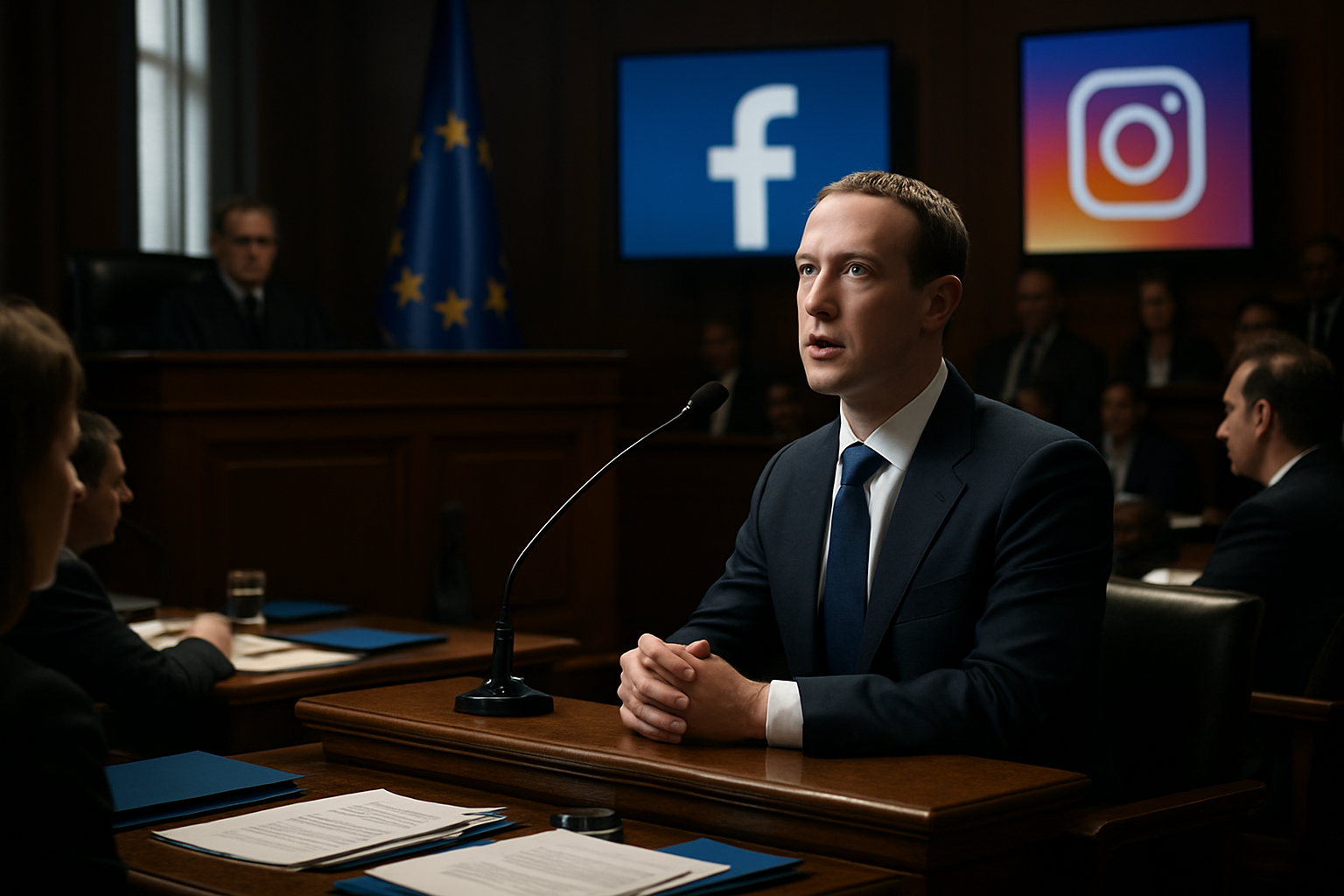
Mark Zuckerberg's historic courtroom testimony in Los Angeles represents just the tip of an unprecedented global regulatory iceberg reshaping the technology industry, as governments worldwide coordinate the most aggressive crackdown on social media platforms and AI development in internet history.
The Meta CEO appeared in a Los Angeles courtroom Wednesday for the first time to testify about Instagram's impact on youth mental health, marking a pivotal moment in a landmark trial that could fundamentally alter how courts view platform liability. The case centers on a 20-year-old plaintiff alleging that early Instagram use created addiction that exacerbated depression and suicidal thoughts during her teenage years.
European Criminal Liability Revolution
Zuckerberg's testimony occurs amid an extraordinary wave of international regulatory coordination. Spain has implemented the world's first criminal executive liability framework for platform violations, creating personal imprisonment risks for tech executives beyond traditional corporate penalties. This revolutionary approach is rapidly spreading across Europe, with Greece implementing under-15 restrictions via its Kids Wallet system, and Slovenia, France, Denmark, and Austria conducting formal consultations on similar measures.
"These platforms are undermining the mental health, dignity, and rights of our children. The state cannot allow this. The impunity of these giants must end."
— Pedro Sánchez, Spanish Prime Minister
The European Commission has found TikTok in violation of the Digital Services Act through "addictive design" features including unlimited scrolling, autoplay, and personalized recommendations designed to maximize engagement over user wellbeing. The platform faces potential penalties of 6% of global revenue—potentially billions of euros.
Scientific Evidence Drives Policy Changes
The regulatory momentum is supported by mounting scientific evidence. Dr. Ran Barzilay's research at the University of Pennsylvania demonstrates that early smartphone exposure before age 5 causes sleep disorders, weight problems, and cognitive decline. Global statistics reveal that 96% of children aged 10-15 use social media, with 70% experiencing harmful content exposure and over 50% encountering cyberbullying.
Recent studies from the University of Macau prove that short-form video content consumption negatively impacts children's cognitive development, causing social anxiety, insecurity, and academic disengagement. Children spending four or more hours daily on screens face a 61% increased depression risk through sleep disruption and decreased physical activity.
AI Development Under Scrutiny
The regulatory pressure extends beyond social media to artificial intelligence development. Google DeepMind CEO Demis Hassabis announced that artificial general intelligence could be achieved within 5-8 years, intensifying concerns about responsible AI governance. Meanwhile, Microsoft has revealed plans for revolutionary glass-based data storage systems capable of preserving data for 10,000 years, highlighting the long-term implications of current technological decisions.

France has escalated enforcement through cybercrime raids on social media platforms, with authorities investigating AI-generated sexual content and child safety violations. The Philippines Department of Information and Communications Technology announced a partnership with Meta to develop more targeted systems for detecting and deleting inappropriate content, while simultaneously warning content creators to be mindful of their online posts.
Global Implementation Challenges
The implementation of these sweeping regulations faces significant technical and logistical challenges. Real age verification requires biometric authentication, raising privacy concerns about comprehensive government databases. The global memory crisis, with semiconductor prices surging sixfold, constrains the infrastructure needed for these verification systems until new fabrication facilities come online in 2027.
Cross-border enforcement requires unprecedented international cooperation. The Netherlands recently experienced a major data breach affecting 6.2 million customers, demonstrating the vulnerabilities of centralized data repositories that governments are building for regulatory purposes.
Industry Resistance and Market Impact
Technology executives have mounted fierce resistance to these regulatory measures. Elon Musk has characterized Spanish regulations as "fascist totalitarian," while Telegram's Pavel Durov has issued warnings about "surveillance state" implications. This industry opposition has been used by government officials as evidence supporting stronger regulatory intervention.
The regulatory uncertainty has contributed to what analysts term the "SaaSpocalypse"—the elimination of hundreds of billions in technology market capitalization during February 2026. Traditional software companies face an existential threat as AI systems directly replace their functions, while regulatory compliance costs may advantage large platforms over smaller competitors.
Alternative Approaches Emerge
Not all countries are pursuing the European enforcement model. Malaysia emphasizes parental responsibility through digital safety campaigns, with Communications Minister Datuk Fahmi Fadzil stressing that parents must control device access rather than using devices as "babysitters." Oman has implemented "Smart tech, safe choices" education initiatives focusing on conscious digital awareness.
This represents a philosophical divide between government intervention and individual agency in digital governance, with different regions adopting varying approaches to the same fundamental challenges.
Youth Protection at the Center
At the heart of this global regulatory revolution is concern for child welfare in the digital age. Australia's under-16 social media ban, which eliminated 4.7 million teen accounts in December 2025, has proven that technical implementation is feasible with government commitment. German Chancellor Friedrich Merz has expressed openness to similar restrictions, following the Australian model.
"We need to protect our children from the toxic online environment that can have lasting harmful effects on their development and mental health."
— Raja Zarith Sofiah, Queen of Malaysia
The Democratic Republic of Congo has joined the global conversation about whether to restrict minors' access to social media platforms, reflecting how these concerns transcend geographical and economic boundaries.
Looking Forward: A Critical Inflection Point
February 2026 represents a critical inflection point in the relationship between democratic institutions and global technology platforms. The success or failure of these coordinated regulatory efforts will establish precedents affecting millions of children globally and determine the framework for 21st-century technology governance.
The stakes extend beyond immediate compliance costs to fundamental questions about democratic accountability, childhood development, and human agency in an increasingly digital world. The international community faces critical choices about whether AI and social media platforms will serve humanity's best interests or become tools of exploitation beyond democratic control.
As Zuckerberg's testimony continues and regulatory frameworks solidify across continents, the technology industry confronts its most significant challenge since the internet's commercialization. The outcome will shape the digital landscape for decades to come, determining whether innovation can coexist with robust protection for society's most vulnerable members.