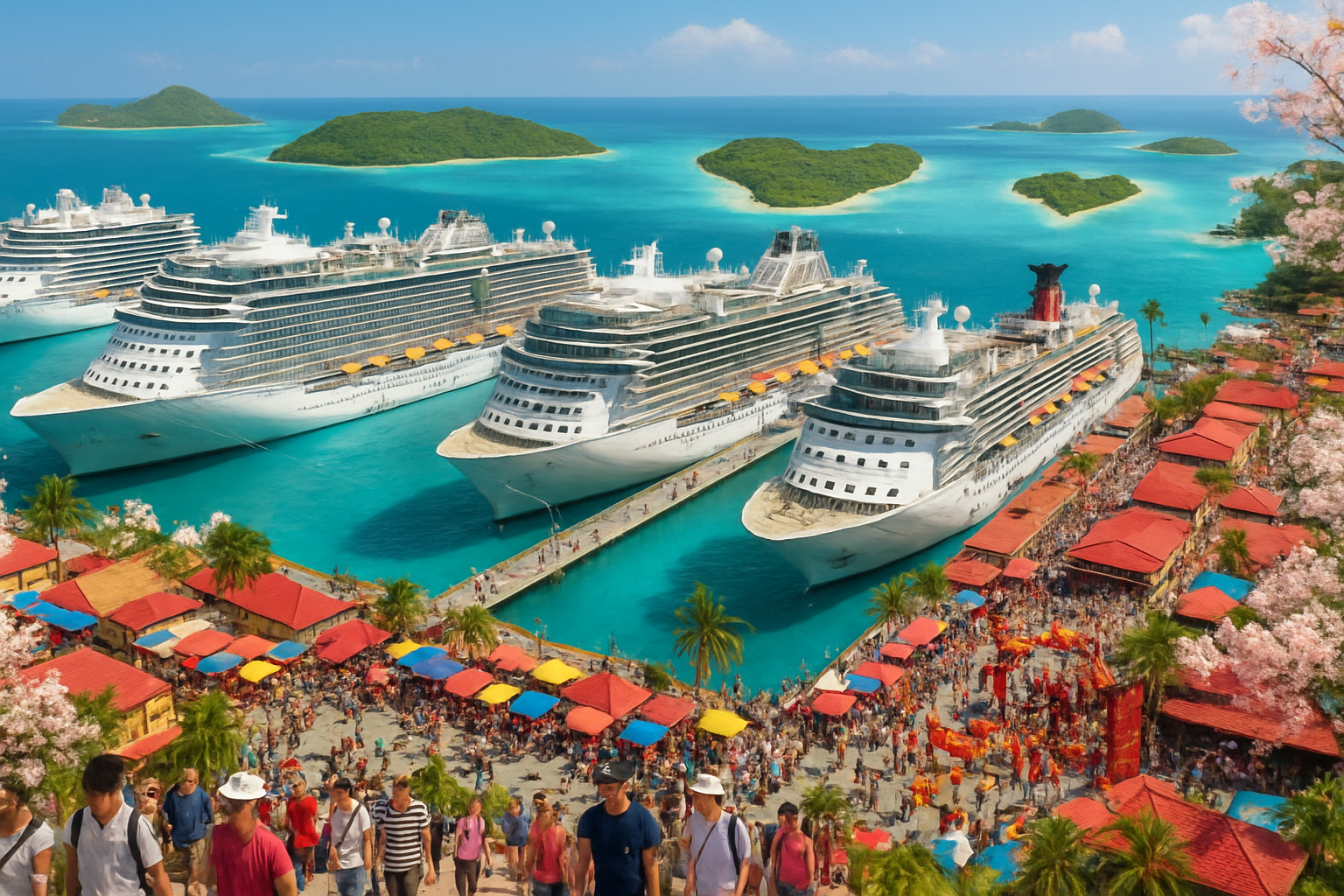
February 2026 marks a pivotal moment in global tourism recovery as multiple regions report significant growth in visitor arrivals, cruise operations reach capacity limits, and new cultural festivals emerge as major destination attractions.
Caribbean Cruise Industry Reaches New Heights
The Caribbean cruise sector has achieved unprecedented success in February 2026, with Saint Kitts and Nevis emerging as a prime example of regional growth. Port Zante simultaneously accommodated six major cruise ships in a remarkable display of operational capacity, according to the Tourism Authority. Some vessels docked directly at the port facilities, while others anchored offshore to manage the high volume of arrivals.
This surge in cruise traffic represents a broader trend across the Caribbean basin, where improved infrastructure and coordinated regional marketing efforts have created a robust multi-destination tourism ecosystem. The successful management of multiple large vessels demonstrates the maturation of Caribbean cruise infrastructure and the region's ability to handle peak-season demand.
China's Lunar New Year Tourism Drives Australian Bookings
China's travel industry is experiencing a sharp increase in outbound tourism during the extended Lunar New Year holiday, with Australia emerging as the top destination for Chinese travelers in February 2026. Industry insiders report that bookings for Australia are likely to more than double compared to last year's totals, driven by the country's appeal for wine tourism, seafood experiences, natural attractions, and flexible small-group itineraries.
The nine-day Lunar New Year break has created unprecedented demand for international travel among Chinese tourists, with millions seeking diverse global destinations. Australia's positioning as a premium destination offering unique natural experiences, combined with its relative proximity to China and established tourism infrastructure, has made it particularly attractive during this peak travel period.
"The lure of wine, seafood, nature and flexible small-group itineraries is driving exceptional interest in Australia during this extended holiday period."
— Industry Tourism Analyst, South China Morning Post
European Destinations Embrace Romantic Tourism
Croatia has captured international attention with its unique heart-shaped islands, which have become nature's ultimate Valentine's Day destination. The country boasts six distinct heart-shaped islands, with Galešnjak island leading this romantic tourism trend. Originally discovered through Google Earth imagery, these natural formations have attracted romantics worldwide and represent Croatia's innovative approach to niche tourism marketing.
The heart-shaped island phenomenon demonstrates how destinations can leverage unique geographical features to create specialized tourism experiences. Croatia's success in promoting these natural attractions shows the power of authentic, distinctive offerings in capturing international visitor attention and social media engagement.
Cultural Festivals Drive Destination Diversification
Cyprus is experiencing a cultural tourism renaissance with the Paphos village of Yiolou organizing its seventh annual Almond Blossom Festival. This celebration takes advantage of the brief window when Cyprus is in full bloom, welcoming families, travelers, and locals to experience traditional village life, live music, local cuisine, and spectacular pink and white almond tree displays.
The festival represents a broader trend toward authentic, seasonal cultural experiences that connect visitors with local traditions and natural cycles. Starting at 11am with performances by local school children and featuring exhibitions from 32 local artisans, the event showcases how small communities can create significant tourism attractions through cultural authenticity and community involvement.
Industry Transformation Toward Quality-Focused Strategies
The February 2026 tourism developments reflect a fundamental shift in the global industry toward quality-focused strategies over volume-based approaches. This transformation is evident across multiple sectors:
- Cruise Operations: Enhanced capacity management allowing multiple vessels while maintaining service quality
- Cultural Tourism: Emphasis on authentic local experiences and seasonal celebrations
- Destination Marketing: Unique geographical features and natural phenomena as key attractions
- International Cooperation: Regional integration strengthening multi-destination experiences
Regional Recovery Patterns and Market Leadership
Asia-Pacific markets continue to lead global tourism recovery, with China's outbound travel surge demonstrating the region's economic resilience and growing middle-class purchasing power. The preference for experiential travel, cultural immersion, and natural attractions reflects evolving consumer preferences in post-pandemic travel patterns.
European destinations are successfully balancing heritage preservation with tourism development, as demonstrated by Cyprus's cultural festivals and Croatia's environmental tourism initiatives. The Caribbean region shows strong infrastructure development capabilities, managing increased cruise capacity while maintaining destination quality and visitor satisfaction.
Sustainable Tourism Development Models
The February 2026 tourism trends emphasize sustainable development models that benefit local communities while attracting international visitors. Cyprus's Almond Blossom Festival exemplifies this approach by:
- Showcasing local artisans and traditional crafts
- Celebrating natural seasonal cycles
- Involving community schools and cultural groups
- Promoting authentic village experiences
- Supporting local economic development
Technology Integration and Infrastructure Investment
The tourism industry's February 2026 success stories demonstrate significant infrastructure investments and technology integration. Port facilities capable of handling multiple large cruise ships simultaneously, digital marketing strategies that capture global attention for unique destinations, and coordinated regional tourism policies all contribute to enhanced visitor experiences and operational efficiency.
These developments occur within a broader context of global tourism industry maturation, where destinations prioritize long-term sustainability, community benefits, and authentic cultural experiences alongside economic objectives.
Looking Forward: Industry Resilience and Innovation
The diverse tourism developments across the Caribbean, Asia-Pacific, and European regions in February 2026 demonstrate the industry's remarkable resilience and capacity for innovation. From managing complex cruise operations to creating intimate cultural celebrations, destinations worldwide are finding new ways to attract visitors while preserving their unique character and supporting local communities.
Success factors emerging from these developments include authentic cultural engagement, environmental sustainability, community involvement, international cooperation, and adaptive management strategies that balance economic growth with cultural preservation and visitor satisfaction. The tourism industry's evolution toward quality-focused experiences represents a mature approach to destination development that prioritizes long-term competitiveness over short-term capacity expansion.