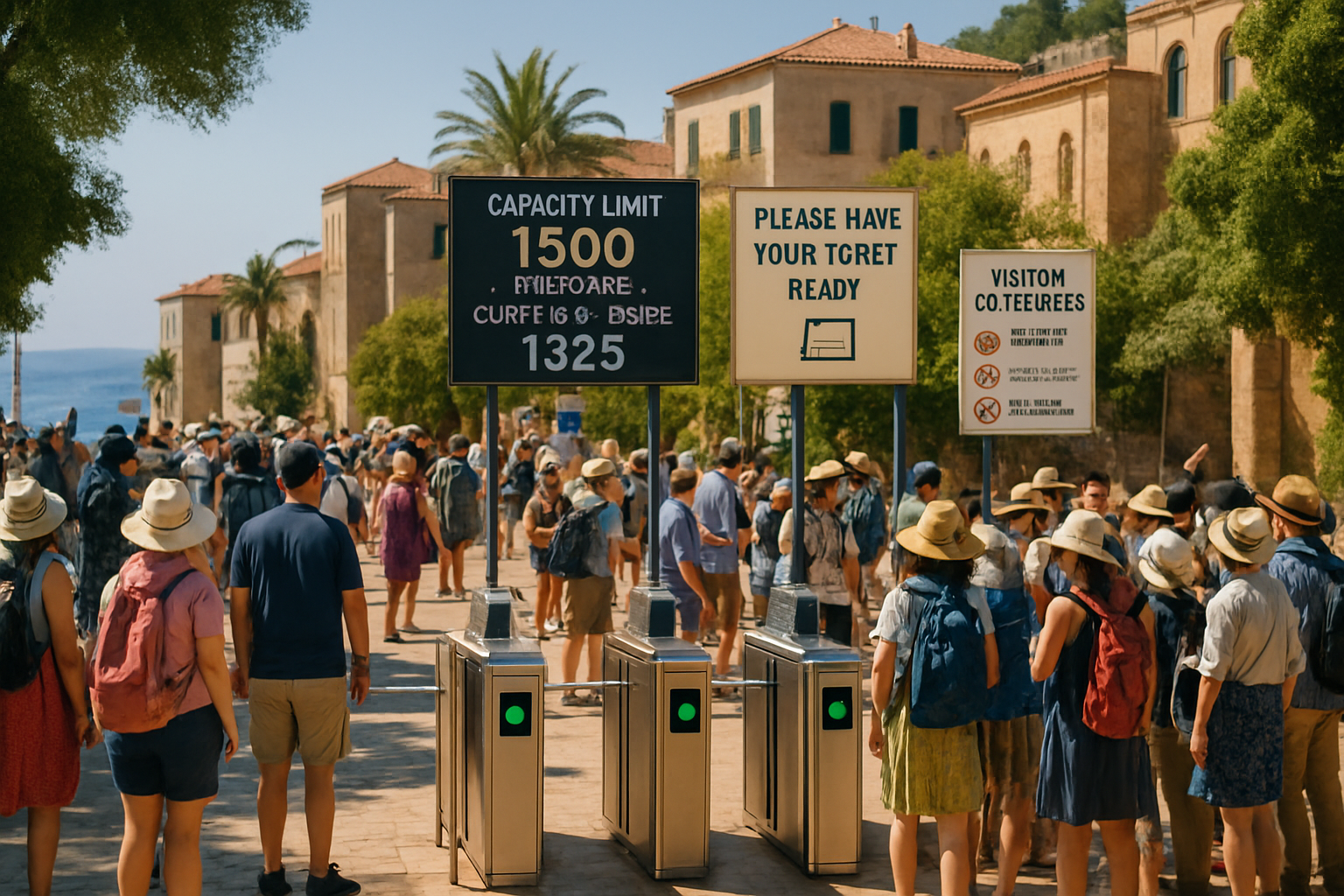
Italy's iconic island of Capri is implementing groundbreaking tourism restrictions starting summer 2026, prohibiting tour groups larger than 40 people and requiring audio equipment for guides, as destinations worldwide grapple with balancing visitor growth against community well-being and environmental sustainability.
The measures, announced by Capri's municipal council, represent one of Europe's most comprehensive approaches to overtourism management. Tour groups exceeding 40 participants will be banned from entering the island, while guides leading groups of more than 20 people must use wireless headsets instead of loudspeakers to reduce noise pollution. Additionally, all tour guides will be required to display visible identification rather than holding up traditional objects to identify their groups.
Capri's Response to Overtourism Crisis
The restrictions address severe overcrowding affecting Capri's 13,000 permanent residents, who host up to 50,000 daily tourists during summer peaks. The island, located in the Bay of Naples, has become a symbol of Mediterranean destinations struggling with overtourism impacts that threaten both visitor experience quality and local community well-being.
Swedish media outlet Expressen confirmed the initiative under the headline "Capri stoppar turistgrupper" (Capri stops tourist groups), highlighting international attention on the island's pioneering approach to visitor management. The measures prioritize visitor experience quality and community well-being over pure volume, representing a paradigm shift in European destination management.
"These restrictions demonstrate a fundamental reimagining of how popular destinations can manage visitor flows while preserving the authentic experiences that make them special in the first place."
— Tourism Industry Expert
Global Tourism Recovery and Regional Variations
While Capri tackles overtourism, other destinations worldwide showcase diverse approaches to tourism development. Argentina's Villa María achieved remarkable success during its Festival de Peñas, reaching 99% hotel occupancy and attracting over 260,000 visitors across Córdoba province. The summer season continues showing historic numbers for Argentine tourism, demonstrating the economic importance of cultural festivals in driving regional tourism growth.
Bolivia presents a different model, promoting Carnival tourism as an opportunity to reactivate the industry. The country's most popular destinations include Oruro, whose UNESCO-recognized carnival attracts national and international tourists, along with Tarija, Cochabamba, and Santa Cruz. Cross-border options extend to Peru's Cusco and Ilo, and Chile's Iquique and Arica, showcasing regional tourism integration.
Innovation in Tourism Education and Marketing
The Pacific region demonstrates forward-thinking approaches to tourism development. Tonga's Tourism Authority launched an innovative online training portal specifically designed for Australian and New Zealand travel agents. This digital platform delivers practical knowledge about the Kingdom's tourism offerings and cultural experiences, strengthening international promotion as visitor numbers continue recovering and growing.
The initiative reflects the broader trend toward professional development and specialized knowledge sharing in the tourism industry, ensuring travel agents can provide authentic, informed recommendations to potential visitors.
Cultural Tourism and Heritage Preservation
Indonesia's tourism sector received international recognition when Sumba Island was named one of Asia's best destinations for 2025 by Time Out Asia. This acknowledgment highlights the growing importance of cultural and natural heritage tourism, as travelers increasingly seek authentic experiences beyond traditional resort destinations.
The recognition of Sumba Island demonstrates how effective destination marketing combined with heritage preservation can position lesser-known locations as world-class tourist attractions, providing economic opportunities for local communities while showcasing unique cultural and natural assets.
Industry Transformation Trends
The global tourism industry is experiencing a fundamental transformation characterized by several key trends. Quality-focused experiences are increasingly prioritized over capacity-driven growth, with destinations implementing sophisticated visitor management technologies and emphasizing authentic cultural engagement.
Destination diversification through improved accessibility represents another major trend. Strategic infrastructure investments are creating opportunities for previously underserved destinations, while expanded air connectivity is reducing travel times and opening new tourism markets.
Strategic marketing initiatives are moving beyond conventional tourist narratives to showcase authentic cultural diversity. This approach encourages exploration of lesser-known destinations while distributing tourism benefits more equitably across regions.
Technology Integration and Visitor Management
The implementation of visitor management technology has become crucial for destination sustainability. Rome's Trevi Fountain €2 entry fee system, which generates €6 million annually while managing overcrowding, serves as a model for other heritage sites worldwide. Such systems demonstrate how technology can balance preservation needs with visitor access.
Digital payment systems, advance booking platforms, and real-time capacity monitoring are becoming standard tools for destination management, enabling more sophisticated crowd control while improving visitor experiences.
Economic and Social Implications
The shift toward sustainable tourism models carries significant economic implications. While some destinations may experience reduced visitor numbers, the focus on quality over quantity often results in higher per-visitor spending, longer stays, and greater engagement with local businesses.
Community involvement has become a critical success factor, ensuring that tourism development serves local interests while preserving cultural authenticity. This approach generates stronger community support for tourism initiatives and creates more resilient destination economies.
International cooperation is increasingly important, as destinations share best practices, coordinate marketing efforts, and develop common standards for sustainable tourism development. This collaboration enables smaller destinations to compete more effectively while maintaining their unique characteristics.
Future Outlook and Challenges
The tourism industry's evolution toward sustainability faces several ongoing challenges. Climate change continues to affect destination accessibility and attractiveness, requiring adaptive management strategies and climate-resilient infrastructure development.
Balancing growth with sustainability remains complex, particularly for destinations dependent on tourism revenue. The success of initiatives like Capri's restrictions will likely influence policy decisions at other popular destinations facing similar overtourism pressures.
The industry's post-pandemic recovery has demonstrated remarkable resilience and adaptability. This experience has accelerated the adoption of digital technologies, emphasized the importance of crisis management capabilities, and highlighted the value of diversified tourism products that can withstand external shocks.
Long-term Industry Transformation
The developments across Capri, Argentina, Bolivia, Tonga, and Indonesia represent a mature industry prioritizing long-term sustainability alongside immediate economic benefits. Success factors consistently include cultural authenticity, sustainable practices, enhanced visitor experiences, international cooperation, and climate-resilient infrastructure.
This transformation balances economic objectives with community benefits, cultural preservation, and environmental sustainability, creating a framework for 21st-century tourism that can maintain competitiveness while serving broader social and environmental goals.
The industry's future will likely be characterized by continued innovation in visitor management, deeper integration of technology with traditional hospitality, and stronger emphasis on community-based tourism models that ensure local populations benefit from tourism development while preserving the authentic character that attracts visitors in the first place.