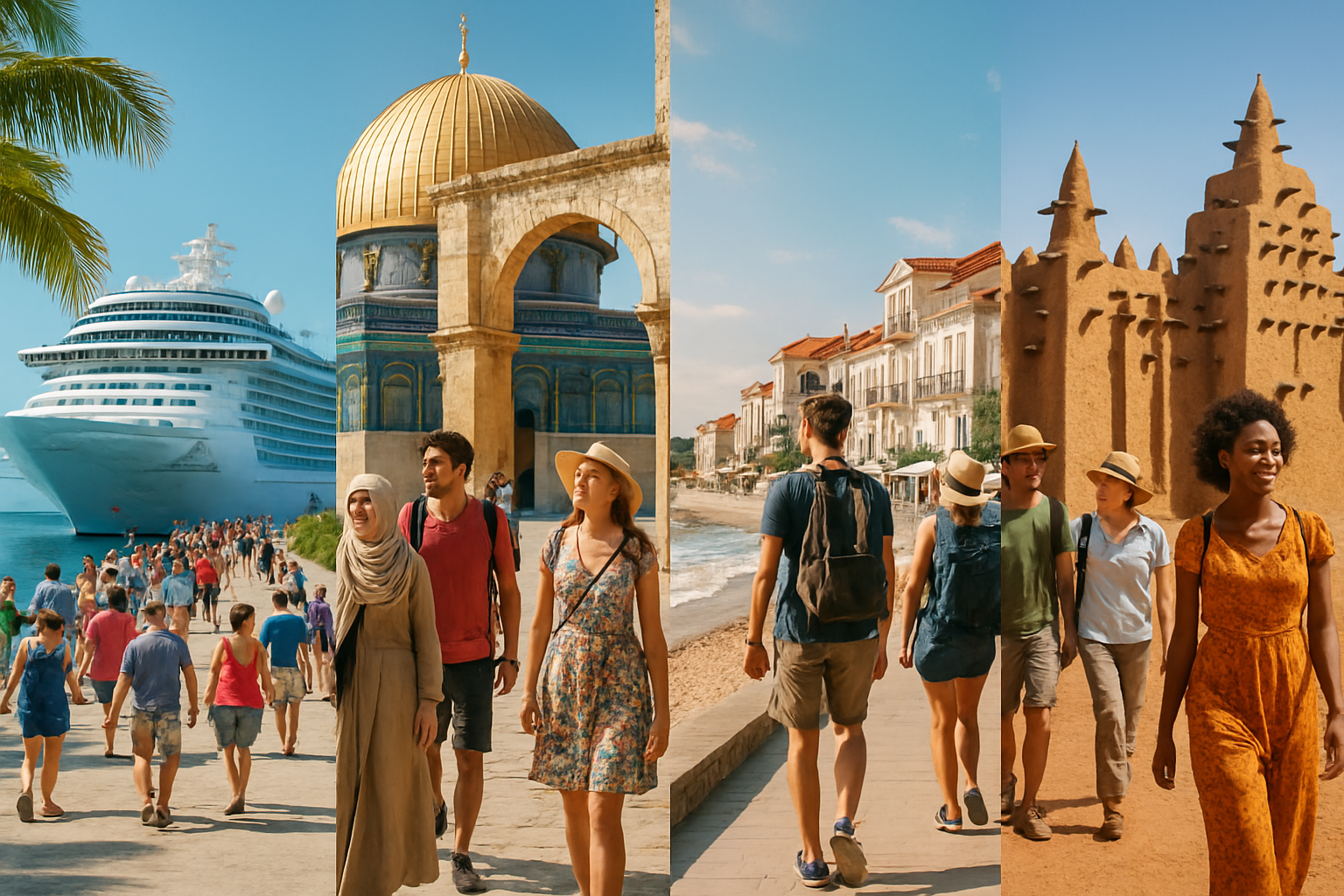
The global tourism industry is experiencing unprecedented transformation as destinations across five continents simultaneously launch major infrastructure projects and cultural initiatives, marking a decisive shift from pandemic recovery to strategic long-term development that prioritizes sustainability and authentic experiences over volume-based growth.
Caribbean Renaissance: Infrastructure Meets Cultural Preservation
The Dominican Republic is spearheading Caribbean tourism transformation with Tourism Minister David Collado announcing a landmark $500 million investment in the Sosúa Beach renovation project in Puerto Plata. The first phase, scheduled for delivery between March 15-20, represents a major milestone in the coastal recovery and reorganization project launched in 2021.
"This project represents an investment aimed at boosting tourism and commercial activity while restoring order to the area."
— David Collado, Tourism Minister
The renovation exemplifies the region's evolution toward sophisticated destination management, combining infrastructure modernization with community economic benefits. This approach aligns with broader Caribbean trends where cruise operations have reached new levels of sophistication, with ports like Saint Kitts demonstrating the ability to simultaneously accommodate six major cruise ships through advanced coordination of direct docking and offshore anchoring.
Middle East Cultural Tourism Surge
Saudi Arabia's Historic Jeddah has emerged as a cultural tourism powerhouse during Ramadan 2026, with statistics revealing an exceptional influx exceeding one million visitors in just the first week. The UNESCO World Heritage Site has transformed into "the beating heart of Jeddah city" under the illumination of traditional Ramadan lanterns.
Visitors formed a vibrant human tapestry stretching from Bab Makkah to the ancient alleyways, drawn by a rich calendar of events managed by Benchmark Company. The massive influx was fueled by traditional craft displays, vendor stalls, and cultural activities that offer visitors a journey through time while maintaining contemporary accessibility.
This success demonstrates how Middle Eastern destinations are successfully balancing heritage preservation with modern tourism infrastructure, creating authentic experiences that attract both regional and international visitors while supporting cultural continuity.
European Innovation in Crisis Management
Portugal is pioneering innovative approaches to tourism-supported crisis management through its "O Turismo acolhe" (Tourism Welcomes) project. The initiative, which connects available tourism accommodations with people displaced by recent storms, currently involves 123 tourism enterprises and has been extended through March 2026.
The project has successfully housed 87 displaced individuals, demonstrating how the tourism industry can serve broader social functions beyond traditional hospitality. This model represents a sophisticated evolution in destination management, where tourism infrastructure becomes part of comprehensive community resilience strategies.
Technology Integration and Sustainable Practices
European destinations continue leading in technology-enhanced visitor management, building on successful models like Rome's Trevi Fountain system that generates €6 million annually through managed access while preserving heritage sites. Croatia is implementing Europe's most extensive seasonal healthcare network with 62 tourist medical clinics for the 2026 season, addressing both visitor safety and pandemic-era accessibility lessons.
Central American Adventure Tourism Expansion
Panama is positioning itself as the gateway for comprehensive American continent exploration, with tour operators developing packages that showcase destinations from Canada's majestic landscapes to Guiana's exotic environments. The emphasis on adventure tourism reflects changing consumer preferences for authentic experiences over standardized vacation products.
Central American destinations, including Costa Rica, Nicaragua, Honduras, and Belize, are benefiting from coordinated marketing efforts that promote multi-destination experiences. This regional integration approach represents a fundamental shift from individual destination competition to collaborative development that enhances competitiveness across the entire region.
African Heritage Tourism Development
Sierra Leone exemplifies Africa's growing sophistication in event-based tourism management through preparations for the second batch of the Budapest–Bamako–Freetown Rally. The Ministry of Tourism and Cultural Affairs has convened comprehensive inter-agency coordination meetings to finalize arrangements for approximately 492 participants and 203 vehicles expected to arrive March 5, 2026.
The event management approach emphasizes sustained coordination among stakeholders to ensure effective logistics, safety protocols, and positive visitor experiences. Participants will overnight at Bureh Beach before proceeding to the official finish-line ceremony at Lumley Beach, showcasing Sierra Leone's capacity for managing large-scale international events while highlighting natural attractions.
Industry Transformation Toward Quality Focus
Analysis of tourism memory data reveals consistent patterns across all regions emphasizing quality-focused strategies over volume-based approaches. Generation Z travelers, representing 50% of those making multiple trips annually, are driving demand for AI-integrated travel planning combined with authentic cultural experiences and sustainable development models.
Success factors consistently emerging across destinations include:
- Cultural authenticity preservation while embracing technological enhancement
- Enhanced visitor experiences through infrastructure investment
- Climate-resilient infrastructure development
- Meaningful community involvement in tourism planning
- International cooperation replacing purely competitive approaches
Economic Multiplier Effects and Sustainable Development
The current tourism recovery represents more than simple pandemic restoration—it demonstrates fundamental industry transformation toward comprehensive community development. Economic multiplier effects now extend beyond traditional hospitality to include transportation improvements, cultural industry support, artisan network development, and year-round employment creation.
Countries implementing comprehensive tourism infrastructure show greater economic resilience and sustainable investment attraction. The Dominican Republic's $500 million investment, Saudi Arabia's cultural programming, Portugal's crisis management integration, Panama's regional connectivity development, and Sierra Leone's event management capabilities all demonstrate how sophisticated destination management combines economic objectives with community benefits and cultural preservation.
Climate Resilience and Adaptive Management
With January 2026 marking the 18th consecutive month of global temperatures exceeding 1.5°C above pre-industrial levels, climate resilience has become essential for destination competitiveness. Successful destinations are implementing proactive infrastructure design that anticipates rather than merely responds to extreme weather conditions.
The integration of climate adaptation strategies with tourism development represents a crucial evolution in industry planning. From Portugal's storm response systems to Saudi Arabia's desert tourism infrastructure, destinations are demonstrating how environmental challenges can be addressed through innovative tourism management approaches.
Future Implications for Global Tourism
February 2026's developments establish new standards for sustainable tourism development that balance economic prosperity with cultural identity and environmental integrity. The simultaneous launch of major initiatives across five continents suggests the industry is entering a maturation phase characterized by sophisticated destination management, technological integration, and sustainable practices.
The emphasis on international cooperation, community engagement, and adaptive management positions the tourism sector to navigate complex global challenges including geopolitical tensions, climate change, and evolving consumer preferences. Success increasingly requires destinations to demonstrate comprehensive value propositions that extend beyond traditional hospitality to include cultural preservation, environmental protection, and community empowerment.
These developments potentially define tourism sector standards for decades ahead, as the industry evolves from volume-based growth to value-based development that serves as an engine for broader economic and social progress while maintaining authentic cultural expressions and environmental sustainability in an increasingly interconnected world.