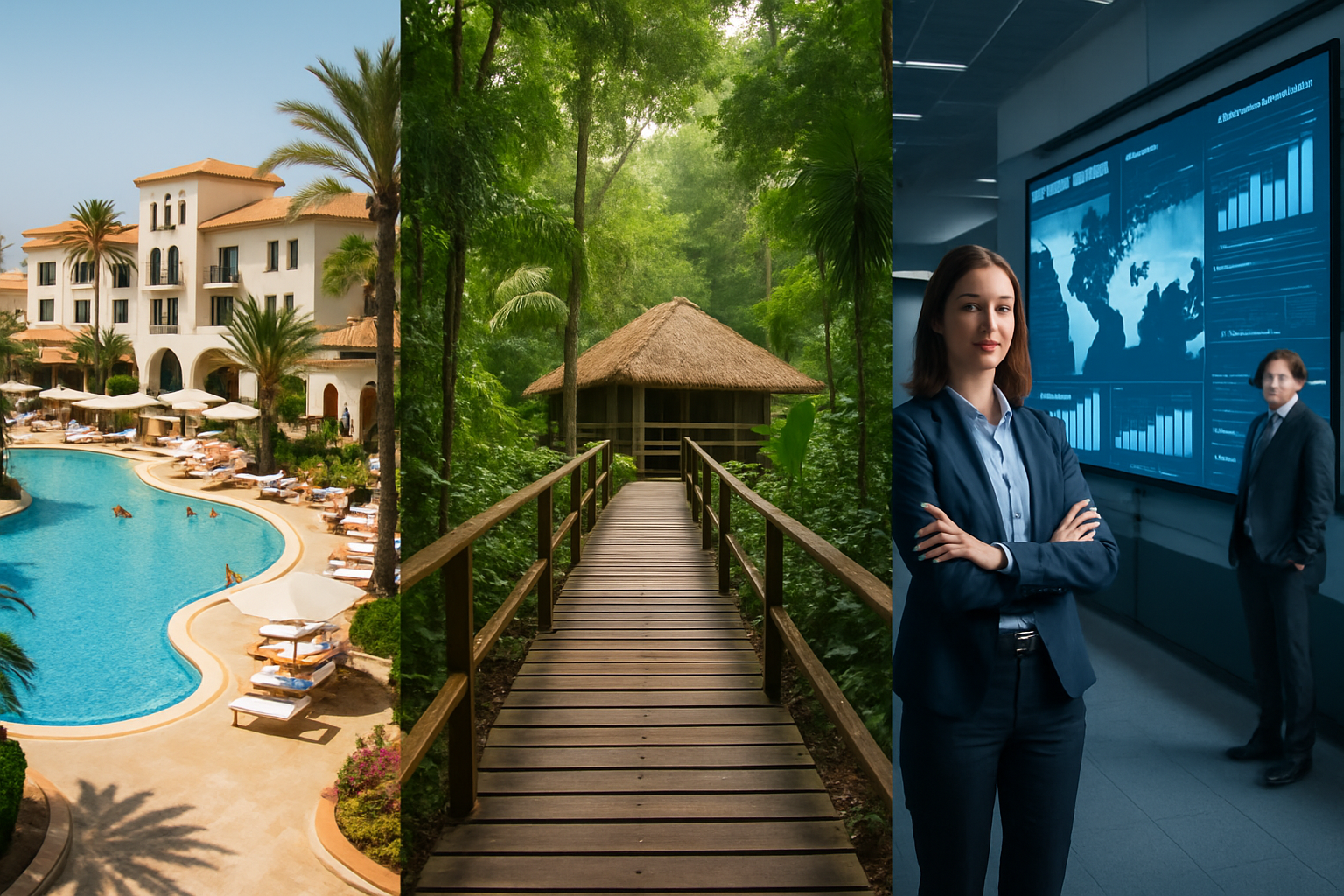
The global tourism industry is experiencing a transformative wave of strategic partnerships and sustainable development initiatives, as demonstrated by Cyprus's expanding cooperation with Serbia, comprehensive data analysis partnerships with Visa, and Guyana's groundbreaking $36 million grant for nature-based community tourism.
Cyprus Leads Mediterranean Tourism Diplomacy
Cyprus Tourism Deputy Minister Kostas Koumis announced significant progress in building stronger tourism cooperation with Serbia, stating that "the Serbian government showed a very intense disposition for building closer and stronger cooperative relations in the field of tourism." This diplomatic breakthrough is expected to culminate in a formal memorandum of understanding in the coming months, positioning Cyprus as a regional leader in tourism diplomacy.
The Serbia-Cyprus partnership represents a broader trend of Mediterranean nations diversifying their tourism markets beyond traditional sources. Cyprus has already achieved remarkable success in this strategy, recording 4.5 million visitors in 2025 with revenues of €3.6 billion, demonstrating a 4.6% increase in per-person expenditure. The country has successfully reduced dependency on UK markets by expanding into Israeli and regional partnerships.
Data-Driven Tourism Intelligence Revolution
Simultaneously, Cyprus is pioneering data-driven tourism analysis through a groundbreaking partnership between the Cyprus Chamber of Commerce and Industry (Keve) and Visa. The March 9, 2026 seminar titled "Cyprus Tourism Trends – Through the Lens of Visa" will present detailed findings about tourist behavior and spending patterns using Visa card payment data.
This innovative approach to tourism intelligence represents a fundamental shift in how destinations understand visitor preferences. The seminar will highlight emerging market trends, including sectors experiencing increased consumption, seasonality patterns, visitor preferences, and variations by country of origin. This data-driven methodology provides unprecedented insights into actual spending behaviors rather than traditional survey-based research.
"Through Visa card payment data, emerging market trends will be highlighted, including sectors experiencing increased consumption, seasonality patterns, visitor preferences and variations by country of origin."
— Cyprus Chamber of Commerce and Industry
Sustainable Tourism Breakthrough in South America
Meanwhile, Guyana has achieved a major milestone in sustainable tourism development through a $36 million grant signed between the Guyana Tourism Authority (GTA) and the World Wildlife Fund (WWF). This EU-funded Sustainable Forest Livelihoods (SFL) programme specifically targets community-led, nature-based tourism in regions Two and Ten.
The Guyana initiative represents a sophisticated approach to conservation tourism, integrating environmental protection with economic development for local communities. This model addresses the growing global demand for authentic, sustainable travel experiences while ensuring meaningful benefits reach indigenous and local communities.
The timing is particularly significant as sustainable tourism has become a priority for Generation Z travelers, who represent 50% of travelers making two trips over five days in 2025, with the majority planning increased 2026 travel budgets. This demographic specifically seeks AI-integrated travel planning combined with authentic cultural and environmental experiences.
Global Tourism Industry Transformation
These developments occur within the broader context of unprecedented global tourism recovery, with the industry surpassing pre-pandemic levels supported by a $570+ billion infrastructure investment surge. The Caribbean region, where Guyana is strategically positioned, has demonstrated particular strength with sophisticated port management and cruise coordination.
The Cyprus-Serbia partnership and Visa data analysis reflect the industry's evolution toward quality-focused strategies over volume-based approaches. Rome's Trevi Fountain €2 system generating €6 million annually while managing overcrowding provides a template for sustainable tourism revenue models that protect cultural heritage while generating economic benefits.
Technology Integration and Cultural Authenticity
The integration of advanced data analytics with traditional tourism promotion demonstrates the industry's sophisticated approach to technology adoption. Rather than replacing authentic cultural experiences, digital tools like Visa's payment analytics and AI-integrated travel planning are enhancing destination management capabilities and visitor satisfaction.
Croatia's implementation of 62 tourist medical clinics for the 2026 season represents Europe's most extensive seasonal healthcare network, demonstrating how destinations are using data and technology to enhance visitor safety and experience quality. This approach directly addresses pandemic-era lessons about accessible medical services' importance for destination competitiveness.
Regional Integration and Cooperation Models
The success of these tourism initiatives reflects broader regional integration trends. Caribbean destinations are coordinating marketing efforts and collaborative infrastructure development, creating multi-destination experiences rather than competing individually. This cooperative approach maximizes economic benefits across the entire region.
Similarly, Cyprus's expansion into Serbian markets complements broader European tourism strategies that emphasize cultural authenticity, enhanced visitor experiences, climate-resilient infrastructure, and meaningful community involvement. These factors consistently emerge as success criteria for sustainable tourism development.
Economic Multiplier Effects
Tourism development is demonstrating comprehensive economic multiplier effects extending far beyond traditional hospitality services. The Guyana WWF partnership creates employment in conservation, eco-tourism, and community development while protecting biodiversity. Cyprus's data analytics partnership with Visa provides insights that benefit entire economic sectors through improved understanding of consumer behavior patterns.
These economic benefits support the broader transformation of tourism from a volume-based industry to one emphasizing sustainable community-focused development. Countries implementing comprehensive tourism strategies demonstrate greater economic resilience and attract sustainable investment compared to destinations pursuing rapid expansion without community integration.
Climate Adaptation and Environmental Sustainability
The environmental dimension of these tourism developments is particularly significant given that January 2026 marked the 18th consecutive month of global temperatures exceeding 1.5°C above pre-industrial levels. Tourism destinations are increasingly required to demonstrate climate resilience and environmental sustainability to remain competitive.
Guyana's nature-based tourism model provides a template for how destinations can leverage environmental protection as an economic development strategy rather than a regulatory burden. The integration of conservation goals with community economic benefits creates sustainable financing mechanisms for long-term environmental protection.
Future Implications and Industry Standards
These February 2026 developments are establishing new standards for 21st-century tourism development. The combination of diplomatic cooperation (Cyprus-Serbia), technological innovation (Visa data analytics), and sustainable community development (Guyana WWF partnership) provides a comprehensive model for tourism industry transformation.
Success factors consistently emerging across these initiatives include cultural authenticity preservation, enhanced visitor experiences through technology, climate-resilient infrastructure development, meaningful community involvement, and international cooperation frameworks. Destinations implementing these comprehensive approaches are positioned for long-term competitiveness in an increasingly sophisticated global marketplace.
The tourism industry's fundamental transformation toward sustainable, community-focused development represents more than pandemic recovery—it establishes frameworks that could define the sector for decades ahead. As demonstrated by Cyprus's diplomatic initiatives, Guyana's conservation partnerships, and the integration of advanced data analytics, the future of tourism lies in balancing economic objectives with community benefits, cultural preservation, and environmental responsibility.