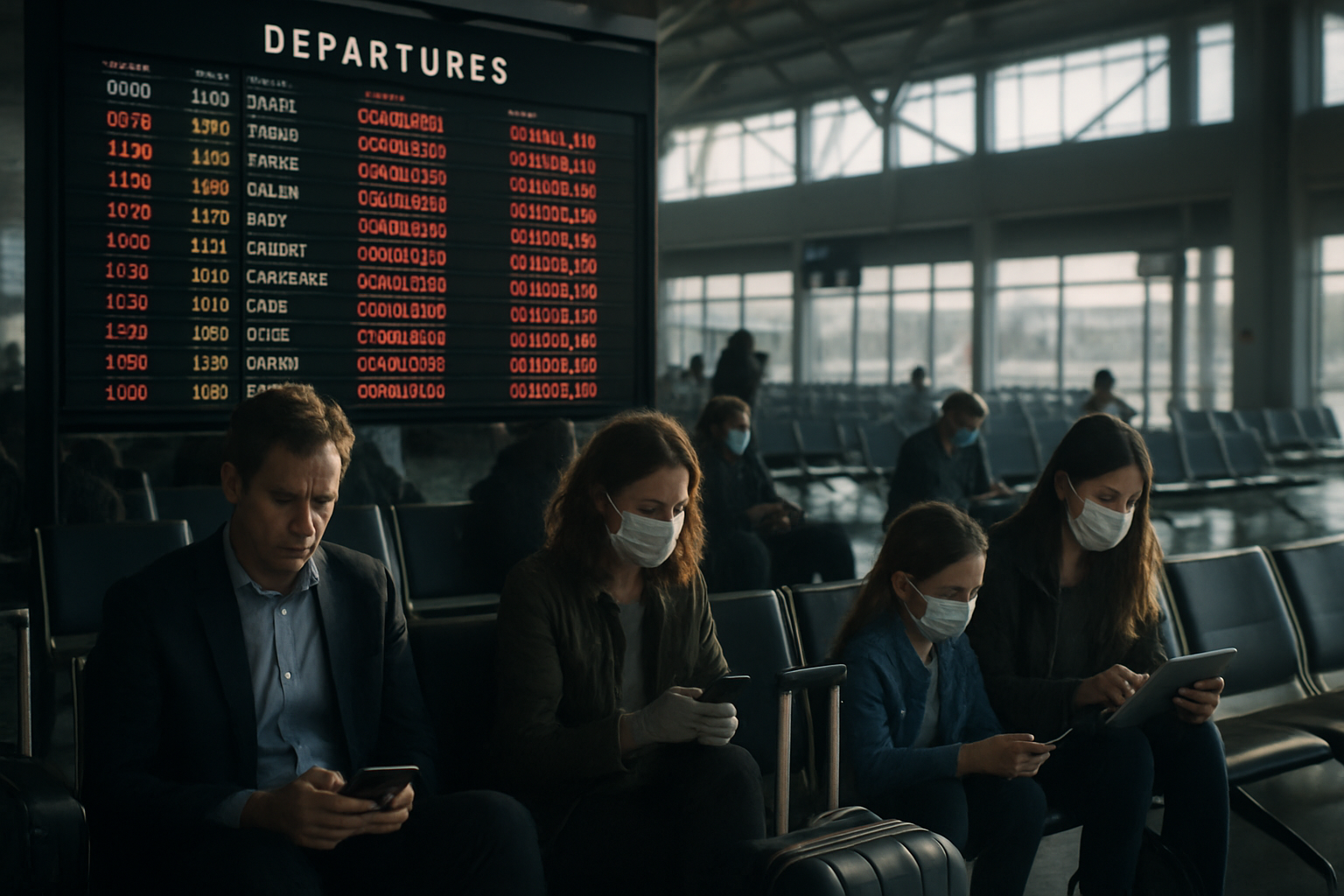
The global tourism industry is experiencing its most severe operational crisis since the COVID-19 pandemic, as a convergence of pricing pressures, security concerns, and aviation disruptions fundamentally reshapes international travel patterns across multiple continents.
From Iceland's solar eclipse pricing controversies to the ongoing Middle East aviation crisis affecting over 18,000 flights worldwide, destinations are grappling with an unprecedented "perfect storm" of challenges that threatens to redefine the sector for decades to come.
Aviation Crisis Reaches Critical Scale
The aviation industry faces its most extensive disruption since COVID-19, with Dubai International Airport—the world's busiest with 86 million passengers annually—completely shut down following missile damage. Eight countries maintain simultaneous airspace closures affecting critical Europe-Asia hub connections, while major carriers including Emirates, Etihad, Air France-KLM, Wizz Air, and Bulgaria Air have suspended operations indefinitely.
Jet fuel prices have surged an unprecedented 122%, jumping from $85-90 to $150-200 per barrel due to Iran's closure of the Strait of Hormuz, which affects 40% of global oil transit. This has forced airlines to implement emergency fare surcharges, with Air France-KLM adding 50 euros to long-haul tickets and similar measures adopted by carriers worldwide.
"The market is very fluid due to the Middle East conflict, but we see crisis as opportunity to expand while competitors reduce capacity," said Nasaruddin Bakar, CEO of Malaysia Airlines Group, which bucked industry trends by launching new routes despite the turmoil.
— Nasaruddin Bakar, Malaysia Airlines Group CEO
Pricing Pressures Hit Prime Destinations
Even traditionally stable destinations face pricing controversies that threaten visitor confidence. In Iceland, industry experts warn that inflated prices around the country's total solar eclipse on August 12 could deter tourists, with services being sold at "multiple times their usual price" according to Bjarnheiður Hallsdóttir, former chair of the Icelandic Travel Industry Association.
This pricing pressure extends globally, with individual travelers bearing extreme costs. Swedish traveler Emily Grosser exemplifies the passenger impact, paying $560 for alternative routing from Paris to Australia after her Dubai connection was cancelled—demonstrating the financial burden placed on travelers during the crisis.
Massive International Evacuations
The crisis has triggered the largest coordinated international evacuation since the Arab Spring of 2011, with over 500,000 citizens extracted from Middle East conflict zones. Australia has evacuated 115,000 nationals, Germany 30,000 tourists, and Cyprus activated its ESTIA plan for the first time, coordinating the evacuation of 2,000+ EU nationals from the UAE.
The scale of these operations demonstrates the vulnerability of modern tourism infrastructure to geopolitical instability, with traditional hub-and-spoke aviation models proving particularly susceptible to regional disruptions.
Regional Winners and Losers Emerge
The crisis has created clear regional redistribution patterns in global tourism. Croatia is positioning itself as a safer European alternative, benefiting from travelers seeking alternatives to traditional Middle Eastern routes. Spain, with its capacity for 513.6 million tourist nights annually, is capturing redirected demand from affected regions.
Conversely, the Caribbean faces a "perfect storm" of Middle East disruptions combined with Cuba's aviation isolation, while New Zealand's tourism recovery is threatened as one-third of European travelers typically use Middle Eastern hubs for their connections.
Travel Insurance Crisis Exposed
A critical gap in traveler protection has been exposed during the crisis, with standard travel insurance policies excluding war-related cancellations. This has left individual travelers financially vulnerable while driving a fundamental shift toward package tours over independent travel, as tour operators can provide comprehensive coverage frameworks that individual policies cannot match.
Austrian European Consumer Centres have confirmed that travelers experiencing "anxiety" about regional conditions have no recourse unless they book organized tours, highlighting fundamental flaws in current protection systems for independent travelers.
Industry Transformation Accelerated
The crisis has accelerated long-term industry transformations already underway. Enhanced security screening, mandatory conflict insurance, and pre-approval systems for high-risk destinations are becoming standard features of international travel. Route diversification has become an urgent priority as the over-dependence on Middle Eastern hubs has exposed critical vulnerabilities in global aviation networks.
Technology integration is advancing rapidly, with destinations implementing sophisticated crowd management systems. Rome's Trevi Fountain generates €6 million annually through its €2 managed access system, while Croatia has deployed Europe's most extensive seasonal healthcare network with 62 tourist medical clinics for the 2026 season.
Economic Impact Extends Beyond Tourism
The crisis's economic impact extends far beyond the tourism sector itself. Oil prices have surged past $100 per barrel for the first time since 2022, with Brent crude reaching $119.50. Financial markets have crashed globally, with Pakistan's KSE-100 suffering its largest single-day decline in history at -8.97%, while South Korea's KOSPI fell 12% before circuit breakers activated.
The International Energy Agency deployed its largest strategic petroleum reserves release in 50 years, releasing 400 million barrels from 32 countries—double the amount released during the 2022 Ukraine crisis.
Quality Over Volume: The New Tourism Paradigm
Despite the challenges, the crisis has accelerated a positive transformation toward quality-focused tourism strategies over volume-based approaches. Generation Z travelers, representing 50% of those taking multiple trips over five days annually, are driving demand for AI-integrated travel planning combined with authentic cultural experiences.
This shift toward value-based development prioritizes community benefits, cultural preservation, and environmental responsibility alongside economic growth. Cyprus achieved record performance in 2025 with 4.5 million visitors generating €3.6 billion in revenue, demonstrating that quality-focused strategies can deliver strong results even amid global uncertainty.
Climate Resilience Becomes Essential
Adding to the complexity, January 2026 marked the 18th consecutive month of global temperatures exceeding 1.5°C above pre-industrial levels, making climate resilience essential for destination competitiveness. Countries are implementing proactive infrastructure design that anticipates rather than responds to extreme weather conditions.
The convergence of geopolitical tensions and climate challenges requires destinations to develop comprehensive adaptation strategies that address multiple risk factors simultaneously.
Recovery Timeline Uncertain
Unlike weather-related disruptions that follow predictable patterns, recovery from the current crisis depends on military operations resolution and diplomatic normalization—factors beyond the tourism industry's control. Airlines are conducting daily reviews but cannot make long-term scheduling decisions while multiple airspaces remain closed and security conditions remain volatile.
UN Secretary-General António Guterres has called the situation "the greatest test of multilateral cooperation and crisis management in the modern era," emphasizing the global significance of the current challenges.
Template-Setting Moment for 21st Century Tourism
March-April 2026 represents a watershed moment for the tourism industry, potentially defining travel patterns for decades to come. The crisis forces a fundamental choice between maintaining global connectivity versus adapting to more regionalized, security-conscious travel patterns.
Success in navigating this transformation will determine which destinations and operators emerge stronger from these unprecedented challenges. The industry's response—balancing safety, affordability, and authenticity—will establish templates for crisis management in an increasingly volatile geopolitical environment.
As the global tourism industry confronts this perfect storm of pricing and security challenges, destinations that successfully adapt their strategies toward quality-focused, community-centered development while maintaining international connectivity and visitor confidence are positioned to lead the sector's evolution into a more resilient and sustainable future.