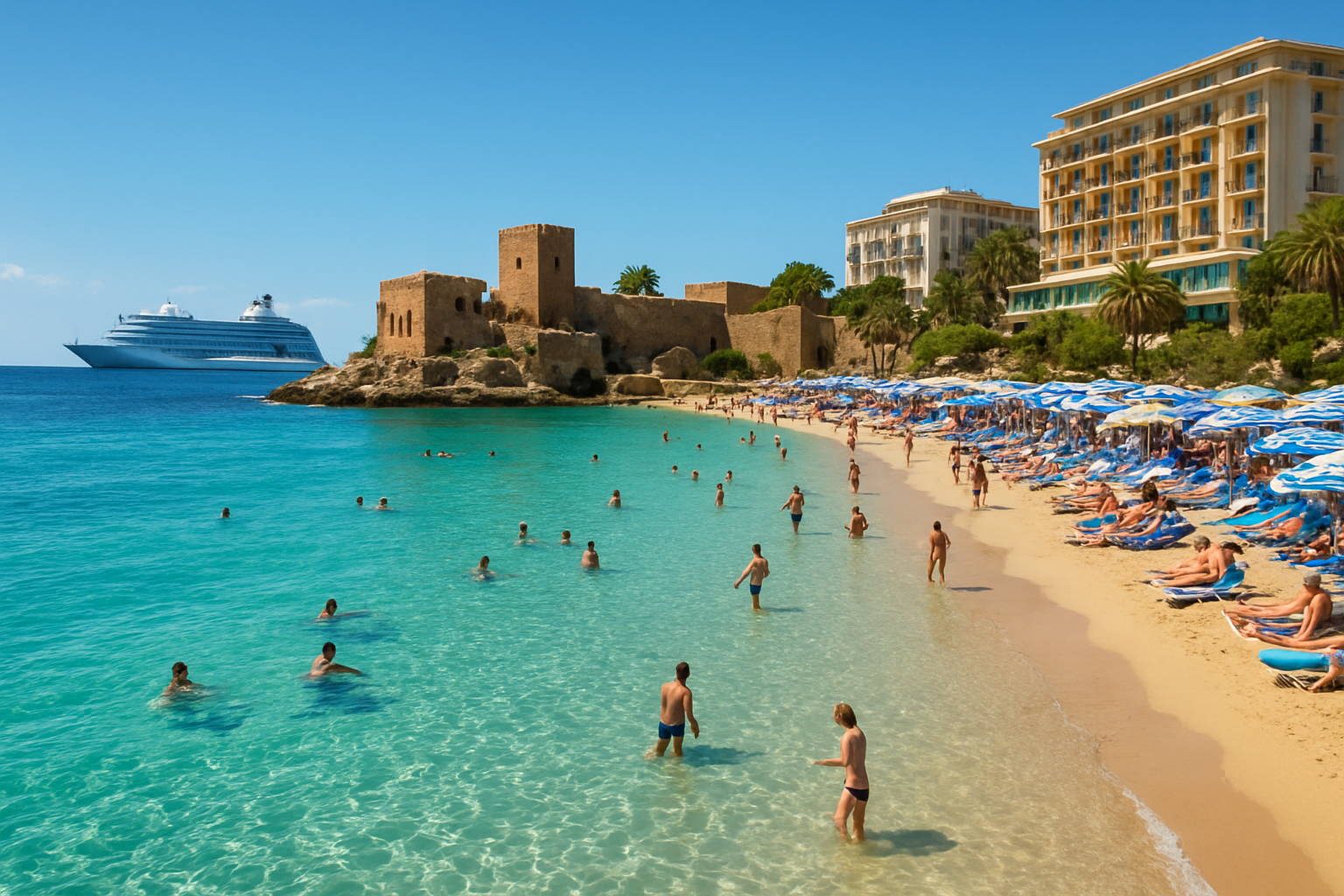
The global tourism industry is experiencing a robust recovery in February 2026, marked by Cyprus's Fig Tree Bay earning recognition as one of Europe's top 19 beaches, strengthened aviation connectivity, and significant hotel development projects spanning from Ireland to Argentina, signaling renewed confidence in international travel.
Cyprus Emerges as European Beach Destination Leader
Fig Tree Bay in Protaras has achieved a major milestone, becoming the only Cypriot beach to be named among Europe's top 19 destinations for 2026 by TripAdvisor's Travellers' Choice awards. The municipality of Paralimni-Deryneia welcomed this recognition as reflecting the beach's standing as a leading coastal destination and strengthening the international profile of both Protaras and the wider municipality.
The award represents validation of sustained investment in infrastructure and visitor services. The municipality credited hundreds of thousands of Cypriot and foreign visitors whose reviews and ratings consistently placed Fig Tree Bay at the top of Cyprus's beaches, calling their trust and preference "the strongest confirmation" of efforts made in cleanliness, safety, accessibility, and organization.
Aviation Connectivity Strengthens Tourism Infrastructure
Cyprus is simultaneously building on this tourism success through enhanced air connectivity. Hermes Airports announced positive momentum for strengthening Cyprus' air connectivity following participation in CONNECT 2026 in Lublin, Poland, where the Air Service Development team conducted 20 targeted meetings with airline partners.
These discussions focused on enhancing connectivity at Larnaca and Paphos airports, securing new routes and expanding existing airline operations. Early booking trends from key markets including the United Kingdom, Poland, Scandinavia, and Switzerland are performing strongly, delivering particularly encouraging signals ahead of the upcoming summer season.
Hotel Development Projects Signal Industry Confidence
The tourism recovery extends beyond beach recognition to substantial infrastructure investments. In Ireland, planning permission has been granted for a new 37-bedroom, four-storey hotel in Rathmullan, described as a "major vote of confidence" for the area. The hotel, set to be built at Kerr's Bay Road by local developer Thomas McCarron of Clipfine Limited, represents significant investment in the region's hospitality infrastructure.
Deputy Pat 'the Cope' Gallagher welcomed the development, emphasizing its importance for local economic growth and tourism capacity expansion. The project demonstrates the continuing appeal of Ireland as a destination for both domestic and international visitors.
"This represents a major vote of confidence in Rathmullan and the wider Donegal tourism offering."
— Deputy Pat 'the Cope' Gallagher
Heritage Tourism Gains Momentum in Argentina
Argentina is positioning itself as a heritage tourism destination with the promotion of unique historical accommodations. The country is highlighting opportunities to stay in a 19th-century mansion hotel in Salta, described as "much more than a stay" but rather "a different way to live the city."
Located opposite Plaza 9 de Julio, the colonial hotel represents how history, architecture, and hospitality combine to transform a trip into an experience. This approach reflects the broader industry trend toward authentic, culturally-immersive travel experiences that differentiate destinations in an increasingly competitive marketplace.
Caribbean Tourism Exchange Reinforces Regional Integration
The Dominican Republic is demonstrating continued leadership in Caribbean tourism through the Dominican Annual Tourism Exchange (DATE) 2026, scheduled for April 24-26, 2026, at the Barceló Bávaro Convention Center in Punta Cana. The event is reaffirmed as the largest and most important tourism trade fair in the Dominican Republic and one of the leading tourism business platforms in the Caribbean.
According to Asonahores (Dominican Republic Hotel and Tourism Association), DATE 2026 continues to strengthen its role as the premier gathering for tourism professionals throughout the region, facilitating business relationships and promoting sustainable tourism development across the Caribbean basin.
Technology Integration Enhances Visitor Management
The tourism recovery is being supported by sophisticated technology integration, building on successful models like Rome's Trevi Fountain €2 entry system, which has generated €6 million annually while effectively managing overcrowding. This template demonstrates how destinations can balance visitor access with sustainable tourism management.
Cyprus is leveraging digital marketing strategies and coordinated tourism sector efforts to enhance visitor experiences. The success reflects broader industry trends toward quality-focused tourism strategies that prioritize visitor satisfaction and sustainable destination development over pure volume-based approaches.
Regional Cooperation Strengthens Competitive Position
The tourism developments reflect increasing regional cooperation and integration. Cyprus's success in attracting visitors from diverse markets, including the UK, Poland, and Scandinavia, demonstrates effective market diversification strategies that reduce dependency on single source markets.
Similarly, the Dominican Republic's tourism exchange serves as a platform for regional cooperation, creating multi-destination experiences and shared marketing initiatives that benefit the entire Caribbean region. This collaborative approach contrasts with traditional competitive strategies, emphasizing mutual benefit and sustainable growth.
Infrastructure Investment Supports Long-term Growth
The hotel development projects and aviation expansion represent part of a broader global infrastructure investment surge totaling over $570 billion, supporting tourism recovery through enhanced connectivity, visitor services, and operational capacity. This includes improvements to healthcare systems, transportation networks, and digital services that extend beyond traditional hospitality offerings.
The investments reflect industry maturation toward comprehensive destination management that combines marketing excellence with infrastructure development and operational efficiency. Successful destinations are demonstrating that economic objectives can align with community benefits and cultural preservation when supported by strategic planning and international cooperation.
Looking Forward: Sustainable Tourism Development
The February 2026 developments establish important precedents for sustainable tourism growth. The success factors consistently emerging include cultural authenticity, enhanced visitor experiences, climate-resilient infrastructure, meaningful community involvement, and international cooperation.
The tourism industry's transformation toward quality-focused strategies represents fundamental change rather than simple post-pandemic recovery. Generation Z travelers are driving demand for authentic cultural experiences integrated with modern technology, environmental sustainability, and meaningful community engagement.
As demonstrated by Cyprus's beach recognition, Ireland's hotel development, Argentina's heritage tourism, and the Dominican Republic's regional leadership, the industry is establishing new standards for sustainable, community-focused development that could define tourism for decades ahead. The unprecedented investment levels, technological integration, and regional cooperation are creating a sophisticated global marketplace that emphasizes long-term sustainability alongside economic objectives, community benefits, cultural preservation, and environmental responsibility.