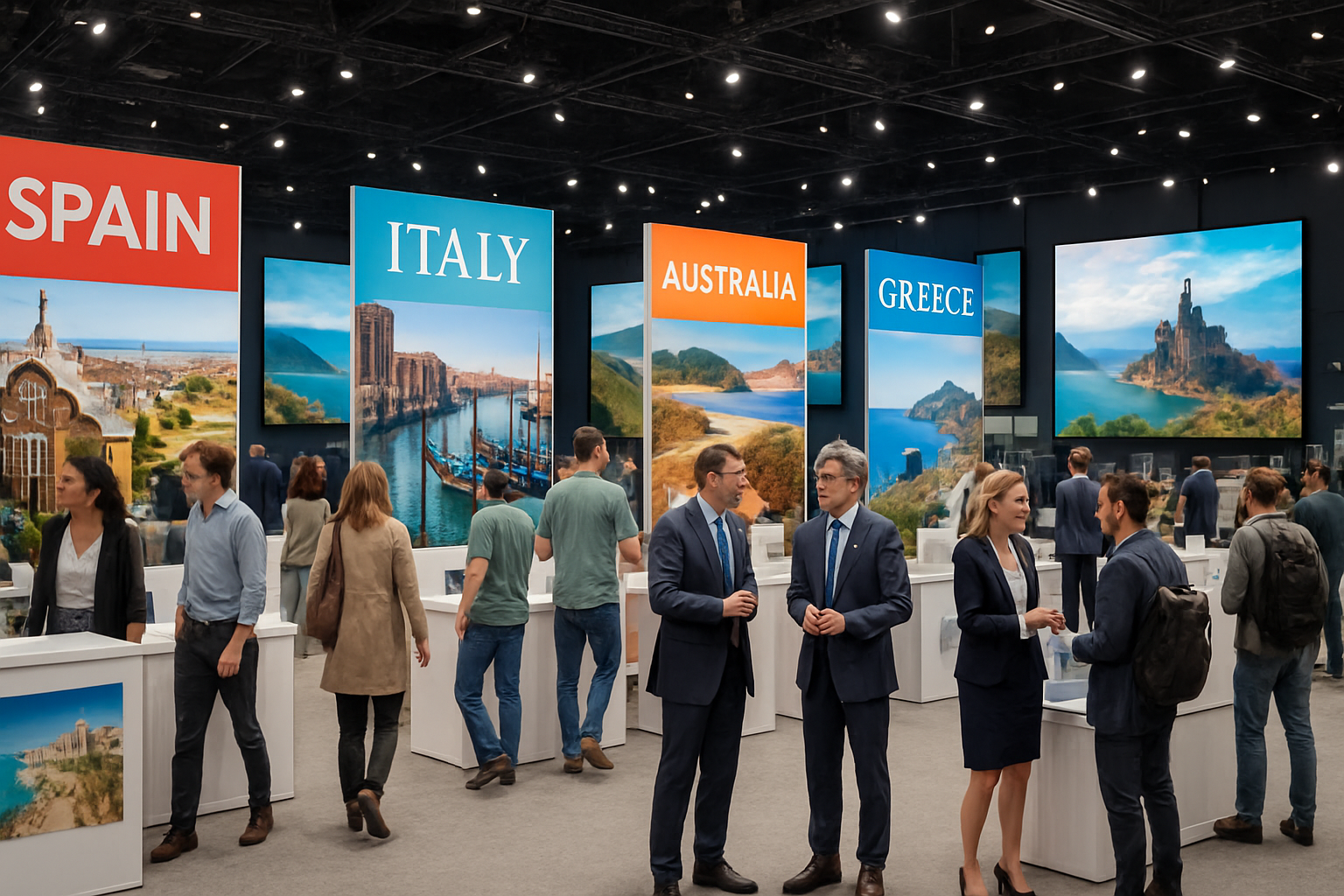
Tourism boards worldwide are launching their most ambitious promotional campaigns since the pandemic, with destinations from Egypt to Panama unveiling innovative strategies that reflect an industry transformed by record-breaking growth and unprecedented infrastructure investment exceeding $570 billion globally.
The latest developments span multiple continents, demonstrating a coordinated effort to capitalize on tourism's remarkable recovery trajectory. Egypt's recognition as "Best Tourist Destination for 2026" at Kazakhstan's KITF International Tourism Fair exemplifies the industry's new emphasis on market diversification and regional partnerships that extend beyond traditional Western tourism corridors.
Egypt Leads Middle Eastern Tourism Renaissance
Egypt's achievement at the 24th KITF International Tourism Fair in Almaty represents more than a ceremonial award—it signals a strategic pivot toward Central Asian and CIS markets. Ahmed Youssef, CEO of the Egyptian Tourism Authority, described the recognition as part of a broader strategy to diversify Egypt's tourism portfolio, particularly targeting Russia and Commonwealth of Independent States countries.
The Egyptian pavilion's Pharaonic-inspired design attracted significant attention from industry professionals, competing against major international participants including Turkish Airlines and national stands from Cyprus. This success builds on Egypt's growing reputation as a cultural tourism powerhouse, leveraging its unparalleled archaeological heritage to attract sophisticated international travelers seeking authentic experiences.
Caribbean Tourism Reaches New Heights
The Dominican Republic's tourism sector is experiencing unprecedented growth, with the DATE 2026 Punta Cana exhibition showcasing the Caribbean's emergence as a premier destination. Organized by the Dominican Republic's Association of Hotels and Tourism (Asonahores), this year's edition broke participation records with over 8,000 scheduled business appointments and 200+ companies from more than 20 source markets.
"The tourism industry provides 800,000 jobs and contributes $3 billion to our local economy. These numbers reflect not just recovery, but transformation toward sustainable growth."
— Asonahores Representative, DATE 2026
The exhibition featured 300+ international buyers and 120 exhibition booths, demonstrating the Dominican destination's diversity and appeal. Recent performance data supports this optimism, with the country achieving a historic record of 3.7 million visitors in Q1 2026, representing a major milestone for Caribbean tourism.
Cruise Sector Drives Economic Growth
The Dominican Republic's cruise industry is experiencing exceptional momentum, with projections of 1.4+ million cruise passengers across Taíno Bay and Port Cabo Rojo in 2026. CEO Mauricio Hamui reports remarkable 90-95% disembarkation rates, directly benefiting the economies of Puerto Plata, Cabarete, and Sosúa.
This success mirrors broader Caribbean achievements, including Saint Kitts and Nevis Port Zante's ability to simultaneously accommodate six cruise ships, and Saint Lucia's record 150,323 cruise passengers in January—a 10.8% increase that demonstrates the region's mature infrastructure capabilities.
Croatia Sets European Tourism Standards
Croatia's nomination of Hvar island and Suncani Hvar hotel group for the prestigious Conde Nast Traveler Readers Awards represents the culmination of decades of strategic tourism development. The island, frequently cited as one of the world's 10 most beautiful islands, continues to attract luxury travelers seeking authentic Mediterranean experiences.
Croatia's tourism infrastructure has evolved significantly, with the country now operating Europe's most extensive seasonal healthcare network—62 tourist medical clinics for the 2026 season. This investment addresses post-pandemic visitor expectations while positioning Croatia as a safe, reliable destination for international travelers of all demographics.
The country's strategic approach extends beyond healthcare to encompass comprehensive visitor services, regional connectivity improvements, and sustainable tourism practices that balance economic growth with environmental preservation and community benefits.
Panama Emerges as Business Tourism Hub
Panama's emergence as a leading destination for Meetings, Incentives, Conferences, and Exhibitions (MICE) represents a significant shift in Latin American business tourism. The country's world-class infrastructure, including the Amador Convention Center and ATLAPA facilities, combined with exceptional global connectivity, positions Panama as an ideal venue for international corporate events.
The transformation extends beyond infrastructure to encompass a comprehensive approach that blends modern city skylines with coastal and rainforest venues, offering unique, high-quality corporate experiences that competitors struggle to match. Panama's strategic location and stable business environment make it particularly attractive for multinational organizations seeking accessible, professional meeting destinations.
Industry Transformation Accelerates
These developments occur within the context of unprecedented global tourism transformation. Generation Z travelers, representing 50% of those making multiple trips of five or more days annually, are driving demand for AI-integrated travel planning combined with authentic cultural experiences. This demographic shift is forcing destinations to balance technological convenience with cultural authenticity.
The industry's evolution from volume-based to quality-focused strategies is evident across all regions. Technology integration examples include Rome's Trevi Fountain managed access system, which generates €6 million annually through €2 entry fees while protecting the historic site, and Venice's expanded entry fee system covering 60 days in 2026 versus the 29-day pilot in 2024.
Regional Cooperation Replaces Competition
A significant trend emerging across all regions is the shift from individual destination competition to collaborative regional development. Caribbean cruise coordination, European infrastructure sharing, and Central American joint marketing initiatives (Nicaragua, Costa Rica, Panama) demonstrate how destinations are creating stronger tourism economies through cooperation.
This collaborative approach extends to crisis management and adaptive strategies. Portugal's "O Turismo acolhe" project, which connected 123 tourism enterprises to house 87 storm-displaced individuals, exemplifies tourism's evolution beyond traditional hospitality toward community resilience and social responsibility.
Climate Resilience Becomes Essential
Climate adaptation has become a critical competitiveness factor, with January 2026 marking the 18th consecutive month of global temperatures exceeding 1.5°C above pre-industrial levels. Destinations are implementing proactive infrastructure design, alternative transportation options, weather-resistant facilities, and seasonal diversification strategies.
Cyprus exemplifies successful climate adaptation, achieving a record 4.5 million visitors generating €3.6 billion revenue in 2025 through market diversification and climate-resilient infrastructure. The country's success demonstrates that quality-focused approaches can deliver superior economic outcomes while maintaining environmental sustainability.
Economic Multiplier Effects Expand
Tourism's economic impact has evolved far beyond traditional hospitality metrics. Current developments generate multiplier effects through infrastructure improvements, cultural industry support, artisan networks, transportation enhancements, and year-round employment creation. These effects position tourism as a comprehensive community development catalyst rather than a seasonal economic activity.
The industry's maturation toward sophisticated destination management combines marketing excellence with operational efficiency, balancing economic objectives with community benefits, cultural preservation, and environmental responsibility. This evolution establishes new standards for 21st-century tourism competitiveness.
Success Factors for Sustainable Growth
Consistent success factors emerge across all regions: cultural authenticity preservation, enhanced visitor experiences through strategic infrastructure, meaningful community involvement in tourism planning, international cooperation frameworks, and adaptive management responding to changing consumer preferences.
The current transformation represents more than recovery—it constitutes a fundamental industry evolution toward sustainable, community-focused development that serves both visitors and host communities effectively while navigating complex global challenges including geopolitical tensions, climate change, and evolving consumer preferences.
As the tourism industry continues its remarkable recovery trajectory, the initiatives launched by Egypt, the Dominican Republic, Croatia, and Panama provide templates for destinations worldwide. Their success demonstrates that quality-focused strategies, international cooperation, and comprehensive infrastructure investment create more resilient, sustainable tourism economies positioned for long-term competitiveness in an increasingly complex global marketplace.