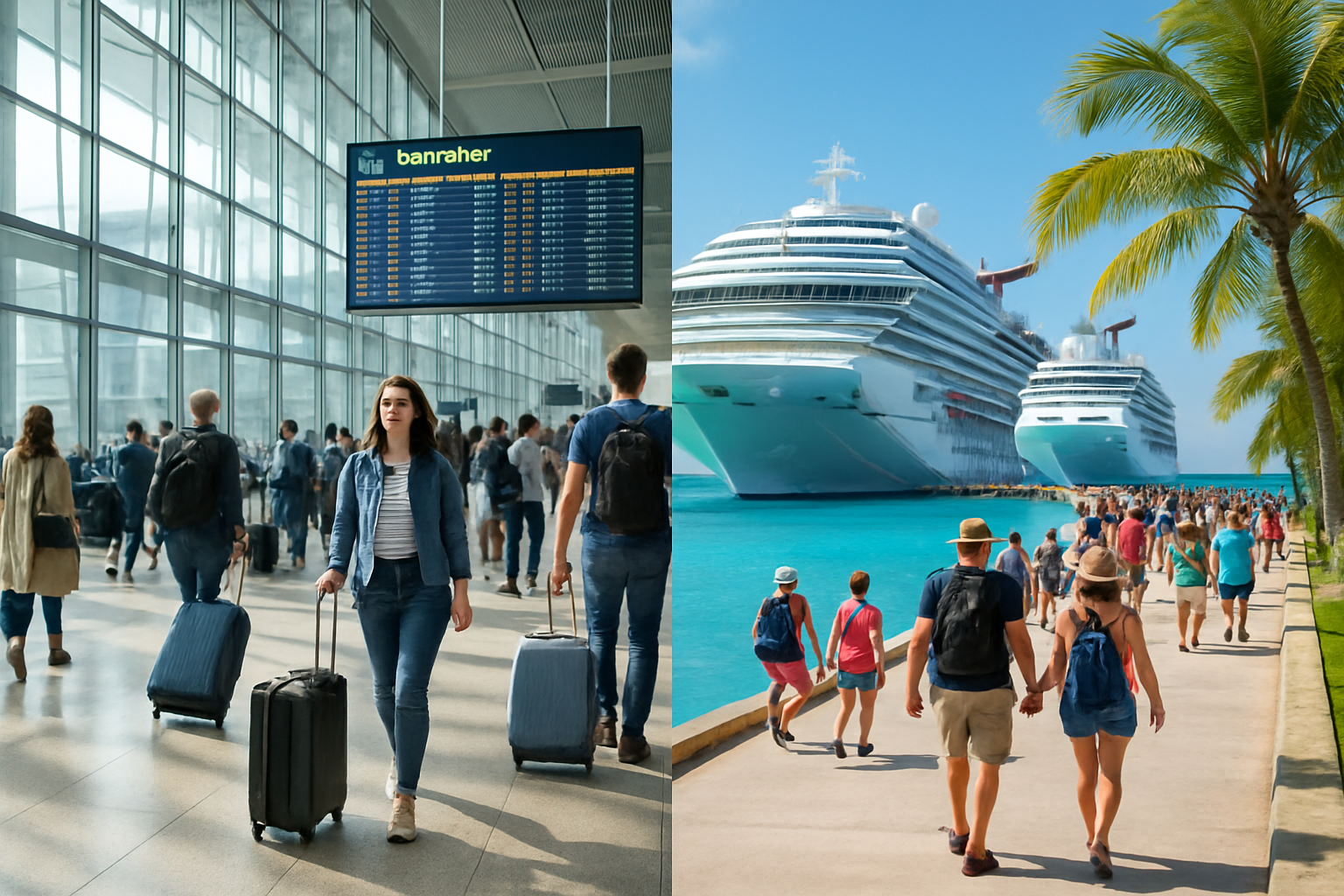
The global tourism industry is displaying a complex pattern of recovery in February 2026, with infrastructure expansion and route development occurring alongside operational challenges and regional disparities across key destinations.
New developments from Croatia, Mexico, and Trinidad and Tobago illustrate the nuanced nature of the sector's post-pandemic transformation, showing both promising growth indicators and persistent structural challenges that define the current recovery phase.
Croatia Leads European Airport Expansion
Dubrovnik Airport has emerged as a standout example of strategic tourism infrastructure development, announcing significant growth projections for 2026 driven by new airline partnerships. The Croatian destination has secured expanded routes from two major budget carriers, with Wizz Air introducing a seasonal service to Cluj, Romania starting May 23, 2026, and Ryanair planning additional connections.
The Romanian route represents a strategic expansion of Dubrovnik's market reach into Eastern Europe, providing direct access from Cluj without requiring transfers. This development is part of a broader pattern of secondary city connectivity that has characterized the post-pandemic recovery, as airlines seek to capture pent-up demand from previously underserved markets.
According to industry analysis, the competition between Wizz Air and Ryanair in the southern Croatian market reflects the budget carriers' confidence in the region's tourism potential. The expansion comes as Croatia continues to benefit from its position as a premium Mediterranean destination, balancing historical attractions with modern infrastructure capabilities.
Mexico's World Cup Tourism Optimism
Mexico's tourism sector is expressing unprecedented optimism for 2026, with industry officials projecting the FIFA World Cup will deliver the strongest tourism performance since the pandemic began. The sporting event, co-hosted with the United States and Canada, is expected to catalyze a tourism surge that extends well beyond the competition period.
Tourism industry representatives indicate that Mexico's moderate but steady growth since the pandemic has positioned the country well to capitalize on the World Cup opportunity. The event is anticipated to showcase Mexico's tourism infrastructure while providing international visibility for destinations beyond traditional resort areas.
The projections reflect broader confidence in Mexico's tourism recovery strategy, which has emphasized sustainable development and market diversification. The World Cup represents a crucial test of Mexico's ability to handle large-scale international events while maintaining service quality standards.
Trinidad's Carnival Performance Reveals Industry Maturation
Trinidad and Tobago's Carnival 2026 performance offers insights into the tourism industry's current state, with the Tourism Industry Association of Trinidad and Tobago (TIATT) reporting steady rather than expanding visitor numbers. Hotel occupancy and tour activity have reached their traditional Carnival levels, similar to previous years, despite expectations that international interest could drive growth.
TIATT Chairman Charles Carvalho's assessment reveals a pattern common across Caribbean destinations: repeat visitors dominating arrivals while new market penetration remains limited. This trend suggests the industry is stabilizing around established visitor bases rather than achieving the dramatic expansion many destinations hoped for during the recovery phase.
The Trinidad example illustrates a broader challenge facing the Caribbean tourism sector, where individual destinations must compete not only for international attention but also for the economic spin-off benefits that tourism can provide to local operators. The steady performance indicates market maturity but also highlights the need for innovative approaches to visitor engagement and economic integration.
Regional Recovery Patterns Emerge
These three case studies reflect wider patterns in global tourism recovery that industry analysts have identified throughout 2026. European destinations like Croatia are benefiting from airline route expansion and infrastructure investment, particularly in secondary markets that offer alternatives to overtouristed primary destinations.
Latin American markets, exemplified by Mexico, are leveraging major international events to drive tourism development while building long-term competitiveness. The World Cup represents not just a single event but a catalyst for sustained tourism infrastructure development and international marketing.
Caribbean destinations face the challenge of maintaining market position while developing new revenue streams. Trinidad's experience reflects the broader regional reality where tourism performance remains steady but requires strategic innovation to achieve growth.
Infrastructure Investment Drives Long-Term Competitiveness
The Croatian airport expansion represents part of a broader global infrastructure investment surge that has characterized the tourism recovery. Airlines are adding routes to previously underserved destinations, while airports are expanding capacity to accommodate new traffic patterns.
This infrastructure development comes as the tourism industry has shifted toward quality-focused strategies over volume-based approaches. Destinations are emphasizing visitor experience enhancement and sustainable development models rather than simply maximizing arrival numbers.
The trend toward regional connectivity, demonstrated by Croatia's Romanian route, reflects changing travel patterns where visitors seek authentic experiences in secondary destinations rather than concentrating in traditional tourism hubs.
Challenges in Market Development
Despite infrastructure expansion, the Trinidad example highlights persistent challenges in converting tourism growth into economic benefits for local communities. The dominance of repeat visitors, while providing stability, limits opportunities for market expansion and new revenue generation.
Industry observers note that destinations must balance visitor satisfaction for existing markets with strategies to attract new demographics. This requires sophisticated marketing approaches and service quality improvements that go beyond infrastructure development.
The steady rather than expanding performance also reflects broader economic pressures affecting international travel, including increased costs and changing consumer preferences that prioritize experience quality over frequency of travel.
Technology and Service Innovation
The tourism industry's 2026 recovery is increasingly characterized by technology integration and service innovation. Destinations are implementing digital solutions for visitor management, booking systems, and experience enhancement while maintaining cultural authenticity.
Airlines are utilizing advanced route optimization and weather resilience systems to improve operational efficiency and passenger experience. These technological advances are particularly important for budget carriers expanding into new markets, where operational excellence determines long-term viability.
The integration of technology with traditional tourism services represents a fundamental shift in industry operations, moving beyond simple digitization to comprehensive transformation of visitor engagement and service delivery.
Looking Ahead: Strategic Positioning for Sustained Growth
The mixed signals from global tourism recovery reflect an industry in transition, moving from emergency pandemic response to strategic long-term positioning. Destinations that successfully combine infrastructure development with operational excellence and market innovation are positioning themselves for sustained competitiveness.
The Croatian model demonstrates how strategic partnerships with airlines can expand market reach while maintaining service quality. Mexico's World Cup preparations show how major events can catalyze broader tourism development when properly integrated with long-term strategy.
Trinidad's steady performance, while not showing dramatic growth, illustrates the importance of maintaining market position and visitor satisfaction as foundations for future expansion. The tourism industry's 2026 recovery suggests that sustainable growth requires balancing infrastructure investment with operational excellence and community engagement.
As the industry continues its post-pandemic evolution, success will depend on destinations' ability to adapt to changing travel patterns while maintaining the authentic experiences that drive long-term visitor loyalty and economic benefits for local communities.