The global tourism industry is experiencing its most significant transformation since the pandemic, with Asia-Pacific markets leading recovery through strategic visa policies, digital content integration, and massive infrastructure investments that are fundamentally reshaping international travel patterns.
South Korean Content Creators Transform Chinese Tourism Landscape
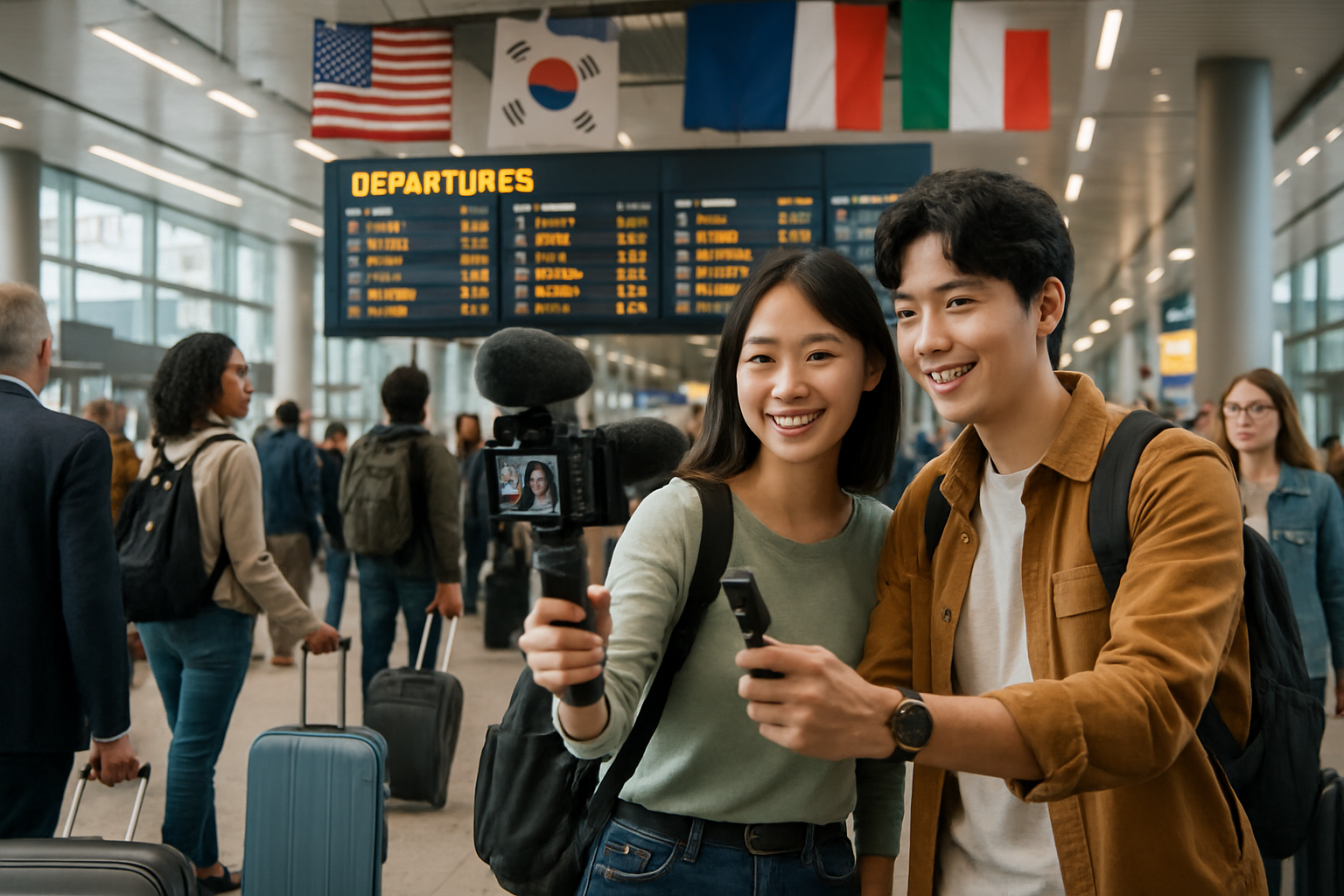
A new wave of South Korean content creators has descended on Chinese cities, transforming urban landscapes into vibrant backdrops for travel vlogs and lifestyle videos. This surge, dubbed the "Korean v-blogger influx" by online users, has been fueled by China's extension of its unilateral visa-free policy for South Korean passport holders through 2026, allowing stays of up to 30 days for tourism, business, and family visits.
The phenomenon has particularly transformed cities like Shanghai and Shenzhen, where Korean vloggers capture everything from street food experiences to cultural attractions. This digital-first approach to tourism promotion represents a fundamental shift in how destinations attract and engage younger travelers, particularly Generation Z consumers who represent 50% of travelers making multiple trips annually.
Chongqing: From Viral Confusion to Tourism Hub
China's Chongqing, known as "the most confusing city," has become one of the country's most popular tourism destinations through social media virality. The city's bewildering mountainous urban landscape has captured the imagination of both Chinese and international content creators, who have made videos about its unique geography a viral trend.
Local tourism experts are working to leverage this online fame into sustainable international tourism infrastructure. The city's unconventional layout, with buildings that seem to defy gravity and navigation systems that confuse even GPS technology, has created an authentic attraction that cannot be replicated elsewhere.
Latin America Emerges as Specialized Tourism Leader
El Salvador has positioned itself as an international hub for motorcycle tourism, hosting the LAMA Bike Festival 2026 at Presidente Plaza. The event brought together more than 200 high-end motorcycles and over 800 participants from 24 countries, demonstrating how smaller nations can capture niche tourism markets through specialized offerings.
The festival represents part of the Nayib Bukele administration's broader strategy to position El Salvador as a safe and attractive destination for international visitors. Tourism officials highlighted how such events strengthen biker culture while dynamizing the broader tourism sector, creating economic multiplier effects that extend far beyond the immediate hospitality industry.
Regional Cooperation Replaces Traditional Competition
The industry is witnessing an unprecedented shift from individual destination competition toward regional cooperation. Caribbean cruise coordination, Central American joint marketing initiatives, and European infrastructure sharing demonstrate how destinations are creating multi-destination experiences that benefit entire regions while maintaining distinctive cultural identities.
This collaborative approach has proven particularly effective during challenging periods. Croatia's deployment of 62 tourist medical clinics—Europe's most extensive seasonal healthcare network—exemplifies how strategic infrastructure investment combined with regional cooperation creates competitive advantages that individual destinations cannot achieve alone.
"This type of events form part of the efforts to position El Salvador as a safe and attractive tourist destination for international visitors, in line with the strategy promoted by the government."
— Tourism Ministry Officials, El Salvador
Technology Integration Enhances Authentic Experiences
The tourism industry's technology integration focuses on enhancing rather than replacing authentic cultural experiences. Rome's Trevi Fountain managed access system generates €6 million annually through €2 fees while protecting the historic site and providing a sustainable template for balancing economic objectives with cultural preservation.
Similarly, Venice has expanded its entry fee system to 60 days in 2026, up from 29 days in the 2024 pilot program, demonstrating how dynamic pricing and visitor flow management can address overtourism while maintaining destination appeal. These technological solutions enable destinations to provide enhanced visitor experiences while preserving cultural authenticity for local communities.
Infrastructure Investment Surge Transforms Global Connectivity
Global tourism infrastructure investment has exceeded $570 billion in 2026, focusing on quality-focused strategies rather than volume-based approaches. This unprecedented investment surge encompasses comprehensive visitor services including healthcare, transportation, digital systems, and climate-resilient infrastructure that extends far beyond traditional accommodation.
The Hilton hotel chain's potential return to Venezuela represents broader industry confidence in emerging markets, while Singapore's promotion of Hong Kong's outer islands demonstrates how established destinations continue innovating to offer fresh experiences. These developments occur within a context of improved economic conditions, declining interest rates, falling energy costs, and rising markets that create favorable environments for tourism investment.
Climate Adaptation Becomes Essential Competitiveness Factor
January 2026 marked the 18th consecutive month of global temperatures exceeding 1.5°C above pre-industrial levels, making climate adaptation essential for destination competitiveness. Successful destinations are implementing proactive infrastructure design that anticipates rather than responds to extreme weather conditions.
Countries implementing comprehensive climate-resilient tourism infrastructure show greater economic resilience and sustainable investment attraction. This includes alternative transportation systems, weather-resistant facilities, seasonal diversification programs, and emergency protocols that ensure visitor safety during environmental challenges.
Generation Z Drives Industry Transformation
Generation Z travelers, who represent 50% of individuals making multiple trips exceeding five days annually, are driving fundamental industry transformation through their demand for AI-integrated travel planning combined with authentic cultural experiences. This demographic seeks technological convenience without sacrificing genuine cultural engagement, environmental sustainability, or community benefits.
Their preferences are reshaping destination marketing strategies, forcing tourism operators to balance digital innovation with cultural preservation. Destinations that successfully provide authentic experiences enhanced by rather than diminished by technology are positioned for long-term competitiveness in an increasingly sophisticated global marketplace.
Economic Multiplier Effects Extend Beyond Hospitality
Modern tourism development creates comprehensive economic impacts extending beyond traditional hospitality through infrastructure improvements, cultural industry support, artisan networks, transportation development, and year-round employment creation. Cyprus achieved record performance with 4.5 million visitors generating €3.6 billion revenue in 2025 through market diversification and strategic infrastructure investment.
Tourism's evolution as a comprehensive community development catalyst integrates economic objectives with cultural preservation and environmental sustainability. Countries demonstrating sophisticated destination management that combines economic prosperity with community benefits are emerging as leaders in the transformed global tourism landscape.
Future Outlook: Sustainable Community-Focused Development
The tourism industry's maturation toward sustainable community-focused development potentially defines sector standards for decades ahead. Success increasingly requires balancing economic objectives with cultural preservation, environmental responsibility, and visitor satisfaction through sophisticated destination management combining marketing excellence with operational efficiency.
Regional integration through coordinated marketing, collaborative infrastructure development, and shared best practices creates opportunities for destinations to benefit from collective strength while maintaining authentic cultural expressions. This approach positions the tourism sector as a bridge between cultures and a driver of sustainable economic development worldwide.
April 2026 represents a watershed moment establishing new tourism industry standards that emphasize innovation with authenticity, economic growth with sustainability, and global connectivity with local community benefits. Destinations successfully navigating this transformation through comprehensive visitor services, international cooperation, and adaptive management capabilities are positioned to emerge stronger from the evolving global travel landscape.