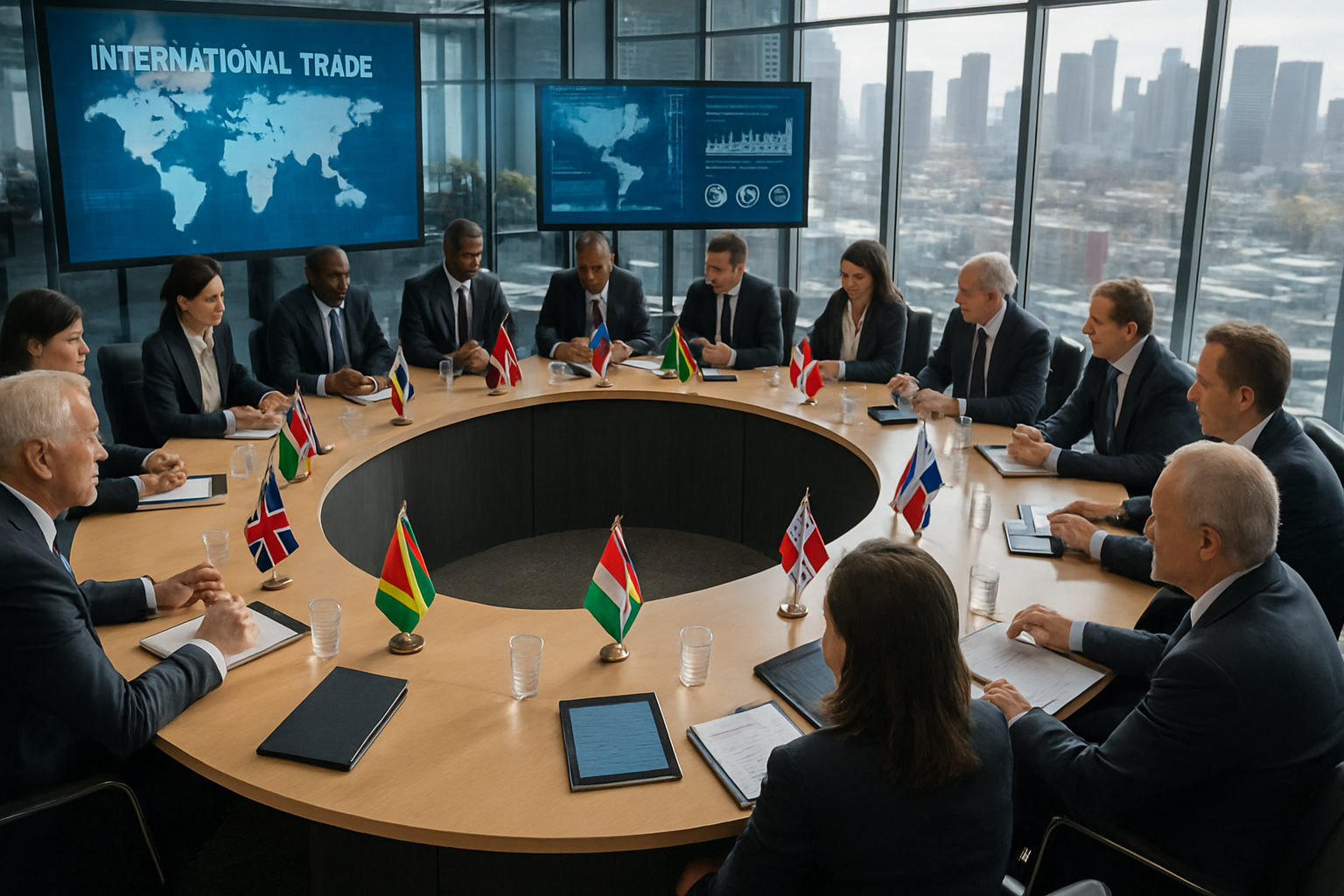
Trade ministers from 166 countries are converging on Yaoundé, Cameroon's capital, this week for a pivotal World Trade Organization meeting that could determine the future of global commerce as divisions over reform, digital trade, and development priorities raise fundamental questions about whether the WTO can adapt to a rapidly changing world.
The high-stakes gathering comes at a critical juncture for international trade, with the global economy still grappling with supply chain disruptions, geopolitical tensions, and the ongoing effects of the pandemic. The meeting, described by trade experts as one of the most consequential in the WTO's history, will address core issues that have stymied multilateral trade negotiations for years.
Deepening Fractures in Global Trade Architecture
The Cameroon summit highlights the growing tensions between developed and developing nations over the fundamental purpose and structure of global trade governance. These divisions have been exacerbated by recent shifts in major economies' trade strategies, with the United States under the Trump administration pursuing bilateral agreements that bypass traditional multilateral frameworks.
Recent examples of this trend include the comprehensive trade agreement between the US and Argentina, which eliminated over 1,600 American tariffs on Argentine goods and 220 Argentine levies on US products. This bilateral approach has been replicated with India, where the US lifted penalty tariffs in exchange for India's commitment to cease Russian oil imports, potentially expanding bilateral trade to $500 billion over five years.
Meanwhile, China has announced its most comprehensive trade expansion with Africa in modern history, providing zero-tariff access to all 53 African countries with Chinese diplomatic relations starting May 1, 2026. This initiative covers agricultural products, minerals, manufactured goods, and textiles, representing a direct challenge to Western-led trade frameworks.
Kenya's Investment Conference Success
As global trade negotiations face headwinds, individual nations are taking proactive steps to attract investment. The fourth edition of the Kenya International Investment Conference (KIICO) opened Wednesday in Nairobi, with leaders unveiling investment deals worth over $2.9 billion expected to create more than 63,000 direct jobs in the country.
The three-day conference, jointly opened by Kenyan President William Ruto and other regional leaders, demonstrates how countries are pursuing direct foreign investment strategies while broader multilateral trade frameworks struggle with reform efforts. The Caribbean Development Bank's forecast of 6.2% regional growth for 2026, led by Guyana's continued expansion as a food security leader, illustrates similar national-level success stories emerging despite global trade uncertainties.
Digital Trade and Development Priorities
One of the most contentious issues facing the Yaoundé gathering is the governance of digital trade, an area where traditional WTO frameworks have struggled to keep pace with technological advancement. The rise of artificial intelligence, blockchain technologies, and digital payment systems has created new forms of international commerce that existing trade rules were not designed to address.
Nigeria's emergence as a leader in digital payments, with 43% of fuel sales now processed through digital channels, exemplifies the rapid transformation of commerce in developing nations. Similarly, Zimbabwe's innovative Ndarama platform represents the world's first programmable collateral-to-fiat system, enabling $1 minimum investments without cryptocurrency complexity.
These technological innovations are reshaping trade patterns faster than international institutions can adapt, creating regulatory gaps that individual nations are filling with their own frameworks. The European Union's accelerated digital euro initiative, with Slovakia's €1.3 billion pilot project leading the way, represents another example of regional responses to global governance failures.
Guyana-Panama Agricultural Partnerships
Beyond the high-level trade negotiations, practical bilateral partnerships continue to develop. Guyana's Agriculture Minister Zulfikar Mustapha recently held discussions with a delegation of investors from Panama to explore opportunities for revitalizing palm oil production, as part of the government's broader agenda to expand and diversify the agricultural sector.
The meeting focused on potential investments, adoption of modern production techniques, and development opportunities that could position Guyana as a key palm oil producer in the Caribbean region. This type of direct nation-to-nation cooperation represents the pragmatic approach many countries are taking while waiting for broader multilateral frameworks to evolve.
Guyana's transformation since 2020 from a food-import dependent nation to the Caribbean's leading food security provider demonstrates how strategic international partnerships can deliver concrete results. The country's success has been built on sophisticated integration of traditional farming expertise with cutting-edge technology and climate-adaptive infrastructure.
Supply Chain Vulnerabilities and Strategic Autonomy
The Yaoundé meeting is also addressing critical vulnerabilities exposed by recent global crises. China's dominance in critical materials production (60% of global production and 90% of refining capacity for lithium, cobalt, and rare earth elements) has prompted the US-EU-Japan Critical Minerals Partnership, now involving 55 countries and seven African suppliers as alternatives.
However, recent events have highlighted the fragility of global supply chains. The global semiconductor shortage has driven memory chip prices up sixfold, affecting everything from smartphones to automotive production. Companies like Samsung, SK Hynix, and Micron face constraints expected to persist until 2027 when new manufacturing facilities come online.
These supply chain disruptions have accelerated discussions about strategic autonomy and the need for more resilient, diversified trade relationships. The African Continental Free Trade Agreement (AfCFTA) represents one response, enabling cross-border agricultural partnerships and shared value chains that could reduce dependence on traditional North-South trade patterns.
Climate Change and Trade Policy Convergence
An increasingly important dimension of trade policy is its intersection with climate action. January 2026 marked the 18th consecutive month of global temperatures exceeding 1.5°C above pre-industrial levels, creating unprecedented agricultural system stress and forcing rapid adaptation in crop selection, irrigation methods, and harvest timing.
The WTO's $5 billion African cotton initiative, led by Director-General Ngozi Okonjo-Iweala, represents a paradigm shift from traditional market access negotiations toward comprehensive industrial development support that addresses both trade and climate adaptation needs. The initiative aims to attract private investment in developing Africa's cotton processing industry while reducing raw material exports.
This convergence of trade and climate policy is evident in multiple partnerships emerging globally. Azerbaijan's positioning as a US Chamber of Commerce-recognized East-West energy coordinator, with the potential for massive expansion from its current $27.2 billion in global exports, demonstrates how energy trade is becoming central to broader economic partnerships.
The Path Forward: Reform or Fragmentation?
As the Yaoundé meeting unfolds, the central question facing trade ministers is whether the WTO can evolve quickly enough to remain relevant in a world where bilateral and regional partnerships are increasingly seen as more effective than multilateral negotiations. The organization's ability to address digital trade, climate adaptation, and development needs will determine its future role.
The success of recent bilateral initiatives, from the US-Argentina agricultural agreement to China's African trade expansion, suggests that countries are not waiting for WTO reform to proceed. This reality puts pressure on the organization to demonstrate its continued value in facilitating global commerce.
The emergence of South-South cooperation as a dominant force in agricultural and technological development represents another challenge to traditional trade governance structures. Countries are increasingly sharing expertise through peer partnerships rather than relying on North-South aid relationships, creating new patterns of economic cooperation that existing frameworks struggle to accommodate.
Conclusion: A Defining Moment
The World Trade Organization meeting in Yaoundé represents more than just another round of trade negotiations—it's a defining moment for the future of global economic governance. With 166 countries represented, the decisions made this week could either revitalize multilateral trade cooperation or accelerate the trend toward bilateral and regional partnerships.
The contrast between the struggles of multilateral institutions and the success of direct nation-to-nation partnerships like those between Kenya and its investors, Guyana and Panama, or the US and Argentina, illustrates the pragmatic approach many countries are taking to international economic relations.
Whether the WTO can adapt to address digital trade governance, climate change imperatives, and development priorities while maintaining the trust of both developed and developing nations will determine not just the organization's future, but the broader architecture of international economic cooperation in the decades ahead.
As trade ministers debate in Cameroon's capital, the world watches to see whether multilateral cooperation can evolve to meet 21st-century challenges or whether the future belongs to more flexible, direct partnerships between nations willing to move beyond traditional institutional constraints.