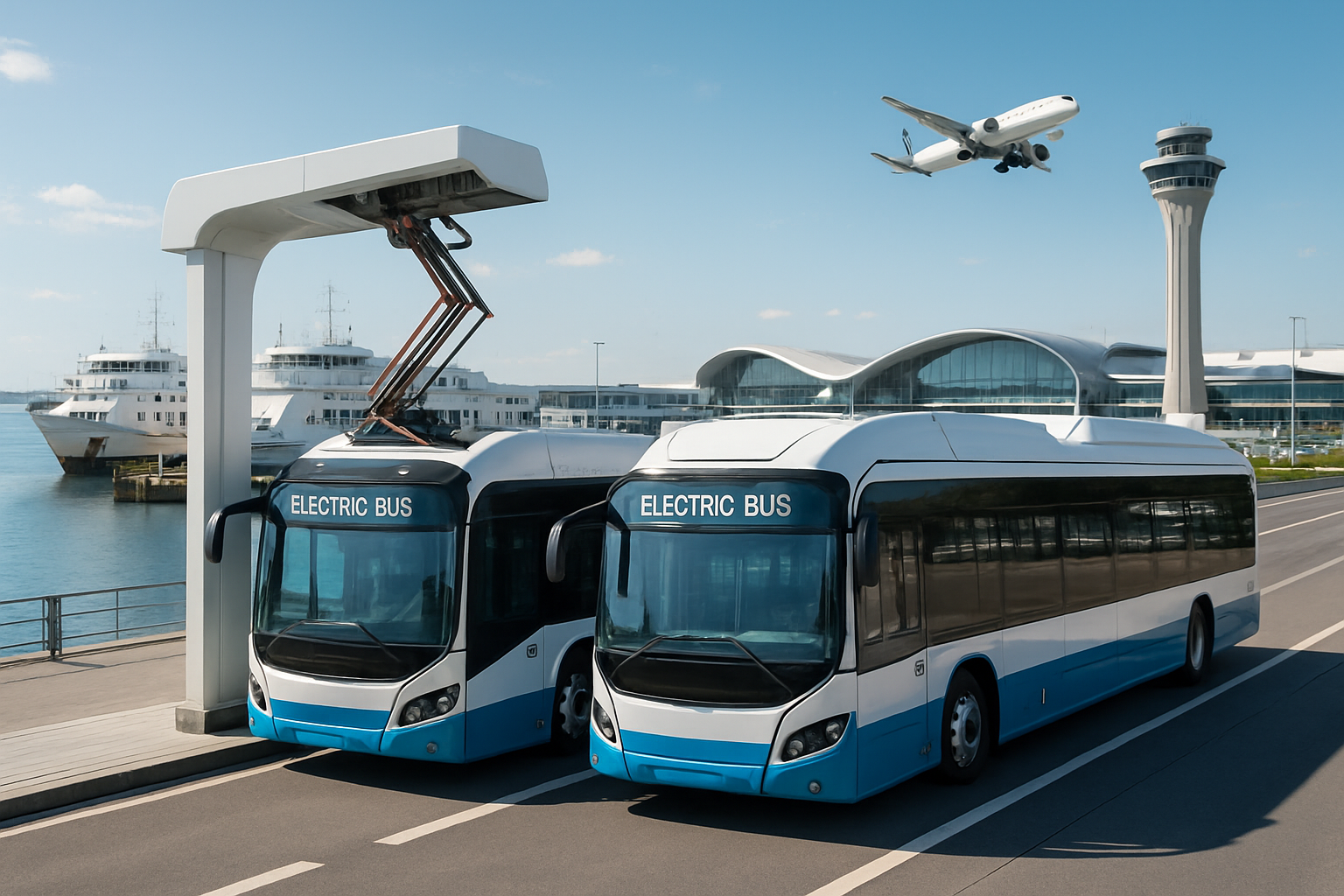
Transportation systems worldwide are experiencing a period of unprecedented transformation, with major developments spanning electric vehicle adoption, ferry service challenges, airport expansion, and public transit evolution, as part of a global $570+ billion infrastructure investment surge.
Copenhagen Achieves Historic Electric Bus Milestone
Denmark's capital has reached a landmark achievement with all buses in Copenhagen now running on electricity, marking a significant milestone in the city's transition to sustainable public transportation. This complete electrification of the city's bus fleet represents one of the most comprehensive urban transportation transformations in Europe and positions Copenhagen as a leader in sustainable mobility.
The achievement comes as part of Denmark's broader commitment to carbon neutrality and sustainable transportation infrastructure. The electric bus transition has been carefully planned over several years, involving coordination between municipal authorities, transportation operators, and charging infrastructure developers to ensure seamless service continuity during the transition period.
Pacific Ferry Services Face Technical Disruptions
New Zealand's inter-island ferry services experienced significant disruptions as the Connemara suffered technical faults, forcing the cancellation of Sunday night's Wellington to Picton 8:30 PM service. The technical problems highlight the vulnerability of critical transportation links that connect New Zealand's North and South Islands, essential for both passenger travel and freight transport.
"The technical fault on the Connemara means Sunday night's Wellington to Picton 8.30pm service will not happen."
— Ferry Operations Statement
These disruptions underscore the importance of redundancy in transportation networks, particularly for island nations where ferry services provide vital connectivity. The Cook Strait ferry route handles millions of passengers and vehicles annually and serves as a critical link in New Zealand's national transportation network.
Australia Advances Free Public Transit Initiatives
Finland reported on Australia's response to rising transportation costs through the implementation of free public transportation for millions of residents. This initiative represents a significant policy shift aimed at addressing affordability concerns and encouraging increased public transit usage to reduce private vehicle dependency and associated emissions.
The free transit program demonstrates how governments are using transportation policy as both a social equity tool and an environmental strategy. By removing financial barriers to public transportation access, Australia is potentially reducing urban congestion while supporting lower-income residents who spend disproportionate amounts of their income on transportation.
Papua New Guinea Expands Aviation Connectivity
Papua New Guinea's aviation sector received a significant boost with the addition of 65,000 seats to the Cairns route, according to Cairns Airport CEO. This expansion enhances connectivity between Papua New Guinea and Australia, supporting both business travel and tourism development in the Pacific region.
The route expansion reflects growing economic ties between Papua New Guinea and Australia, as well as increased demand for air travel in the Pacific. Enhanced aviation connectivity is crucial for Papua New Guinea's economic development, facilitating trade, tourism, and access to international markets.
Global Infrastructure Investment Context
These regional developments occur within the broader context of unprecedented global infrastructure investment. The current $570+ billion surge in transportation infrastructure spending represents a coordinated international response to 21st-century mobility challenges, incorporating climate adaptation measures, smart technology integration, and regional connectivity objectives.
Modern infrastructure projects increasingly emphasize multi-modal integration, environmental sustainability, and climate resilience. From Copenhagen's electric buses to Pacific ferry services, transportation networks must now accommodate both immediate mobility needs and long-term environmental objectives while maintaining operational reliability in increasingly challenging climate conditions.
Technology Integration and Climate Adaptation
Contemporary transportation infrastructure development requires sophisticated technology integration from the design phase. Projects now incorporate real-time monitoring systems, predictive maintenance capabilities, digital payment integration, and environmental optimization features that were optional additions in previous decades but are now essential components.
Climate adaptation has become a central design requirement, with transportation networks needing to function effectively under weather conditions they were not originally designed to handle. This includes enhanced drainage systems, weather-resistant materials, backup power capabilities, and flood management features that account for current rather than historical climate patterns.
Regional Integration and Economic Multiplier Effects
Transportation infrastructure development creates substantial economic multiplier effects beyond construction employment. Projects facilitate reduced logistics costs, enhanced market access, improved business productivity, and support for regional integration initiatives such as the African Continental Free Trade Area (AfCFTA) and ASEAN connectivity objectives.
The success of these initiatives depends on sustained political commitment, transparent governance, comprehensive stakeholder engagement, and adaptive management approaches that can respond to changing conditions and emerging challenges. International cooperation has become increasingly standard, with technical assistance, knowledge sharing, and coordinated procurement becoming essential components of major infrastructure projects.
Implementation Challenges and Success Factors
Despite significant progress, transportation infrastructure development faces persistent challenges including funding sustainability, technical capacity building, coordination complexity, environmental compliance requirements, and the need for genuine community engagement. The global semiconductor shortage has also created additional complications, with memory chip prices increasing sixfold, affecting control systems implementation timelines.
Success factors for modern transportation infrastructure include comprehensive strategic planning from initial phases, transparency in governance and procurement processes, meaningful community consultation, and adaptive management approaches that can respond to rapidly changing technological and environmental conditions. The convergence of environmental awareness, technological advancement, and international cooperation is creating new models for sustainable transportation development.
Future Implications
The transportation developments of March 2026 establish important precedents for global infrastructure policy in the decades ahead. The integration of environmental sustainability with operational efficiency, the balance between immediate mobility needs and long-term climate objectives, and the coordination of national priorities with regional integration represent challenges that will define transportation policy well beyond current projects.
As climate challenges intensify and global interconnectedness increases, the approaches developed today will determine whether transportation networks can serve as foundations for sustainable prosperity or become sources of vulnerability. The current infrastructure renaissance may be remembered as the moment when humanity systematically began building the physical foundations for navigating an uncertain but increasingly interconnected future.