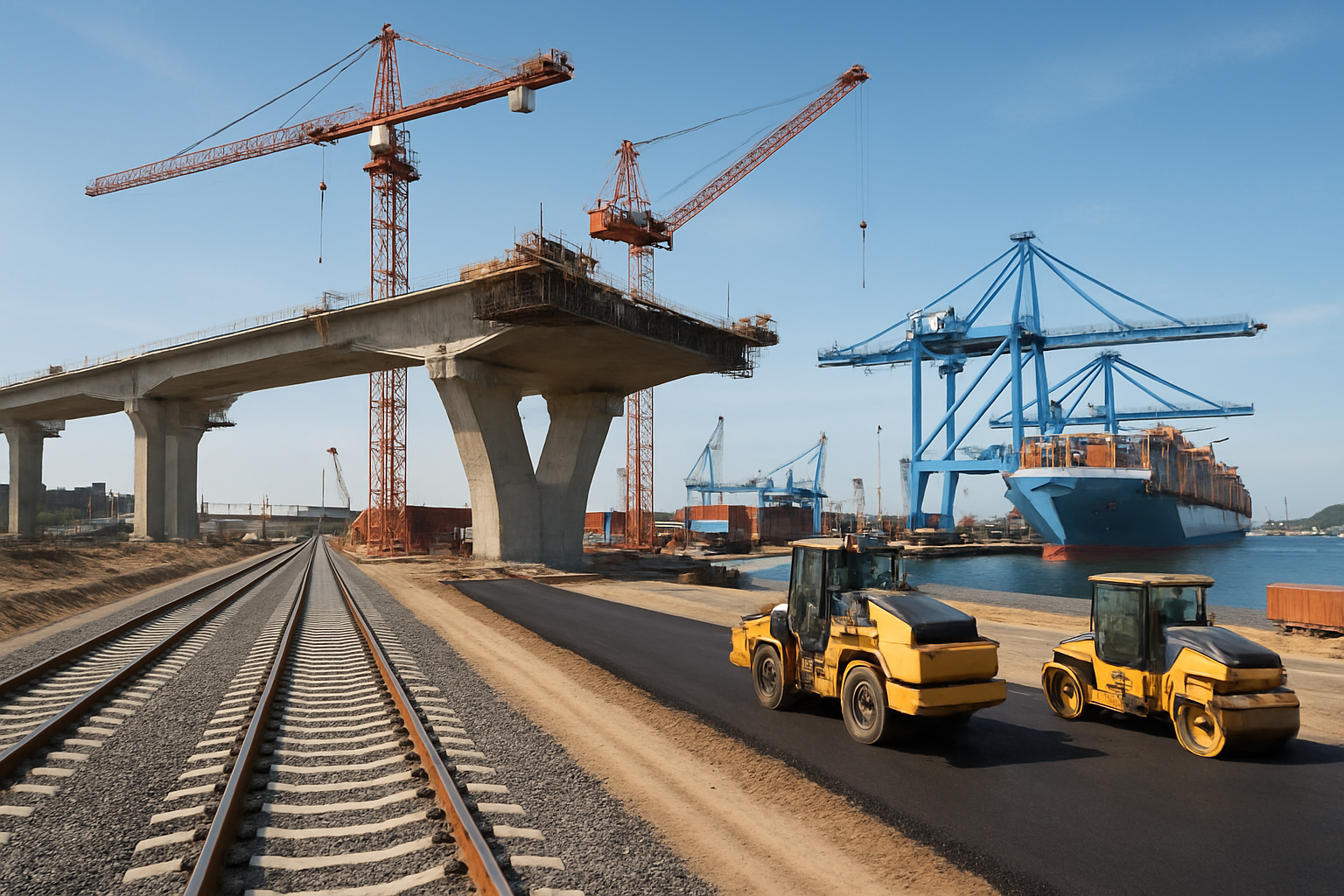
Four nations across three continents are spearheading a new chapter in global transportation infrastructure development, with projects spanning road repairs, bridge construction, railway modernization, and historic international crossings as part of an unprecedented $570 billion worldwide investment surge.
The latest developments from Colombia, Kuwait, Portugal, and Russia demonstrate the evolving sophistication of transportation infrastructure projects, incorporating advanced climate adaptation measures, smart technology integration, and international cooperation frameworks that are setting new standards for 21st-century connectivity.
Colombia's Strategic Highway Development
In Colombia, authorities have established an ambitious 36-month timeline to complete critical improvements to Unidad Funcional 8, a strategic corridor connecting Bucaramanga, Barrancabermeja, and Yondó. The project represents a significant advancement in Colombia's national transportation strategy, addressing long-standing connectivity challenges between major economic centers.
The Bucaramanga-Barrancabermeja-Yondó corridor serves as a vital artery for regional commerce and represents one of Colombia's most important inland transportation routes. The three-year completion schedule reflects sophisticated project management capabilities that balance urgent infrastructure needs with sustainable development principles.
"The 36-month timeline reflects our commitment to delivering world-class infrastructure that serves immediate connectivity needs while building sustainable prosperity foundations for decades ahead."
— Colombian Infrastructure Officials
Russia-North Korea Historic Bridge Project
Russia and North Korea celebrated the completion of their first land bridge connection with ceremonial events marking a historic milestone in bilateral infrastructure cooperation. The bridge, scheduled to open for traffic this summer, will handle up to 300 vehicles and 2,850 people daily, creating the first direct road link between the two nations.
This development comes amid strengthened relations between the two countries during the ongoing geopolitical realignments. The bridge represents more than mere infrastructure—it symbolizes deepening economic, political, and cultural ties between Moscow and Pyongyang during a period of enhanced cooperation across multiple sectors.
The technical specifications demonstrate modern engineering capabilities, with the crossing designed to accommodate significant daily traffic volumes while maintaining security protocols essential for border infrastructure. Advanced surveillance and communication systems have been integrated throughout the facility.
Portugal's Railway Resilience and Recovery
Portugal's Infraestruturas de Portugal (IP) has announced that repairs to damage caused by devastating January and February storms on the Oeste and Beira Baixa railway lines will be completed by the end of 2026. The comprehensive restoration project addresses severe weather damage that highlighted the urgent need for climate-resilient transportation infrastructure.
The storms that struck Portugal early this year were part of an unprecedented weather pattern, with January 2026 marking the 18th consecutive month of global temperatures exceeding 1.5°C above pre-industrial levels. This sustained warming has created operational conditions that traditional transportation networks were never designed to handle.
The Portuguese restoration efforts incorporate "build back better" principles, implementing enhanced drainage systems, weather-resistant materials, and backup power capabilities designed for future climate conditions rather than historical patterns. These adaptations represent a fundamental shift in infrastructure planning philosophy.
Technology Integration and Climate Adaptation
All four projects demonstrate the universal adoption of sophisticated technology integration from the design phase, including real-time monitoring systems, predictive maintenance capabilities, digital payment platforms, and environmental optimization features. These technological advances mark a significant evolution from traditional infrastructure development approaches.
Climate adaptation has evolved from an optional consideration to a fundamental requirement across all major transportation projects. Enhanced drainage systems, weather-resistant construction materials, and backup power infrastructure are now standard components rather than retrofitted additions.

Economic Multiplier Effects and Regional Integration
The economic impact of these transportation developments extends far beyond construction employment. Each project creates substantial multiplier effects through reduced logistics costs, enhanced market access, and improved business productivity that supports broader regional integration objectives.
Colombia's corridor improvements will facilitate enhanced connectivity between major industrial centers, supporting the nation's economic diversification goals. The Russia-North Korea bridge opens new possibilities for bilateral trade and regional commerce patterns. Portugal's railway restoration protects critical connections essential for European Union integration and climate-conscious transportation policies.
These projects align with larger regional integration frameworks, including the African Continental Free Trade Area (AfCFTA) principles, European Union connectivity objectives, and Asian cooperation initiatives that recognize transportation infrastructure as the foundation of economic competitiveness.
Implementation Challenges and Success Factors
Contemporary transportation infrastructure projects face universal challenges that require sophisticated management approaches. Material cost inflation has reached critical levels, with some construction materials experiencing price increases that threaten project viability. Skilled labor shortages affect every major project, requiring innovative training and recruitment strategies.
The global semiconductor shortage has increased smart infrastructure component costs sixfold through 2027, forcing project managers to develop alternative approaches that emphasize efficient algorithms and distributed processing capabilities while maintaining technological advancement goals.
Success factors identified across all projects include sustained political commitment that transcends electoral cycles, transparent governance frameworks, comprehensive stakeholder engagement processes, and adaptive management strategies that can respond to changing conditions without abandoning core objectives.
International Cooperation and Knowledge Sharing
The coordination visible across these diverse projects reflects enhanced international cooperation in transportation infrastructure development. Technical assistance, knowledge sharing, and coordinated procurement approaches are addressing supply chain disruptions while maintaining quality standards and delivery timelines.
Portugal's recovery efforts benefit from European Union technical expertise and financing mechanisms. Russia's bridge project demonstrates bilateral cooperation capabilities in complex engineering environments. Colombia's corridor development incorporates international best practices adapted to local geographic and economic conditions.
This cooperation extends beyond individual projects to create frameworks for addressing interconnected global challenges through sophisticated planning that serves immediate community needs while building sustainable long-term prosperity foundations.
Strategic Significance for Global Development
April 2026 represents a watershed moment in global transportation infrastructure policy, establishing precedents that will influence worldwide development strategies for decades ahead. The convergence of technological advancement, environmental awareness, and international cooperation is creating development models that prioritize sustainability alongside economic growth.
These projects demonstrate the evolution of infrastructure from simple physical assets to comprehensive systems that support economic development, environmental protection, and social connectivity simultaneously. The choice between transformative infrastructure adaptation and reactive crisis management is becoming increasingly critical as prevention windows narrow.
The success of diverse approaches visible in Colombia, Kuwait, Portugal, and Russia provides templates for addressing immediate community needs while building long-term competitiveness and environmental resilience. These precedents will influence transportation development strategies worldwide, representing humanity's systematic approach to building physical foundations for sustainable prosperity in an uncertain but interconnected future.
"Infrastructure choices made in 2026 will determine whether investments become sustainable prosperity foundations or climate-vulnerable assets. The coordination we're seeing demonstrates unprecedented sophistication in addressing 21st-century connectivity challenges."
— International Infrastructure Development Experts
Future Implications and Scaling Potential
The developments across these four nations provide practical templates adaptable to global contexts, demonstrating that successful infrastructure development balances rapid modernization with environmental sustainability, national priorities with regional integration, and technological advancement with authentic community engagement.
As global temperatures continue to exceed historical norms and extreme weather events become increasingly frequent, the infrastructure renaissance visible in April 2026 potentially marks the moment when humanity began systematically building physical foundations for sustainable prosperity in a climate-challenged world.
The success of these diverse international approaches establishes crucial precedents for continental infrastructure development patterns, supporting the evolution from aid-recipient relationships to strategic development partnerships that maintain national ownership of development priorities while accessing global expertise and financing capabilities.