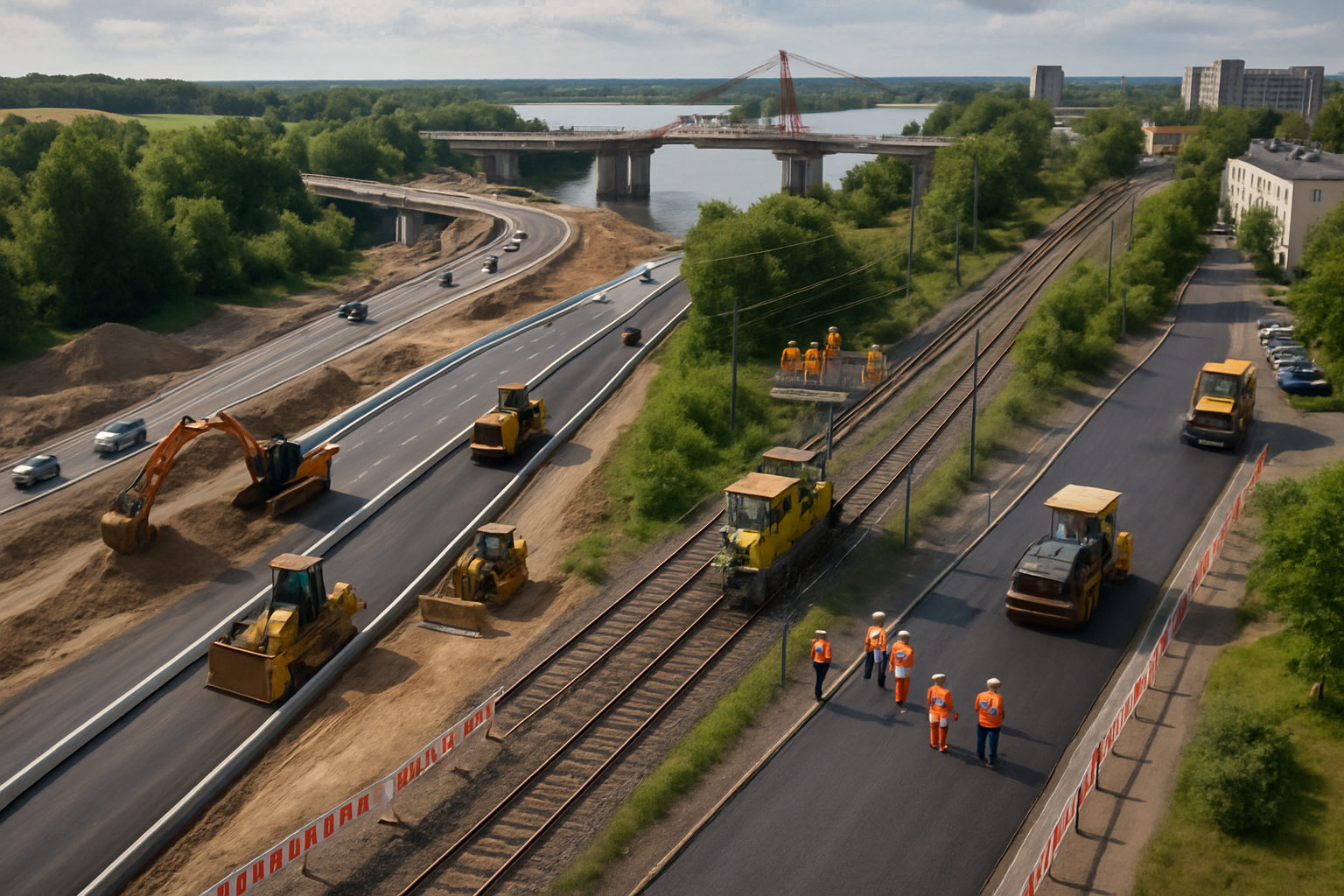
Transportation infrastructure across multiple continents faces a critical juncture as unprecedented development projects clash with mounting maintenance challenges, extreme weather events, and urgent economic demands, creating a complex landscape of opportunity and vulnerability that will shape global connectivity for decades.
Four distinct transportation stories from Belgium, Mozambique, Serbia, and the Democratic Republic of Congo reveal the broader tensions facing transportation networks worldwide. While some projects advance sustainability and recreation goals, others struggle with basic maintenance and catastrophic failures that threaten vital economic corridors.
European Sustainability Meets African Resilience
Belgium's Flemish Agency for Nature and Forests represents the optimistic face of modern infrastructure development, constructing a comprehensive 4-stage ramblers' trail between Halle and Leuven in Flemish Brabant Province. The project, scheduled for completion in 2028, will feature designated campsites and a dozen day-loop alternatives mapped by the Forests of Brabant National Park. This initiative exemplifies Europe's shift toward sustainable, recreational infrastructure that balances environmental stewardship with public access.
In stark contrast, Mozambique's N14 road maintenance work on the Metoro-Montepuez section in Cabo Delgado Province highlights the ongoing struggle to maintain basic transportation arteries in developing regions. The 110-kilometer corridor requires immediate attention, with contractors focusing on an initial 18-kilometer stretch of roadbed repairs and surface resealing in previously identified problem locations.
"Modern infrastructure projects increasingly incorporate sophisticated technology integration from the design phase, including real-time monitoring, predictive maintenance, and climate adaptation measures becoming standard versus optional considerations."
— Infrastructure Development Analysis, February 2026
Urban Congestion and Critical Corridors
Serbia's Belgrade faces acute transportation challenges as repair work on overpass pillars in the Autokomanda loop area creates substantial traffic congestion on a critical section of the highway system. The infrastructure maintenance highlights the delicate balance between necessary upgrades and maintaining traffic flow in densely populated urban corridors where alternative routes are limited.
Meanwhile, a bridge collapse just south of the Zambian border has severed the Democratic Republic of Congo's main copper-export corridor, disrupting shipments from the world's second-largest copper producer. The flooding-induced failure demonstrates how extreme weather events can instantly transform critical trade routes into bottlenecks, with cascading effects throughout global supply chains.
Climate Adaptation and Economic Vulnerability
These diverse infrastructure challenges occur within the context of an unprecedented $570+ billion global infrastructure investment surge, yet they reveal fundamental gaps between planning aspirations and climate reality. Historical memory indicates that January 2026 marked the 18th consecutive month with global temperatures exceeding 1.5°C above pre-industrial levels, creating operating conditions beyond traditional infrastructure design parameters.
The DRC copper corridor disruption particularly illustrates the economic multiplier effects of infrastructure failures. As the world's second-largest copper producer, any interruption in the country's export capacity reverberates through global markets, affecting everything from renewable energy projects to electric vehicle production. The incident underscores how transportation infrastructure has evolved from simple connectivity assets to strategic economic lifelines.
Technology Integration and Smart Solutions
Contemporary infrastructure projects increasingly incorporate sophisticated technology integration from the design phase, including real-time monitoring, predictive maintenance systems, and climate adaptation measures. However, global memory chip shortages with semiconductor prices surging sixfold until 2027 are affecting smart transportation system implementation, forcing projects to balance innovation aspirations with supply chain realities.
Success factors for modern transportation development include comprehensive planning from initial stages, transparent governance frameworks, community engagement processes, adaptive management strategies, and international cooperation models with knowledge sharing and coordinated procurement across borders.
Regional Integration and Global Connectivity
The transportation infrastructure developments reflect broader regional integration efforts. European projects like Belgium's trail system support EU connectivity objectives and sustainable tourism initiatives. African infrastructure challenges highlight the urgent need for climate-resilient design and enhanced international cooperation to maintain trade corridors essential for economic development.
Economic implications extend far beyond construction employment, creating reduced logistics costs, enhanced market access, improved regional competitiveness, and support for initiatives like the African Continental Free Trade Area (AfCFTA) and European integration frameworks.
Looking Forward: Adaptation Imperatives
The convergence of immediate development needs with long-term sustainability requirements represents a watershed moment for global transportation policy. Infrastructure designed for historical climate patterns increasingly operates beyond intended parameters, while transportation and power systems face cascading failures during extreme weather events.
The choice between reactive crisis management and transformative adaptation approaches becomes increasingly urgent as extreme weather frequency intensifies. Success requires balancing immediate mobility needs with long-term sustainability through sophisticated technical solutions that overcome geographic and historical obstacles while serving economic connectivity objectives.
As transportation networks worldwide navigate between unprecedented investment opportunities and mounting climate challenges, the projects unfolding across Belgium, Mozambique, Serbia, and the DRC provide crucial lessons for building resilient, sustainable infrastructure that can serve communities effectively in an era of permanent climate volatility.