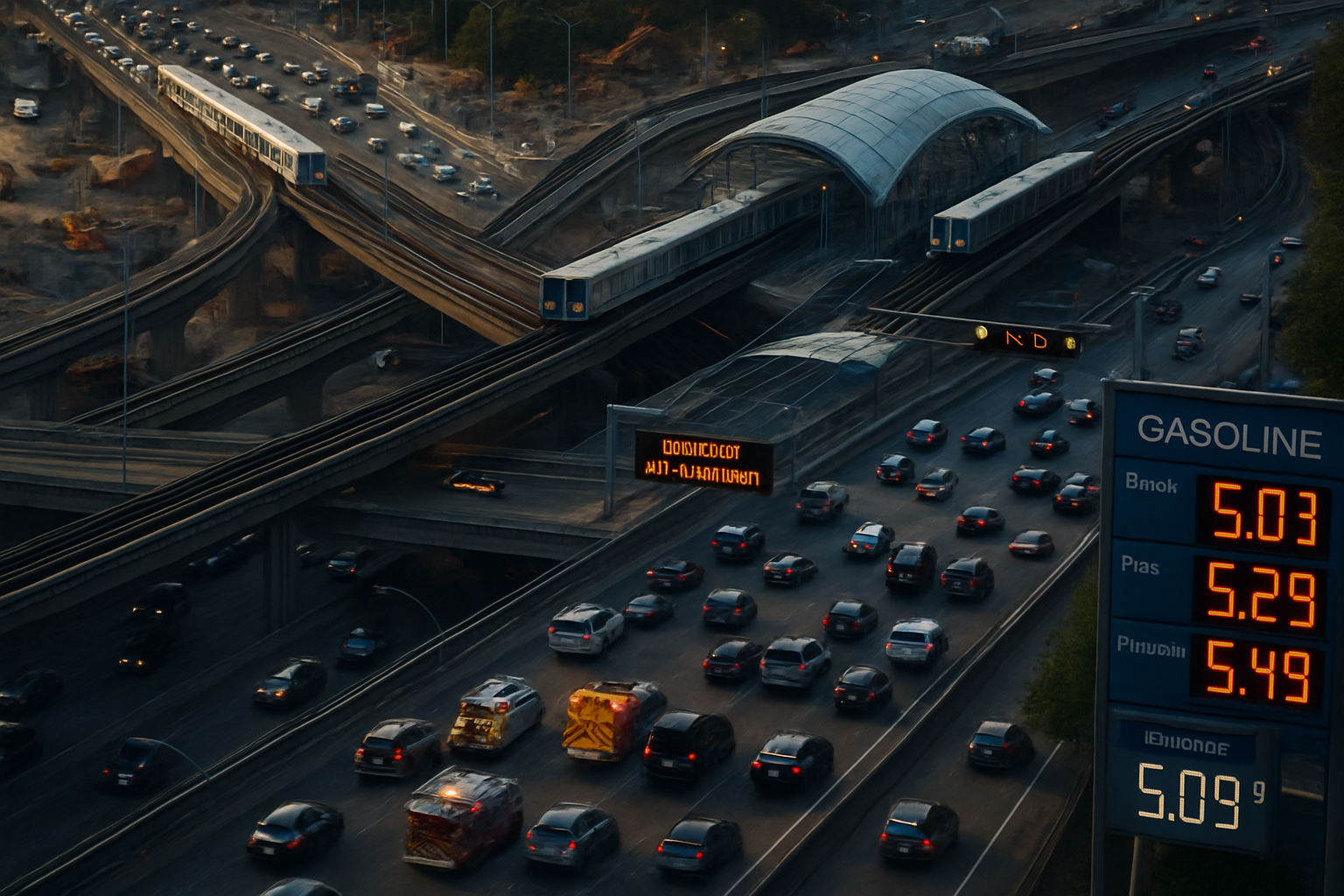
Transportation systems across multiple continents are experiencing their most severe crisis in decades, as metro outages disrupt millions of commuters, fuel prices reach crisis levels, and fatal accidents expose critical infrastructure vulnerabilities amid unprecedented global climate pressures.
From Algeria's metro system failures to Pakistan's soaring fuel costs and deadly road accidents spanning multiple countries, April 2, 2026, has highlighted the fragile state of global transportation infrastructure operating under conditions it was never designed to handle.
Metro Systems Under Pressure
Algeria's capital faced significant disruption as the metro system serving key stations including Aissat Idir, El Hamel, and Jardin d'Essais experienced technical failures. The state-owned metro operator SIMA quickly mobilized technical teams to restore service, achieving full operations by 6:50 AM following overnight repairs.
"Our specialized teams intervened immediately upon detecting the malfunction, allowing us to restore normal conditions in a short period," SIMA officials confirmed, though the incident underscores the vulnerability of urban transit systems under increasing operational pressures.
Similar challenges have plagued transportation networks globally, with New Zealand's Auckland Transport experiencing a complete system outage that suspended all train services during Thursday morning rush hour, resuming only at 10:15 AM and highlighting the critical dependence of modern cities on digital infrastructure.
Deadly Toll of Transportation Accidents
The human cost of deteriorating transportation infrastructure continues to mount across multiple continents. Colombia experienced three separate fatal incidents, including motorcycle collisions near Medellín that killed three people and a tragic explosion at the Casablanca toll plaza where a family from Santander province died when their vehicle was struck by a runaway truck.
In Guyana, two brothers, Mickel Daniels (21) and Miguel Daniels (23), lost their lives in a three-vehicle collision on Union Public Road, West Coast Demerara, at 5:30 AM on April 2. The accident involved multiple vehicles and highlights the persistent road safety challenges affecting developing nations worldwide.
"The economic impact of each traffic fatality extends far beyond the immediate human tragedy, costing societies hundreds of thousands in lost productivity, medical expenses, and legal proceedings," according to international transportation safety experts.
— Global Transportation Safety Research Institute
New Zealand also recorded a fatality when a car careened off Moa Flat Road in Ettrick, claiming the life of its sole occupant and adding to concerning patterns of preventable road deaths affecting multiple countries simultaneously.
Fuel Crisis Reaches Breaking Point
The global fuel crisis has reached unprecedented levels, with Pakistan implementing dramatic price increases that pushed petrol to Rs458.4 per litre and high-speed diesel to Rs520.35 per litre. The Pakistani government announced these increases alongside new toll tax hikes, with national highway tolls set at Rs100 for cars and the Kohat Tunnel toll raised to Rs250.
Petroleum Minister Ali Pervaiz Malik and Finance Minister Muhammad Aurangzeb announced targeted subsidy programs, including Rs100 per litre subsidies for two-wheelers capped at 20 litres monthly for three months, attempting to cushion the impact on vulnerable populations.
The crisis stems from ongoing disruptions to global oil supply chains, with Croatia Airlines reporting operational adaptations amid worldwide fuel price surges affecting aviation operations. The carrier recorded its strongest first quarter in history but acknowledged significant challenges from volatile energy costs.
Infrastructure Development Under Strain
Major infrastructure projects continue despite challenging conditions. Luxembourg announced a six-week closure of National Route 4 connecting France via the Grenz quarter, starting April 13, for major construction work in Esch-sur-Alzette. The project represents crucial regional connectivity improvements but demonstrates the complex coordination required for modern infrastructure development.
Vietnam's ambitious transportation plans include a 30-minute nonstop metro connection between Tan Son Nhat and Long Thanh airports, with major intersection closures scheduled for April 4 to enable underground station construction. The project is part of Vietnam's broader $120 billion commitment to building 9,000 kilometers of expressways by 2050.
These developments occur within an unprecedented $570+ billion global infrastructure surge, representing coordinated international recognition of transportation networks as strategic foundations for economic competitiveness and climate adaptation in the 21st century.
Climate Pressures Intensifying
Transportation infrastructure worldwide operates under climate conditions exceeding historical design parameters. With 18 consecutive months of global temperatures surpassing 1.5°C above pre-industrial levels, extreme weather events are testing systems beyond their intended capabilities.
Serbia experienced a train derailment on the route from Subotica to Szeged, Hungary, demonstrating how even routine cross-border transportation faces increasing operational challenges. The incident, while contained, reflects broader vulnerabilities in international transportation networks.
Infrastructure adaptation has evolved from an optional enhancement to an essential survival strategy, with projects now incorporating enhanced drainage, weather-resistant materials, and backup power systems as standard requirements rather than premium options.
Supply Chain Vulnerabilities Exposed
The global semiconductor shortage continues to affect transportation systems, with memory chip prices increasing sixfold through 2027. This crisis particularly impacts smart transportation infrastructure, adding 20-30% to construction costs and forcing innovative approaches to system design and management.
Material cost inflation has created negative profit margins for many infrastructure developers worldwide, constraining new project development despite persistent demand. The combination of rising costs and supply chain disruptions has forced a fundamental reassessment of traditional construction and operational approaches.
Regional Responses and Innovations
Different regions are adopting varied strategies to address transportation challenges. Sweden's Vision Zero approach continues to demonstrate that significant fatality reductions are possible through comprehensive infrastructure design that accounts for human error rather than expecting perfect driver behavior.
The Netherlands' Safe System Approach offers another successful model, designing transportation networks to minimize accident consequences through better engineering, safety technology, and emergency response coordination.
Estonia leads European sustainable transport initiatives with 88% renewable electricity powering its transportation networks and the continent's largest battery storage system supporting 90,000 households, demonstrating how environmental sustainability can be integrated with transportation infrastructure development.
Economic and Social Implications
The economic multiplier effects of transportation challenges extend far beyond immediate operational disruptions. Reduced logistics costs, enhanced market access, and improved regional competitiveness depend on reliable transportation networks functioning effectively.
Small businesses in regional areas face mounting operational challenges as transport costs escalate, while tourism sectors confront reduced domestic travel prospects as families reconsider holiday plans amid volatile fuel prices and safety concerns.
The crisis has prompted calls for enhanced international cooperation, with knowledge sharing and coordinated responses becoming essential as transportation challenges increasingly transcend national borders through migration patterns, investment flows, and economic spillovers.
Technology Integration and Innovation
Modern transportation projects increasingly incorporate sophisticated technology from the design phase, including real-time monitoring, predictive maintenance, digital payment systems, and environmental optimization. However, the complexity of these systems also creates new vulnerabilities requiring careful balance between technological advancement and robust backup capabilities.
Successful technology integration combines innovation with redundant systems and human oversight, ensuring that technological failures don't cascade into broader transportation network collapses.
Looking Forward: Adaptive Strategies
The choice between transformative infrastructure adaptation and reactive crisis management has become a critical policy decision for the current decade. Success in building resilient transportation systems will determine regional competitiveness and community viability under unprecedented environmental and economic pressures.
International cooperation has evolved from optional coordination to essential survival strategy, with countries recognizing that transportation challenges require sophisticated planning that serves immediate community needs while building sustainable prosperity foundations for decades ahead.
As April 2026 continues to unfold, the transportation sector faces a watershed moment where current decisions will establish precedents influencing global development patterns for the remainder of the 21st century. The convergence of technological advancement, environmental awareness, and international cooperation is creating development models that must prioritize sustainability alongside economic growth while addressing immediate safety and operational needs.