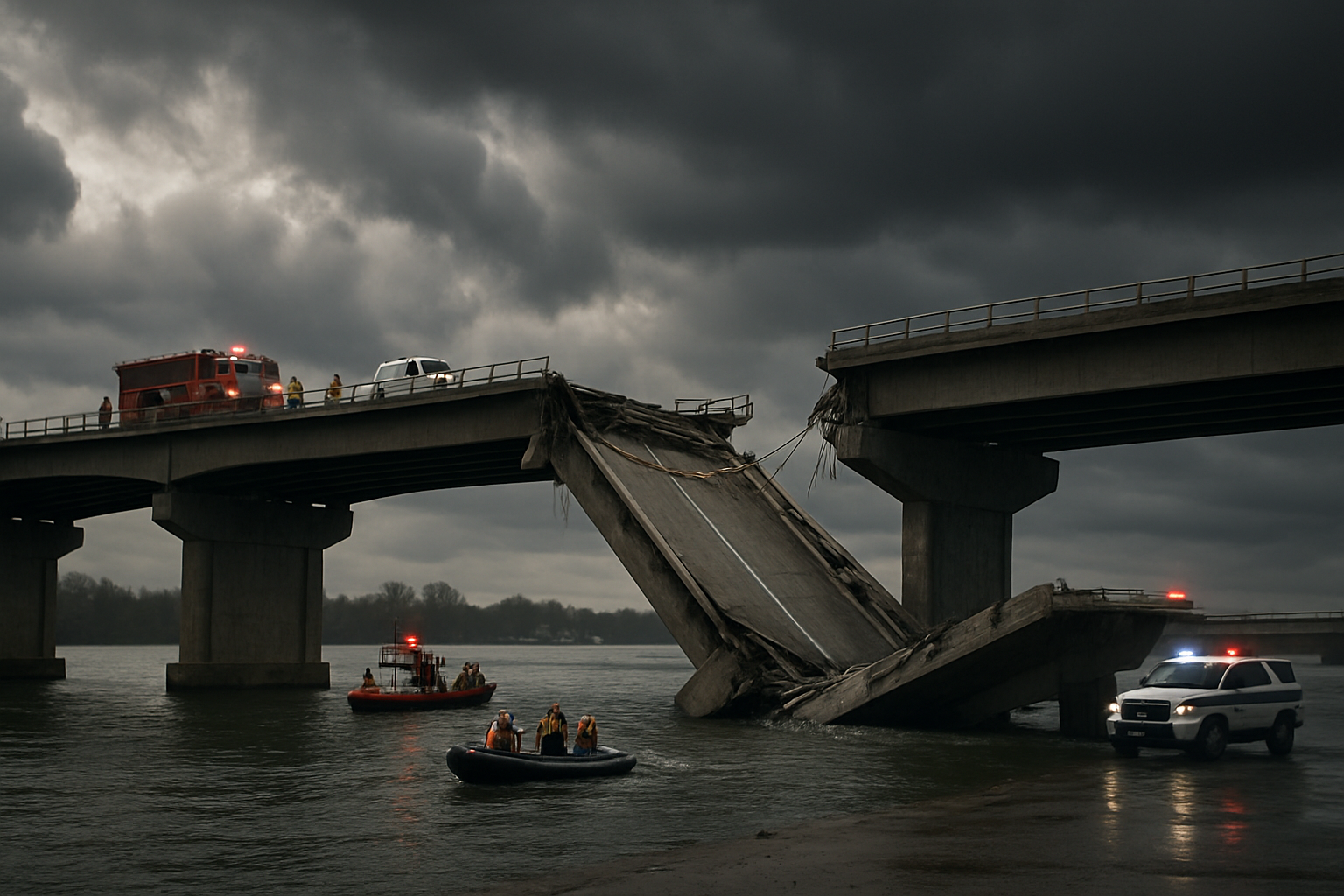
A cascading transportation infrastructure crisis continues to unfold across the Caribbean and Latin America, with Trinidad and Tobago's vital seabridge service entering its fifth consecutive week of severe disruptions while Jamaica launches a $328 million road rehabilitation program following devastating hurricane damage.
The Trinidad and Tobago Chamber of Business and Commerce issued stark warnings to Tobagonians to prepare for significant price increases as cargo service disruptions enter their most critical phase. The chamber's statement revealed that members are "reeling with the commercial blow and are suffering losses daily" due to inadequate ferry services connecting the twin islands.
Caribbean Ferry Crisis Reaches Breaking Point
The seabridge between Port-of-Spain and Tobago, described as a "vital economic lifeline," has transformed from a reliable one-day supply cycle into a chaotic two to three-day logistical ordeal. The Trinidad and Tobago Chamber of Industry and Commerce's Tobago Division has documented comprehensive concerns including:
- Extended delivery times beyond operational capacity
- Severely reduced sailing frequency affecting goods movement
- 48-52 hour truck turnaround cycles creating supply bottlenecks
- Prolonged port waiting periods disrupting logistics chains
- Rising transportation costs passed to consumers
- Inadequate arrangements for refrigerated cargo affecting food supplies
The crisis has created tremendous pressure on businesses struggling to maintain current prices while facing mounting operational costs. Chamber members report bitter complaints about their inability to secure goods on time and maintain adequate supply levels, creating ripple effects throughout supermarkets, hardware stores, hotels, and households across Tobago.
Hurricane Melissa's Devastating Legacy in Jamaica
Simultaneously, Jamaica's western region continues recovering from Hurricane Melissa's catastrophic impact on October 28, 2025. The Category 5 storm caused widespread destruction, particularly affecting transportation infrastructure across the western parishes of St. James, Trelawny, Westmoreland, and Hanover.
The National Works Agency (NWA) has initiated a comprehensive $328 million patching and local rehabilitation program targeting the worst affected roadway sections. Community Relations Officer Janel Ricketts confirmed that repairs will focus on critical routes including roads in and around Montego Bay's city center and the Highgate Hall to Stettin corridor.
"The latest effort to improve road infrastructure in the region will target the worst affected sections of selected roadways following Hurricane Melissa's significant challenges."
— Janel Ricketts, NWA Community Relations Officer
Global Context of Infrastructure Vulnerability
These Caribbean developments occur within a broader pattern of global transportation infrastructure challenges that have dominated February 2026. Historical memory analysis reveals multiple concurrent crises affecting transportation systems worldwide, from European storm damage requiring hundreds of billions in repairs to Arctic ferry maintenance challenges lasting months.
The convergence of climate disasters, aging infrastructure, and inadequate maintenance funding has exposed fundamental vulnerabilities in transportation networks designed for historical rather than current climate conditions. Recent memory indicates that extreme weather events are increasingly overwhelming traditional infrastructure capacity, creating cascading effects across economic sectors.
Economic Multiplier Effects
The transportation disruptions create profound economic consequences extending far beyond immediate inconvenience. In Tobago, businesses face extinction risks while families struggle with rising costs for basic goods. The tourism sector, critical to the Caribbean economy, confronts reputation damage and operational uncertainty.
Jamaica's agricultural exports, essential during critical harvest seasons, face continued challenges from damaged road networks affecting market access. The $328 million rehabilitation program, while substantial, represents ongoing costs of climate adaptation rather than growth-oriented investment.
Technology and Adaptation Challenges
Historical analysis reveals that modern transportation networks increasingly depend on sophisticated digital systems, creating single-point failure vulnerabilities. The complexity of preventive maintenance has grown substantially, as demonstrated by extended ferry maintenance timelines and the intricate coordination required for hurricane damage assessment and repair.
Climate adaptation has become central to infrastructure planning, with transportation systems requiring design for volatile rather than stable weather patterns. The Caribbean's geographic isolation amplifies these challenges, as traditional mutual aid mechanisms prove inadequate during simultaneous regional disasters.
International Cooperation and Investment Needs
The scale of infrastructure challenges demands unprecedented international cooperation and financial commitment. Recent global infrastructure investment surge, totaling over $570 billion worldwide, demonstrates recognition that transportation connectivity serves as essential strategic assets for economic competitiveness and climate adaptation.
However, the Caribbean crisis illustrates that investment alone proves insufficient without comprehensive planning integrating sustainability, innovation, and equity considerations. Success requires coordination between technological advancement, environmental adaptation, community engagement, and international cooperation for increasingly interconnected networks.
Looking Forward: Lessons and Imperatives
The simultaneous transportation crises in Trinidad and Tobago and Jamaica provide templates for understanding broader global infrastructure vulnerabilities. The transition from treating extreme weather as exceptional to adapting to "new normal" increased climate volatility requires fundamental transformation of emergency management systems.
Key adaptation requirements include:
- Infrastructure hardening for extreme weather rather than historical patterns
- Enhanced early warning integration across borders and sectors
- Emergency capacity expansion and resource stockpiling
- Climate-adaptive planning and water management systems
- Improved international cooperation for multi-national crisis response
The choice between reactive crisis management versus transformative infrastructure adaptation grows increasingly urgent as extreme weather frequency intensifies. February 2026 may represent a watershed moment forcing fundamental reconsideration of transportation system resilience in an era of permanent climate volatility.
Success in addressing these challenges will determine whether current infrastructure crises mark a turning point toward resilient systems or signal deeper vulnerabilities affecting the world's most transportation-dependent communities. The human cost—from separated families to economic disruption—demands immediate action on comprehensive climate-resilient infrastructure development.