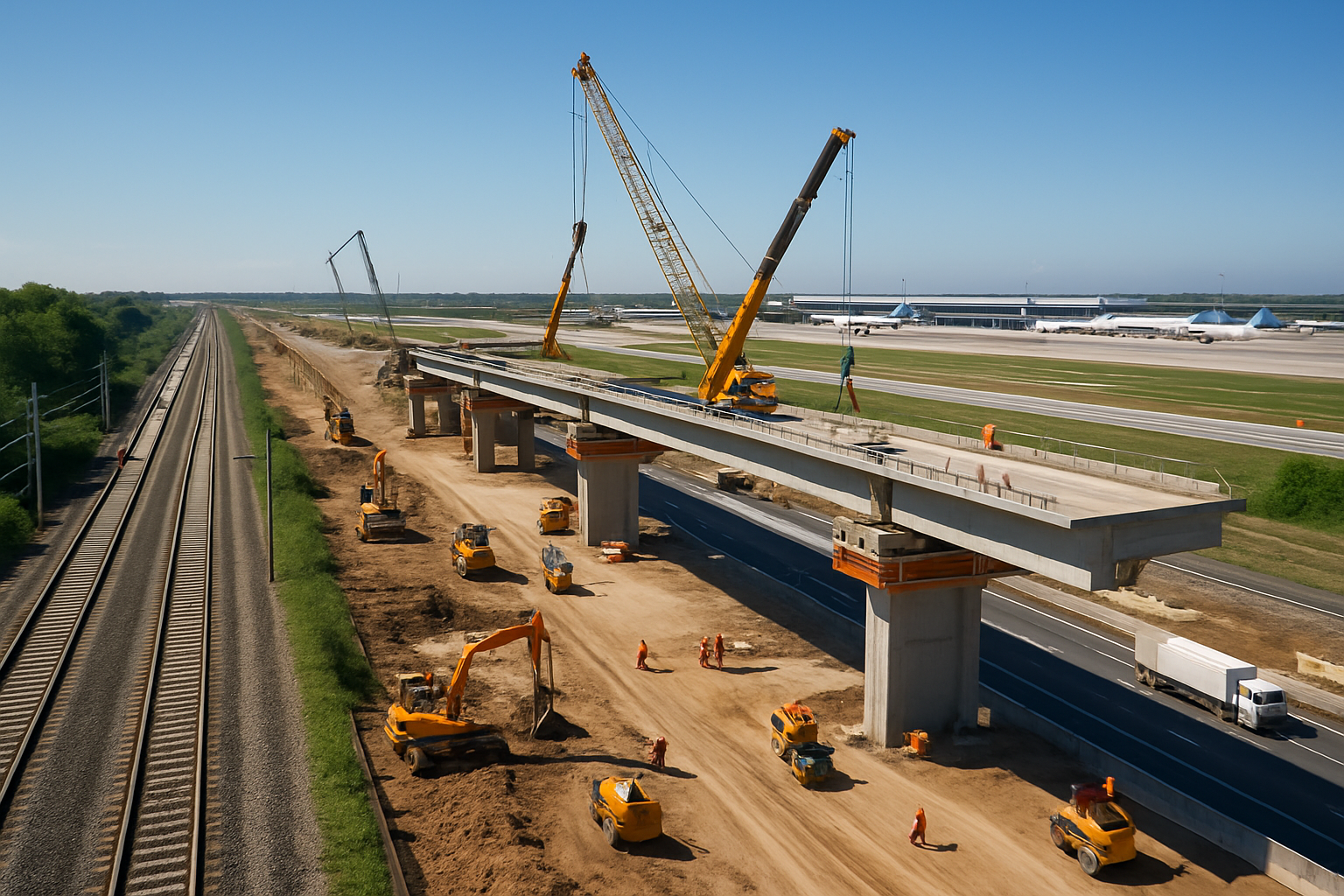
A global transportation infrastructure renaissance is reshaping connectivity across continents as countries invest unprecedented resources in modernizing railways, airports, and road networks, with developments spanning from Afghanistan's rail freight surge to Papua New Guinea's aviation expansion and Sierra Leone's ambitious road construction program.
Afghanistan Railway Revival Drives Regional Trade
Afghanistan has witnessed a dramatic transformation in rail connectivity with Iran, as freight transport between the two nations surged 17-fold during the 1404 solar year (March 2025-February 2026). According to Shahryar Naqizada, Director General of Foreign Trade for Iran's Railway, approximately 650,000 tons of goods were transported to Afghanistan by rail during this period, including 150,000 tons of transit cargo from third countries routed through Iran.
This remarkable increase reflects Tehran's broader strategy to strengthen regional connectivity and position itself as a crucial trade corridor linking Central Asia to international markets. The development comes as Afghanistan seeks alternative trade routes amid ongoing challenges, with rail links becoming increasingly important for economic stability and regional integration.
The rail freight boom demonstrates the strategic importance of cross-border infrastructure in facilitating international commerce. As traditional routes face various constraints, the Iran-Afghanistan rail connection has emerged as a vital lifeline for Afghan trade, supporting both bilateral commerce and broader regional connectivity objectives.
Papua New Guinea Aviation Infrastructure Modernization
In the Pacific region, Papua New Guinea is advancing significant aviation infrastructure improvements, with the Kiunga Airport terminal building reaching 30% completion as part of the broader Civil Aviation Development Investment Program (CADIP) Phase 3. The project builds on successful earlier initiatives, including the Mt. Hagen Kagamuga Airport upgrades under CADIP-1.
Papua New Guinea faces unique connectivity challenges, with over 800 languages distributed across remote mountain valleys and scattered islands. The aviation infrastructure development addresses critical national integration needs, though Works Secretary Gibson Holemba has highlighted that the Connect PNG program remains severely underfunded despite its vital importance for bringing remote communities into the national economic framework.
The Kiunga Airport project represents a crucial component of PNG's strategy to improve accessibility to remote regions, supporting economic development, emergency services access, and social integration. The completion of this terminal will enhance regional connectivity and support local economic activities in the Western Province.
Sierra Leone's Major Road Network Expansion
Sierra Leone has achieved significant milestones in transportation infrastructure development, with the Sierra Leone Roads Authority (SLRA) successfully rehabilitating and constructing 442.86 kilometers of roads and 56 bridges across the country between 2018 and 2025. SLRA Director General Ing. Alfred J. Momodu announced these achievements during a stakeholder engagement at the Kono District Council Hall.
"We prioritize strategically," Momodu emphasized, highlighting the necessity of a structured and focused approach when executing large-scale public works projects.
— Ing. Alfred J. Momodu, SLRA Director General
The infrastructure development represents a significant investment in national connectivity, with road construction being acknowledged as one of the government's most capital-intensive undertakings. Momodu attributed the steady progress to phased implementation and careful strategic planning, demonstrating effective project management in challenging economic conditions.
Sierra Leone's road network is categorized into trunk, secondary, urban, and feeder roads. While feeder roads are largely supported by development partners, the SLRA has concentrated its efforts on trunk, secondary, and urban roads, creating a comprehensive transportation network that supports economic development and regional integration.
Global Infrastructure Investment Surge
These developments occur within an unprecedented global infrastructure investment surge exceeding $570 billion, representing a fundamental shift toward viewing transportation networks as strategic foundations for economic competitiveness, climate adaptation, and international cooperation. The scale of investment reflects coordinated international recognition of infrastructure as essential for post-pandemic recovery and sustainable development.
Contemporary infrastructure projects increasingly incorporate sophisticated technology integration from the design phase, including real-time monitoring, predictive maintenance, digital payments systems, and environmental optimization features. Climate adaptation has become a central requirement, with projects incorporating flood management systems, enhanced drainage, weather-resistant materials, and backup power systems.
The financing models for these projects demonstrate innovation in international cooperation, combining public-private partnerships, bilateral agreements, multilateral development funding, and national investment strategies. This diversified approach enables developing nations to undertake previously impossible infrastructure projects while maintaining national ownership and strategic autonomy.
Regional Integration and Economic Impact
Transportation infrastructure development creates substantial economic multiplier effects beyond initial construction employment. Improved connectivity reduces logistics costs, enhances market access, and increases business productivity while supporting regional integration initiatives such as the African Continental Free Trade Area (AfCFTA) and various Asian economic cooperation frameworks.
The success of projects like Afghanistan's rail connection with Iran demonstrates how transportation infrastructure can serve as a catalyst for regional economic integration, providing alternative trade routes and reducing dependence on traditional corridors. Similarly, Papua New Guinea's aviation development supports Pacific regional connectivity, while Sierra Leone's road network enhances West African integration.
Modern infrastructure development emphasizes intermodal integration, requiring coordination between different transportation modes and standardized systems that facilitate seamless connectivity across national boundaries. This approach maximizes the economic impact of individual projects while creating resilient transportation networks capable of adapting to changing economic and environmental conditions.
Technology and Sustainability Integration
The current generation of transportation infrastructure projects represents a significant evolution from traditional construction approaches. Smart technology integration includes digital monitoring systems, automated operations capabilities, real-time analytics, and integrated payment systems that enhance efficiency and passenger experience from the initial design phase rather than as retrofitted additions.
Environmental sustainability considerations have become standard requirements rather than optional features. Projects incorporate renewable energy systems, waste reduction strategies, environmental protection measures, and climate resilience planning. The "build back better" principle is now applied to new construction, ensuring infrastructure is designed for future climate conditions rather than historical patterns.
The integration of advanced technologies addresses both operational efficiency and safety concerns. Predictive maintenance systems reduce long-term costs while improving reliability, while digital coordination platforms enhance traffic management and emergency response capabilities.
Challenges and Success Factors
Despite significant progress, transportation infrastructure development faces ongoing challenges including technical coordination across borders, environmental compliance requirements, community engagement processes, and the need to maintain existing services during construction periods. The global semiconductor shortage has affected control system implementations, though it has also accelerated innovation in alternative approaches.
Success factors for contemporary infrastructure projects include comprehensive strategic planning, transparent governance frameworks, effective community consultation, adaptive management approaches, and sustained political commitment across multiple government cycles. International cooperation has proven essential, with knowledge sharing and technical assistance contributing significantly to project success.
The balance between immediate mobility needs and long-term sustainability requirements demands sophisticated project management approaches that can adapt to changing conditions while maintaining core objectives. Projects that successfully integrate immediate economic benefits with climate adaptation and technological advancement are establishing precedents for future infrastructure development globally.
Future Implications and Trends
The February 2026 surge in transportation infrastructure development represents a watershed moment that will likely influence global connectivity patterns for decades. The convergence of technological advancement, environmental awareness, and international cooperation is creating new models for infrastructure development that prioritize sustainability alongside economic development.
Emerging trends include increased emphasis on climate resilience, greater integration of digital technologies, enhanced international cooperation frameworks, and more sophisticated financing mechanisms that combine multiple funding sources. The success of current projects is establishing templates that can be adapted to different geographic, economic, and political contexts worldwide.
As nations continue to invest in transportation infrastructure modernization, the emphasis on regional integration and international cooperation suggests a future where connectivity networks transcend national boundaries, creating integrated systems that support global trade, cultural exchange, and sustainable development objectives.
The transportation infrastructure developments in Afghanistan, Papua New Guinea, and Sierra Leone exemplify this global trend toward strategic connectivity investment, demonstrating that effective infrastructure development can drive economic growth, enhance regional integration, and improve quality of life across diverse geographic and economic contexts.