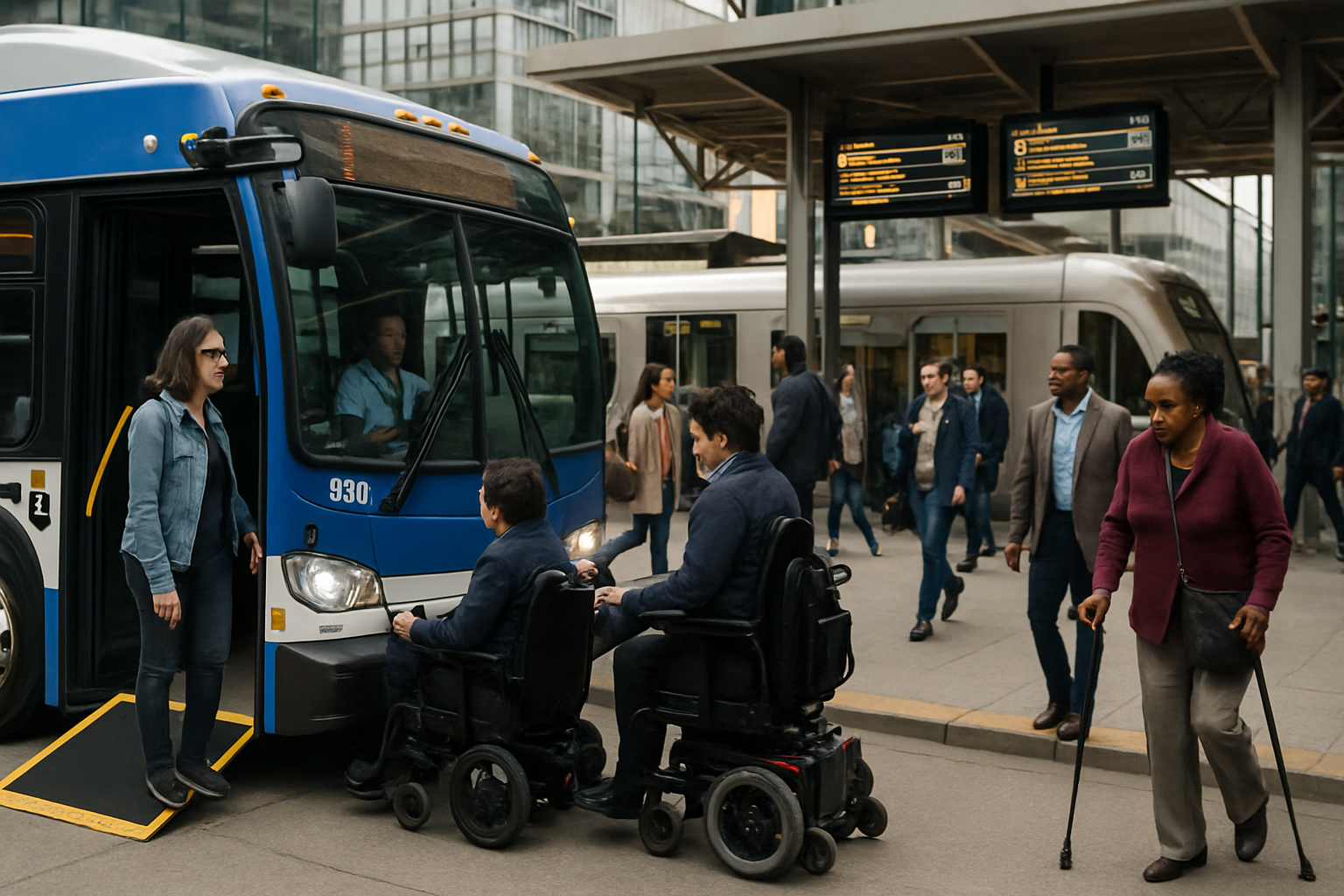
Multiple countries across Africa, Europe, and the Middle East are advancing major transportation infrastructure projects that promise to transform regional connectivity, modernize aging systems, and support economic integration on an unprecedented scale.
Three significant developments exemplify this global transportation renaissance: Algeria's strategic railway expansion connecting southern mining regions, Egypt's comprehensive modernization of Alexandria's historic tram system, and Spain's adaptive approach to railway service challenges.
Algeria Advances Strategic Mining Railway Connection
Algeria's Minister of Public Works and Infrastructure, Abdelkader Djellaoui, chaired a high-level interministerial committee meeting to review progress on the crucial Laghouat-Ghardaia-Menia railway line project. The 495-kilometer rail corridor, financed by the African Development Bank (BAD), represents a cornerstone of Algeria's infrastructure development strategy.
The meeting brought together representatives from multiple government ministries, including Public Works, Interior and Local Communities, Transport, Industry, Agriculture and Rural Development, and Energy and Renewable Resources. This comprehensive approach demonstrates Algeria's recognition that major infrastructure projects require coordinated multi-sector planning and implementation.
The railway line forms part of Algeria's broader strategy to develop the Gara Djebilet iron ore reserves, recognized as the world's third-largest deposit. The project aligns with continental infrastructure development goals under the African Continental Free Trade Area (AfCFTA), which requires enhanced cross-border connectivity to facilitate regional trade flows.
Egypt Accelerates Historic Tram Modernization
Transport Minister Kamel Al-Wazir conducted a comprehensive tour of Alexandria to assess progress on the rehabilitation and modernization of the historic Raml Tram, a flagship national project aimed at transforming urban mobility in Egypt's coastal metropolis.
The ambitious modernization encompasses a 13.2-kilometer line serving 24 stations, including 5.7 kilometers at grade, 7.3 kilometers elevated, and 276 meters underground. The route extends westward from Victoria Station through critical districts including San Stefano, Gianaclis, Al-Wizara, Roushdy, Mostafa Kamel, Sidi Gaber, Sporting, Al-Ibrahimiya, and Raml.
"This project preserves the tram's historic character while upgrading it to meet modern standards of safety, efficiency, and passenger comfort."
— Kamel Al-Wazir, Egyptian Transport Minister
Upon completion, the project will deliver remarkable performance improvements. Passenger capacity will nearly triple from approximately 4,700 passengers per hour per direction to 13,800. Travel time will be reduced from 60 minutes to 35 minutes, while operational speeds will increase to 70 km/h and headways will be cut from nine minutes to just three minutes.
The modernization represents more than infrastructure upgrades—it embodies Egypt's commitment to sustainable urban transportation. Alexandria's tram system, one of the oldest in Africa, serves as a crucial link in the city's public transportation network, supporting both tourism and daily commuter needs.
Spain Adapts to Railway Service Challenges
Spain's state railway company Renfe is launching a bus company to address anticipated delays and suspended services during extensive infrastructure modernization planned for the coming years. This strategic adaptation comes as public confidence in rail services faces challenges following a recent deadly crash in Córdoba.
The decision reflects Renfe's proactive approach to maintaining service continuity during necessary infrastructure improvements. By establishing alternative transportation options, the company aims to minimize passenger disruption while ensuring critical connectivity is preserved throughout the modernization process.
Spain's approach demonstrates how transportation authorities are adapting to the reality that aging infrastructure requires substantial investment and temporary service adjustments. The integration of bus services with railway operations represents an innovative multimodal solution to infrastructure transition challenges.
Regional Integration and Economic Impact
These projects reflect broader trends in global transportation infrastructure development. The Algeria railway connects to continental mining strategies, supporting the African Continental Free Trade Area's goals of regional economic integration. Egypt's tram modernization enhances urban mobility in one of the Mediterranean's key economic centers. Spain's adaptive approach addresses the practical challenges of maintaining service during infrastructure transitions.
The economic implications extend beyond transportation efficiency. Algeria's railway will facilitate mineral exports and regional trade. Egypt's improved tram system supports Alexandria's role as a major Mediterranean port and tourist destination. Spain's service continuity measures maintain economic connectivity during infrastructure improvements.
Technology Integration and Climate Adaptation
Modern transportation infrastructure increasingly incorporates advanced technologies and climate resilience measures. Egypt's tram modernization includes digital monitoring systems, automated operations, and energy-efficient technologies. These projects demonstrate the evolution from basic transportation provision to sophisticated, integrated mobility systems.
Climate adaptation represents another critical consideration. Infrastructure projects now incorporate weather-resistant design, enhanced drainage systems, and backup power capabilities to ensure service continuity during extreme weather events that have become increasingly common across the Mediterranean and African regions.
International Cooperation and Financing
The financing and technical cooperation behind these projects illustrate the importance of international partnerships in major infrastructure development. Algeria's railway project receives African Development Bank support, demonstrating intra-African financial cooperation. Egypt's modernization benefits from international technical expertise and financing arrangements.
These partnerships reflect the evolution of infrastructure development from traditional donor-recipient relationships to more sophisticated cooperation arrangements that respect national sovereignty while enabling technology transfer and capacity building.
Challenges and Future Prospects
Despite significant progress, these projects face common challenges including funding sustainability, technical capacity building, and coordination complexity. Success requires sustained political commitment, community engagement, and adaptive management approaches that can respond to changing circumstances.
The success of these initiatives will influence transportation infrastructure development patterns across their respective regions. Algeria's railway could serve as a template for resource-linked infrastructure development across Africa. Egypt's tram modernization may inspire similar urban transportation improvements throughout the Middle East and North Africa. Spain's adaptive service model could provide lessons for railway modernization across Europe.
As these projects advance through 2026, they represent more than individual infrastructure improvements—they embody the transformation of transportation systems to meet 21st-century demands for efficiency, sustainability, and regional integration. Their success will contribute to enhanced economic competitiveness, improved quality of life, and strengthened regional connectivity that supports broader development objectives across three continents.