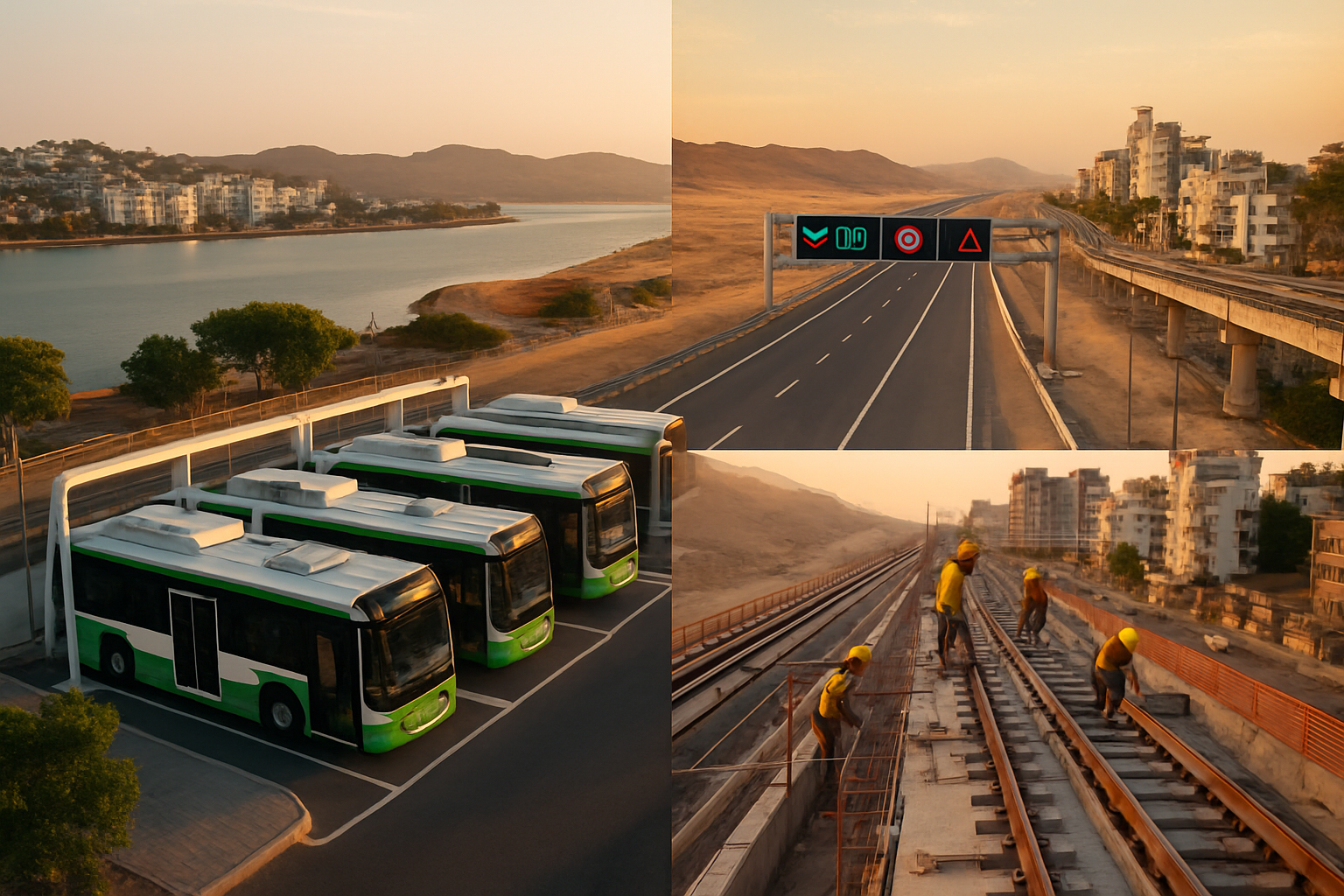
Transportation infrastructure across the globe is undergoing its most significant transformation in decades, as countries from Ecuador to Jordan launch ambitious smart mobility projects that promise to revolutionize how people and goods move through urban and rural landscapes.
This week's developments represent a coordinated push toward sustainable, technology-enabled transportation systems that address both environmental concerns and growing urbanization pressures. The initiatives span electric vehicle integration, intelligent highway systems, and public transport modernization—all part of what experts describe as the largest peacetime infrastructure investment surge in modern history.
Ecuador Pioneers Smart Electric Transit in Manabí
Ecuador's Manabí province is leading Latin America's transition to intelligent transportation with an ambitious pilot program targeting electric mobility and highway alert systems. The project, developed by a United States consortium, focuses on four major cooperatives serving the critical Portoviejo-Manta corridor—one of Ecuador's most important economic arteries connecting inland agricultural regions to the country's primary Pacific port.
The smart transportation initiative represents a fundamental shift from traditional transit management to a digitally integrated system that combines electric vehicle adoption with real-time traffic monitoring and emergency alert capabilities. This approach addresses both environmental sustainability and operational efficiency, critical factors for a country seeking to modernize its transportation infrastructure while managing fiscal constraints.
Local transportation cooperatives, which form the backbone of Ecuador's public transit system, will serve as testing grounds for electric bus integration and digital monitoring systems. The pilot program's success could serve as a template for nationwide expansion, potentially transforming Ecuador's approach to urban and intercity transportation.
India's Urban Transportation Expansion
India continues its massive transportation infrastructure expansion with significant developments in both electric public transit and metropolitan rail construction. Prime Minister Narendra Modi virtually flagged off 25 electric buses for Chandigarh, marking another milestone in the country's ambitious electric vehicle adoption strategy under the broader "Viksit Bharat 2047" vision.
The Chandigarh e-bus initiative represents more than simple vehicle replacement—it embodies India's comprehensive approach to urban mobility transformation that integrates digital payment systems, real-time tracking, and energy-efficient operations. These developments align with India's $133 billion infrastructure allocation, emphasizing sustainable urban development and reduced carbon emissions from public transportation.
However, India's infrastructure development faces significant challenges, as highlighted by ongoing construction difficulties at Mumbai Metro sites. Recent accidents at construction locations underscore the complex balance between rapid infrastructure development and safety protocols. These incidents demonstrate that while India pursues aggressive infrastructure timelines, ensuring worker safety and construction quality remains paramount.
The Mumbai Metro construction challenges reflect broader issues facing rapidly expanding urban rail networks worldwide. As cities rush to build comprehensive transit systems to address congestion and environmental concerns, maintaining safety standards while meeting ambitious deadlines requires sophisticated project management and international best practices.
Jordan Modernizes Regional Connectivity
Jordan is implementing a significant transportation modernization program focusing on digitalization and improved connectivity between provinces and the capital. The initiative, announced by Saleh Al-Bador, Director of Land Transport in Tafileh province, will introduce frequency-based scheduling between Tafileh and Amman, expected to begin by the end of the first quarter of 2026.
This transformation represents a fundamental shift from individual operator systems to corporate management structures, incorporating advanced tracking technologies, electronic payment systems, and camera-based monitoring. The new system will operate under fixed timetables, dramatically improving reliability and passenger experience for travelers between Jordan's southern regions and the capital.
Jordan's transportation modernization occurs within the broader context of regional infrastructure development and economic integration. The country's strategic location as a crossroads between Asia, Africa, and Europe makes efficient transportation systems crucial for both domestic development and international trade facilitation.
Global Infrastructure Renaissance Context
These regional developments occur within an unprecedented global infrastructure investment surge exceeding $570 billion in 2026. From Vietnam's $120 billion expressway commitment to build 9,000 kilometers of highways by 2050, to Saudi Arabia's historic 785-kilometer high-speed electric railway linking Riyadh and Doha, countries worldwide are recognizing transportation infrastructure as fundamental to economic competitiveness.
The coordinated timing of these projects reflects lessons learned from recent global supply chain disruptions and climate adaptation needs. Modern transportation infrastructure increasingly incorporates smart technology from the design phase, enabling system optimization, predictive maintenance, and integration with broader urban management systems.
"Transportation infrastructure serves as the physical foundation for economic integration, whether supporting regional trade agreements like AfCFTA or enabling international market access through enhanced connectivity."
— Infrastructure Development Analysis, February 2026
Technology Integration and Smart Systems
The new generation of transportation projects distinguishes itself through comprehensive technology integration. Ecuador's smart highway systems include digital monitoring and real-time information systems. Jordan's corporate transport management features GPS tracking, automated payments, and digital scheduling. India's electric buses incorporate advanced battery management, route optimization, and passenger information systems.
These technological advances address multiple objectives simultaneously: environmental sustainability through electric and hybrid systems, operational efficiency through digital monitoring, and improved user experience through mobile integration and real-time information. The convergence represents a fundamental evolution from infrastructure as simple physical assets to integrated, data-driven mobility ecosystems.
However, technology integration faces significant challenges, particularly the ongoing global semiconductor shortage that has increased memory chip prices sixfold, affecting vehicle control systems and smart infrastructure components. Countries pursuing advanced transportation systems must navigate supply chain constraints while maintaining project timelines.
Environmental and Climate Considerations
Modern transportation infrastructure development increasingly prioritizes climate adaptation and environmental sustainability. Ecuador's electric mobility initiative directly addresses carbon emission reduction from public transportation. India's e-bus expansion supports the country's commitment to achieving net-zero emissions. Jordan's corporate transport management includes efficiency optimization that reduces fuel consumption and emissions.
These environmental considerations reflect broader recognition that transportation infrastructure must serve future climate conditions rather than historical patterns. Projects incorporate climate-resilient design principles, renewable energy integration, and adaptation measures for extreme weather events that are becoming more frequent due to climate change.
The timing of these initiatives coincides with January 2026 being confirmed as the 18th consecutive month exceeding 1.5°C above pre-industrial levels, demonstrating the urgency of transitioning to sustainable transportation systems. Infrastructure investments made today will operate for decades, making climate compatibility essential for long-term viability.
Economic Development and Regional Integration
Transportation infrastructure creates significant economic multiplier effects beyond the immediate construction and operation phases. Ecuador's Portoviejo-Manta corridor improvements directly support agricultural exports and port operations. India's urban transit expansion enables economic development by improving workforce mobility and reducing transportation costs. Jordan's provincial connectivity enhancement facilitates domestic commerce and regional integration.
These projects support broader regional integration objectives, including the African Continental Free Trade Area (AfCFTA), ASEAN connectivity goals, and Arab economic cooperation initiatives. Efficient transportation systems reduce trade costs, improve market access, and create competitive advantages for participating countries.
The economic impact extends to employment generation during construction phases and permanent operational improvements. Modern transportation systems attract business investment, support tourism development, and create foundations for knowledge economy growth by improving connectivity and reducing transaction costs.
Implementation Challenges and Solutions
Despite ambitious goals, transportation infrastructure projects face complex implementation challenges. Financing coordination requires sophisticated public-private partnerships and international cooperation. Environmental assessments must balance development needs with ecological protection. Community engagement ensures projects serve local populations while meeting broader economic objectives.
Technical challenges include integrating new systems with existing infrastructure, ensuring interoperability across different platforms, and maintaining cybersecurity for increasingly connected transportation networks. Success requires adaptive management approaches that can respond to changing circumstances while maintaining project integrity.
International cooperation has become essential for knowledge sharing, technology transfer, and best practice dissemination. Countries pursuing similar projects benefit from coordinated approaches to procurement, standardization, and technical specifications.
Future Implications and Global Trends
The current wave of transportation infrastructure development establishes precedents that will influence global transportation policy for decades. Successful integration of electric vehicles, smart systems, and sustainable practices creates templates for other countries facing similar development challenges.
Emerging trends include greater emphasis on multimodal integration, where different transportation modes—rail, bus, walking, cycling—connect seamlessly through digital platforms and physical infrastructure. Cities and regions that successfully implement integrated mobility systems gain competitive advantages in attracting investment, talent, and tourism.
The shift toward corporate management of transportation services, demonstrated in Jordan's reforms, reflects broader recognition that professional, technology-enabled operations deliver better outcomes than fragmented individual operators. This trend may accelerate as countries seek to optimize transportation efficiency while maintaining service quality.
As these projects mature, their success or failure will influence the next generation of transportation investments worldwide. The lessons learned from Ecuador's electric mobility pilot, India's urban rail expansion, and Jordan's digital transport management will inform infrastructure policy globally, making their implementation crucial for the broader transportation transformation underway.