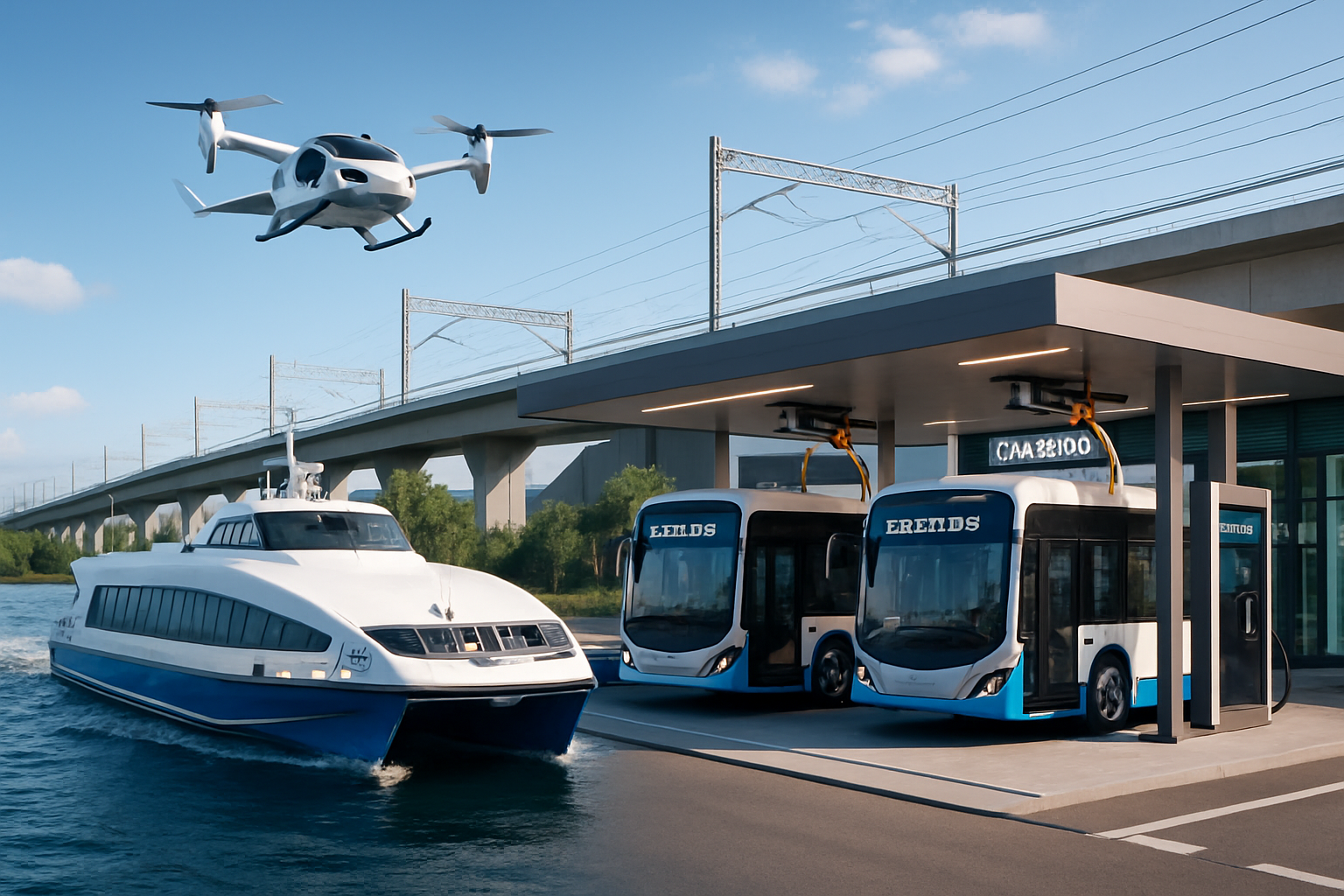
A coordinated surge of transportation innovation is transforming mobility across five nations this March, marking a decisive shift toward sustainable, technology-enabled transportation systems that promise to reshape how the world moves people and goods.
From Croatia's expansion of Adriatic catamaran services to Slovakia's breakthrough in flying car production, the developments represent part of an unprecedented $570+ billion global infrastructure investment surge that is fundamentally redefining transportation networks as strategic foundations for economic competitiveness and climate adaptation.
Croatia Enhances Maritime Connectivity
Krilo Shipping Company is launching a transformative new daily catamaran service connecting Dubrovnik to the islands of Mljet and Korčula starting May 1, 2026. This expansion of Croatia's maritime transportation network addresses long-standing connectivity challenges in the Adriatic archipelago, supporting both tourism development and year-round residents who depend on reliable inter-island transportation.
The new route builds on Croatia's strategic positioning as a leader in sustainable maritime transportation, leveraging advanced catamaran technology that reduces travel times while maintaining environmental sustainability standards increasingly demanded by both travelers and regulatory frameworks.
Slovakia Achieves Flying Car Breakthrough
Slovakia's AirCar project has reached a historic milestone, attracting significant Chinese investment and moving toward commercial production after decades of development. The innovative vehicle can transform from road-capable automobile to aircraft in just three minutes, representing a quantum leap in personal mobility technology.
This breakthrough positions Slovakia at the forefront of the emerging aerial mobility sector, with potential applications ranging from emergency services and rural connectivity to premium transportation services. The project demonstrates how sustained innovation combined with international investment can transform conceptual technology into commercial reality.
Cyprus Strengthens European Aviation Links
Hermes Airports announced the arrival of Discover Airlines at Larnaca Airport, marking the Lufthansa Group carrier's first-ever operations to Cyprus. The new service connecting Cyprus with major German hubs Frankfurt and Munich provides enhanced travel options while strengthening the island's position as a strategic aviation gateway between Europe and the Eastern Mediterranean.
Operating with Airbus A320 aircraft featuring both Economy and Business Class cabins, the service addresses growing demand for convenient, efficient travel connections between Cyprus and Germany's major cities, supporting both business travel and tourism development.
Denmark Revitalizes International Rail
Denmark is implementing the return of direct high-speed rail service between Copenhagen and Stockholm, restoring a critical Scandinavian transportation link that enhances regional integration. Though details remain limited, the initiative reflects broader European efforts to strengthen cross-border rail connectivity as an alternative to aviation for medium-distance travel.
This development aligns with European Union priorities for sustainable transportation and regional integration, offering travelers efficient alternatives while supporting climate objectives through reduced aviation dependency for regional travel.
Kenya Expands Urban Transit Networks
Super Metro has announced significant expansion of its urban transportation network with new routes connecting Nairobi's Central Business District to additional residential areas, including the Ongata Rongai corridor. This marks the second major route expansion by the renowned bus company in less than one year, demonstrating rapid growth in Kenya's public transportation sector.
The expansion addresses growing urbanization pressures in Nairobi while providing affordable, reliable transportation options for commuters. Super Metro's continued growth reflects successful private sector involvement in urban transportation solutions, offering a model for other rapidly growing African cities.
Technology Integration Drives Innovation
Modern transportation infrastructure projects universally incorporate sophisticated technology integration from the design phase, including real-time monitoring, predictive maintenance capabilities, digital payment systems, and environmental optimization features. This represents a fundamental evolution from traditional infrastructure approaches toward comprehensive systems that serve multiple objectives simultaneously.
Climate adaptation has evolved from an optional consideration to a central design requirement, with projects incorporating enhanced drainage systems, weather-resistant materials, and backup power infrastructure designed for future climate conditions rather than historical patterns.
Economic Multiplier Effects
These transportation improvements create substantial economic benefits extending far beyond construction employment. Reduced logistics costs, enhanced market access, and improved business productivity support regional integration objectives while creating competitive advantages for participating nations.
The projects demonstrate successful models for balancing immediate mobility needs with long-term sustainability requirements, national development priorities with regional integration objectives, and technological advancement with community engagement and environmental responsibility.
International Cooperation Framework
Success across these diverse projects reflects sophisticated international cooperation involving technical assistance, knowledge sharing, and coordinated procurement strategies. From Slovakia's Chinese investment partnerships to Cyprus's integration with European aviation networks, contemporary transportation development increasingly relies on cross-border collaboration and expertise sharing.
The developments occur within broader patterns of regional integration, including European single market connectivity objectives, African Continental Free Trade Area implementation, and Asian cooperation frameworks that view transportation networks as essential infrastructure for economic development.
Strategic Significance
March 2026 represents a watershed moment in global transportation development, establishing precedents that will influence infrastructure strategies for decades ahead. The convergence of technological advancement, environmental awareness, and international cooperation is creating development models that prioritize sustainability alongside economic growth.
These projects demonstrate the evolution from simple construction activities toward comprehensive systems supporting economic development, environmental protection, and social connectivity simultaneously. Success in managing this transformation will determine adaptive capacity for thriving in an increasingly interconnected and climate-challenged world.
The choice between transformative infrastructure adaptation and reactive crisis management represents one of the most significant policy decisions of the current decade, with implications extending far beyond national borders to influence global standards for sustainable development and international cooperation.